Some hotels are born for controversy. The 13, now rebranded as 13 Palace, didn't just stumble into its reputation for opulence and drama. It was practically engineered for it.
When Hong Kong entrepreneur Stephen Hung first unveiled his vision, the promise was audacious: build the world's most luxurious hotel at a staggering cost of over US$7 million per room. No stone unturned. No expense spared. The property landed in Macao's Seac Pai Van area, a wooded neighborhood carved from reclaimed seabed on Coloane, far enough from the city's frenetic casino strip to feel like a private escape. It was meant to establish "a new world standard for ultra-luxury hotels." Instead, it became a cautionary tale about ambition colliding with reality.
The hotel's downfall wasn't instant. Construction delays, financing troubles, and operational challenges plagued it before the doors even opened in 2018. Then came the garishness problem. Those Rolls-Royce Phantoms painted fire-engine red? The Baroque sculptural details? The Roman baths in villa-style suites with private elevators and colonnades? Journalists didn't know whether to applaud the audacity or laugh. The distance from Macao's gambling hub plus the failure to secure a casino license meant revenue couldn't match the spectacular overhead. The property suspended operations in early 2020 as the pandemic took hold, filed for bankruptcy in 2023, and seemed destined for oblivion. After earning a fresh five-star deluxe license from the Macao Government Tourism Office, new owner Loi Keong Kuong (chairman of Rio Hotel) stepped in with a HK$598 million (US$72 million) acquisition in 2025.
Gold Paint and Guinness Records
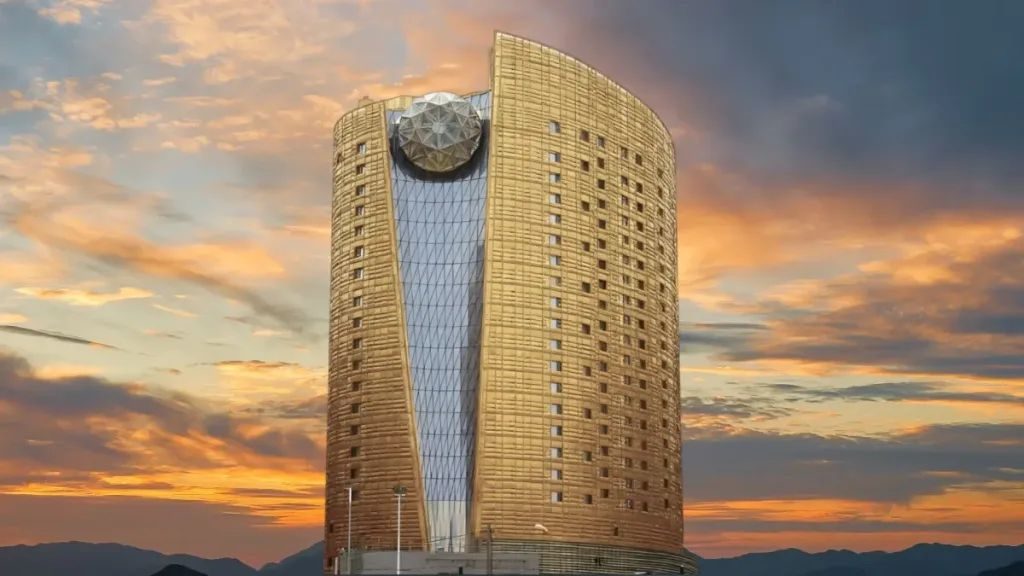
The reboot comes with a visual overhaul. Gone is the original crimson branding. The hotel now sports a striking gold aesthetic that somehow feels less jarring than expected. More importantly, 13 Palace has begun collecting Guinness World Records. It now holds the title for the most hotel elevator lobbies in a single building and boasts the world's tallest semi-indoor vertical garden, a green wall cascading from the fifth to the 20th floor. These aren't just amenities. They're conversation starters, the kind of details that fuel social media buzz and attract the Instagram-savvy wealthy.
The property is rolling out in phases, starting with 50 to 100 rooms to build momentum and test operations before full capacity. Current booking rates hover around 50 to 60 percent, though international reservations aren't yet live. The strategy hints at humility this time around: prove the product works before declaring victory.
Luxury That Actually Makes Sense Now
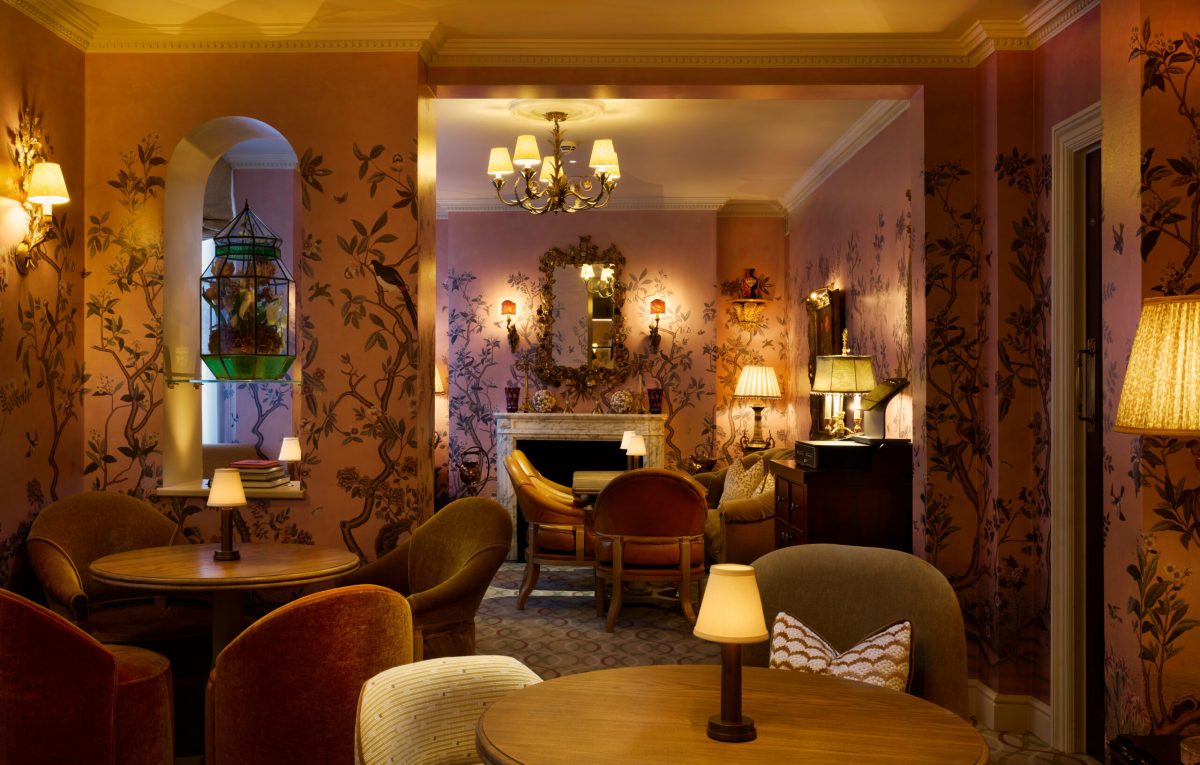
What's clever about the repositioning is recognizing what the location actually offers. Rather than fighting its distance from casinos, management is leaning into proximity to golf courses and Macao's Giant Panda Pavilion. The target is affluent travelers from mainland China, Japan, South Korea, and Southeast Asia who crave refinement without feeling obligated to gamble. The 199 suites come with round-the-clock butler service, spa access, and that red Rolls-Royce fleet (still on duty, presumably still red). Dining spans Cantonese, Chiu Chow, Italian, and Japanese kitchens. The Baroque blue glass Chairman's Bar channels old-money elegance.
For those curious about extravagant stays, the 13 Palace sits in that rarefied category where your money vanishes at speeds that shock most travelers. Yet unlike its original incarnation, the new version seems to understand that extreme luxury requires a story, not just a price tag.
The phased opening feels less like caution and more like strategy. Build a reputation. Win back trust. Create demand through scarcity and social proof. This isn't the desperate scramble for prestige that defined the first era. It's a savvier approach from an industry that's learned some hard lessons about what separates lasting luxury from momentary spectacle.
Macao travel typically orbits around casinos, shopping, and dim sum. If 13 Palace pulls off this resurrection, it could reshape how wealthy visitors think about the city altogether. Not as a gambler's paradise, but as a destination where exceptional hospitality and architectural audacity can coexist.