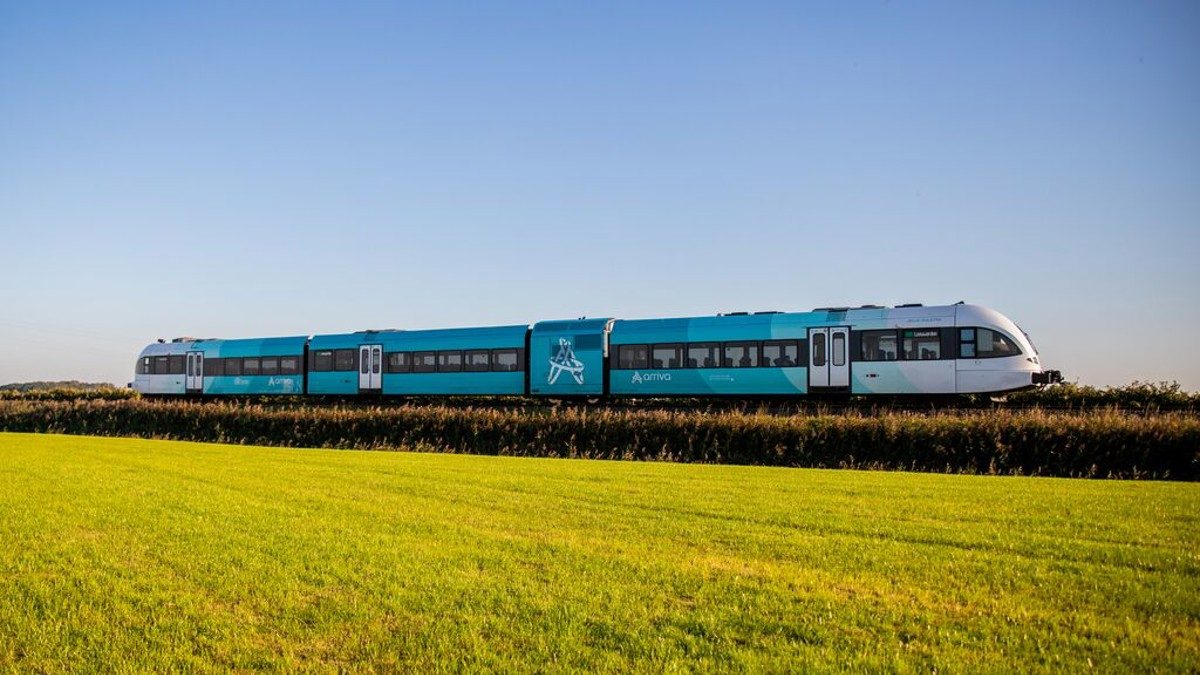
The European train network is quietly getting more useful. Arriva, the Dutch rail operator that's been steadily chipping away at the monopoly held by national carriers, just announced plans to launch new direct services from the Netherlands all the way to Paris by 2028. This isn't speculation or wishful thinking. The company has formally submitted these plans to Dutch regulators, and they're designed to reshape how people move through northwestern Europe.
Here's what's happening. Starting February 2028, Arriva will operate two daily return trains from the central Dutch city of Amersfoort to the French capital. These trains will stop in Utrecht, 's-Hertogenbosch, and Breda before crossing into Belgium at Antwerp, Brussels Airport, Brussels-South, and Mons. A second route will run from The Hague to Paris three times daily in each direction, calling at Rotterdam and Roosendaal before following the same Belgian corridor. This means major Dutch cities that have never had direct rail access to Paris will suddenly get it.
The scale of this expansion is worth pausing on. These aren't token services. We're talking about consistent daily frequencies that make Paris feel less like a weekend getaway and more like a commutable second city. Brussels Airport has been positioning itself as an increasingly important international rail hub, and these new routes will cement that role while giving Belgian travelers the same direct access to Paris.
Arriva is already operating the Three Country Train through the region, which connects Liège, Maastricht, and Aachen. The company also has bigger ambitions still. A third route linking Groningen in the far north to Paris via Brussels has been in the pipeline since 2023, though that service keeps getting pushed back. Originally it was supposed to launch in June 2026, but now the company isn't promising anything before 2027. Even delays here don't diminish the bigger picture. By late this decade, Arriva will operate an unprecedented network of international connections across three countries, with Paris as the anchor destination.
Why are they doing this, and why now? The operator argues that it's tapping into existing spare capacity on rail infrastructure that already exists but isn't being used. Demand for international train travel has been climbing as passengers actively seek alternatives to short-haul flights. There's also a competitive angle. In countries like Spain, Italy, and France, liberalization of the rail market (letting operators like Arriva compete against national monopolies) has driven down fares and improved service quality. Arriva is betting that introducing competition on these routes will replicate that success.
The regulatory path ahead is long. Launching international rail services requires timetable coordination between three separate countries, capacity allocation on shared infrastructure, and approvals from multiple national bodies. It's not quick. But it's happening. The company has already navigated this process for existing services, and the Dutch Authority for Consumers and Markets (ACM) has accepted their notification for these expanded routes.
For travelers, this represents a genuine shift. The Hague gets its first direct rail link to Paris, giving Europe's diplomatic capital and center for international justice seamless access to the French capital. Amsterdam-area travelers get more options and, likely, competitive pressure driving fares down. The whole corridor from Amsterdam through Brussels to Paris becomes less fragmented, less dependent on connections that eat up time and create frustration.
The environmental angle is secondary in Arriva's pitch but not irrelevant. Shifting even a small portion of short-haul air traffic onto trains removes carbon from the equation. As rail networks across Europe continue to evolve, the sustainability case for trains over planes only gets stronger.
None of this is guaranteed. Regulators in all three countries still need to sign off. Infrastructure bottlenecks could emerge. But for the first time, travelers planning a Netherlands-to-Paris trip in 2028 or later will have a real option that doesn't involve flying, doesn't require multiple train changes, and will actually be competitive on price. That's a significant moment for European travel, even if it doesn't feel revolutionary right now.