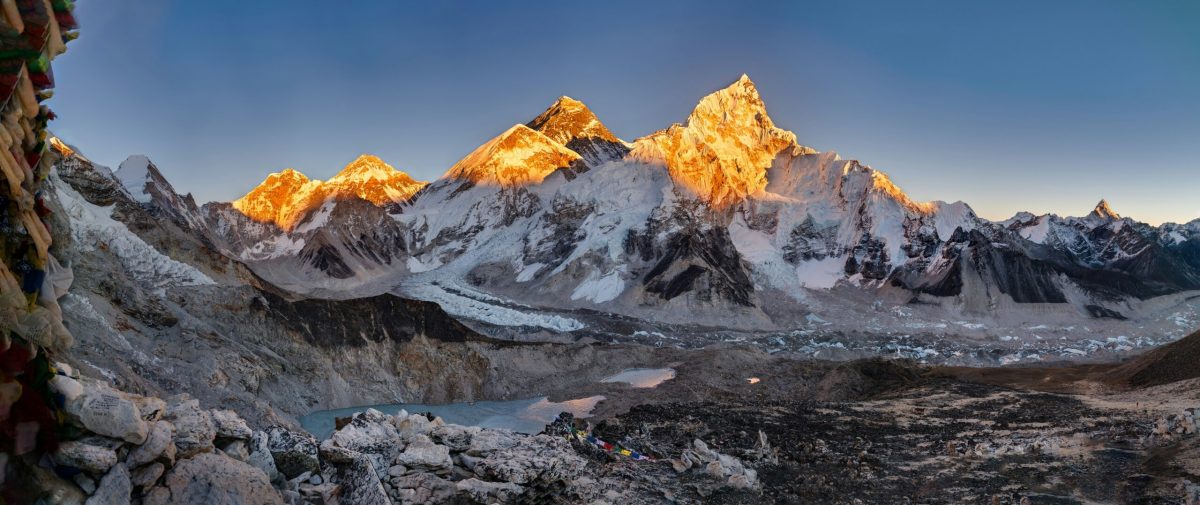
Mount Everest has always demanded respect. Now it is asking for something else: a little less urine. A new study published in Regional Environmental Change has quantified what many suspected but few dared to calculate. The base camp on the Khumbu Glacier is melting at twice the rate of the rest of the glacier, and the cause is not just climate change. It is us.
Every April and May, hundreds of climbers and their guides gather at Everest Base Camp, a temporary city of tents, generators, and coffee bars. They drink liters of water to stave off altitude sickness, and then they urinate directly onto the ice. The study, led by researchers from the International Centre for Integrated Mountain Development (ICIMOD), estimates that this seasonal ritual produces over 6,000 liters of urine, which melts about 154 tons of glacier ice. That is the equivalent of a small iceberg, gone in a season.
The problem does not stop at melting. The urine seeps into meltwater streams that flow down to local communities, polluting drinking water. And the camp itself is a power hog. In 2023, climbers and support staff used 824 liquefied gas cylinders, over 5,000 liters of petrol, and nearly 19,000 liters of kerosene to keep the camp running. All that energy generates heat, which concentrates the warming effect in a small, heavily used area.
The result is a landscape in flux. The Khumbu Icefall, already one of the most dangerous sections of the standard route to the summit, is becoming more unstable. Meltwater streams now carve through parts of the glacier that were once solid ice. A high-altitude glacier collapse on the China-Nepal border in August 2026 triggered catastrophic flash floods that killed over 1,000 people, a grim preview of what may come.
Scientists have been warning about this for over a decade. A 2014 ICIMOD report predicted that visitor-driven climate impacts could bring harsher avalanches, floods, and landslides to the region. Those predictions are now coming true. The study notes that the increasing numbers of climbers, trekkers, and support staff have intensified environmental impacts on the Khumbu Glacier, which it calls "a critical staging area for mountaineers."
Climbers are already required to carry their faeces back down the mountain, a rule that has been in place for years. But urine remains exempt. The study suggests that a similar rule for urine, or at least the use of portable urinals, could reduce the impact. Some expedition operators are starting to provide pee bottles or funnel devices, but the practice is not yet widespread.
For travelers who dream of standing on top of the world, the mountain is not what it used to be. The base camp now offers Wi-Fi, coffee bars, and big screens, a far cry from the spartan camps of the early expeditions. But this comfort comes at a cost. The very amenities that make the experience more palatable are accelerating the glacier's demise.
If you are planning an Everest expedition, consider the footprint you will leave. Choose operators who prioritize sustainability, carry out all waste, and minimize energy use. The mountain has given us so much. It is time to give something back.
For more on how mountains are changing, read about Mount Etna's ash cloud or the return of steam trains in Switzerland. And if you are curious about the broader impact of tourism on fragile environments, check out this story about a mountain refuge overwhelmed by viral fame.