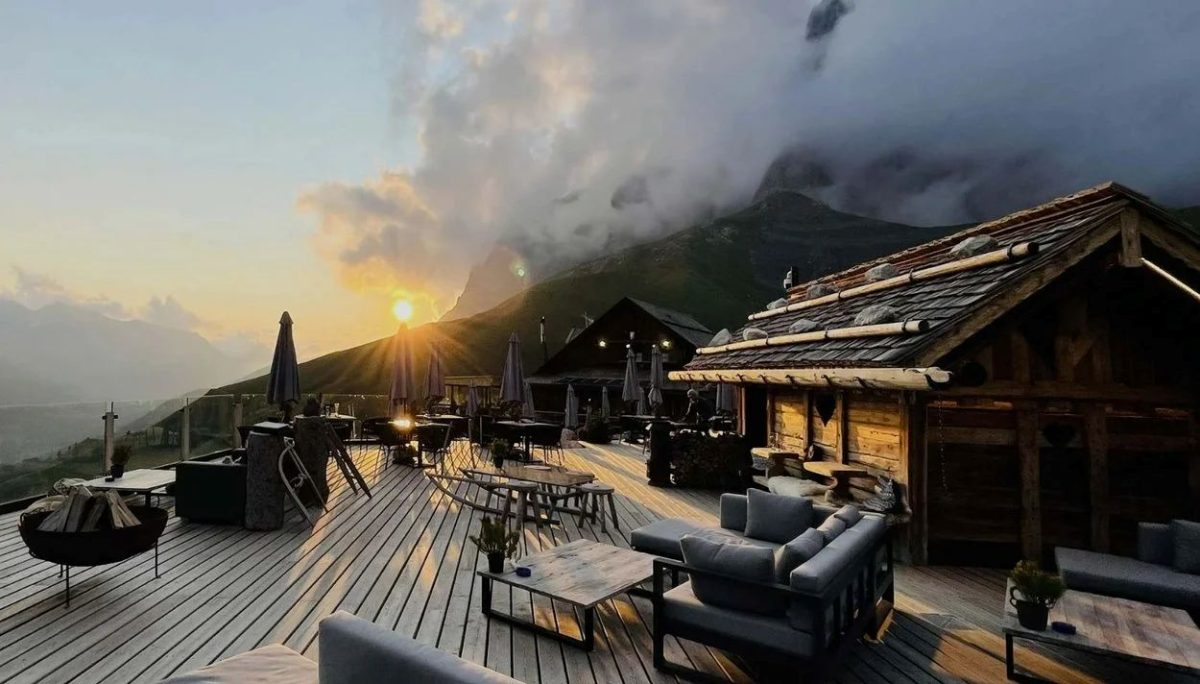
Something strange happened in the Italian Dolomites. A small mountain refuge called Friedrich August has been serving fresh krapfen (German doughnuts filled with cream) for more than thirty years. Nobody famous cared. Then TikTok and Instagram got involved.
Now hundreds of people hike 2,300 meters to eat a pastry against a scenic backdrop. They queue down the mountainside. They camp overnight in the parking lot. They arrive at sunrise with their phones ready. The refuge team, despite selling more krapfen than ever, tells local media the whole thing has become chaotic and unmanageable.
The krapfen themselves are spectacular, we should acknowledge that. Italians call them bombolone because of their bomb-like shape and the way the cream filling explodes in your mouth. At about four euros each, they've been a quiet local treasure for decades. But food influencers discovered them, posted them against the stunning mountain landscape, and tapped directly into what modern travelers desperately want: hidden places, authentic food, untouched nature, cultural connections. The algorithm loved it. Local residents did not.
When Instagram Discovers Your Quiet Mountain
Francesco Abbruscato, president of the Veneto branch of the Italian Alpine Club, told media outlets that social platforms are bringing a fundamentally different kind of tourist to the region. These visitors don't respect the landscape the way traditional hikers do. "The main problem is those who visit the mountains without knowing or respecting them," Abbruscato said. "Until five or six years ago we did not witness overtourism in precise points or at certain moments in the Dolomites. Now there are iconic places where it is no longer possible to appreciate the beauty as we're surrounded by dozens of people who take selfies and are only there for that."
The Dolomites themselves are exceptional. This mountain range in the northern Italian Alps includes 18 peaks above 3,000 meters and holds UNESCO World Heritage status as some of the most beautiful mountain landscapes on Earth, featuring vertical walls, sheer cliffs, and a high density of narrow valleys. At least 10 million visitors arrive annually. The 2026 Olympics will bring more. The UN warns that this volume of tourism creates significant negative impacts on both the alpine environment and the quality of life for mountain residents.
A Cry for Help From the Mountains
The Friedrich August situation reveals a broader crisis. Marco Bussone, president of the national union of mountain communities, put it bluntly: "The mountains are not a playground." Workers at the refuge speak privately of frustration. The infrastructure never expected this.
This isn't unique to the Dolomites. Vlkolínec, a 43-house village in Slovakia's Carpathians, now receives 7,000 visitors for every resident. Some villagers have demanded UNESCO remove their World Heritage designation just to reduce the tourism crush. In other parts of the Dolomites, farmers have installed paying turnstiles on hiking trails as a desperate signal to authorities that the system is breaking down.
There's a real tension here that no social media company seems to acknowledge. Travel influencers promote these places genuinely, often with good intentions. Travelers who see these posts want real experiences, not theme parks. But the scale is new. The speed is new. One viral video doesn't just bring a few curious hikers anymore. It brings hundreds every day, most of them for the same selfie.
The Uncomfortable Truth About Discovering Hidden Places
When you read about an off-the-beaten-path destination online, you're usually already too late. The moment it gets written about, photographed, and shared, the conditions that made it special start to vanish. The refuge at Friedrich August sells out of krapfen by mid-morning now. The trail is crowded. The experience of being there has fundamentally changed.
This raises hard questions for travelers and travel writers alike. How do you share beautiful places responsibly? Should you share them at all? The Friedrich August situation suggests that some places survive their discovery, and others don't. The Dolomites remain stunning whether the refuge is mobbed or quiet. But the experience of being there, for both visitors and residents, has shifted into something less peaceful.
If you're planning a Dolomites trip, the krapfen are worth trying. But consider exploring beyond the viral hotspots. The mountains hold countless other rifugios, trails, and experiences that haven't yet been condensed into a 30-second video. That's often where you'll actually find what you came for.