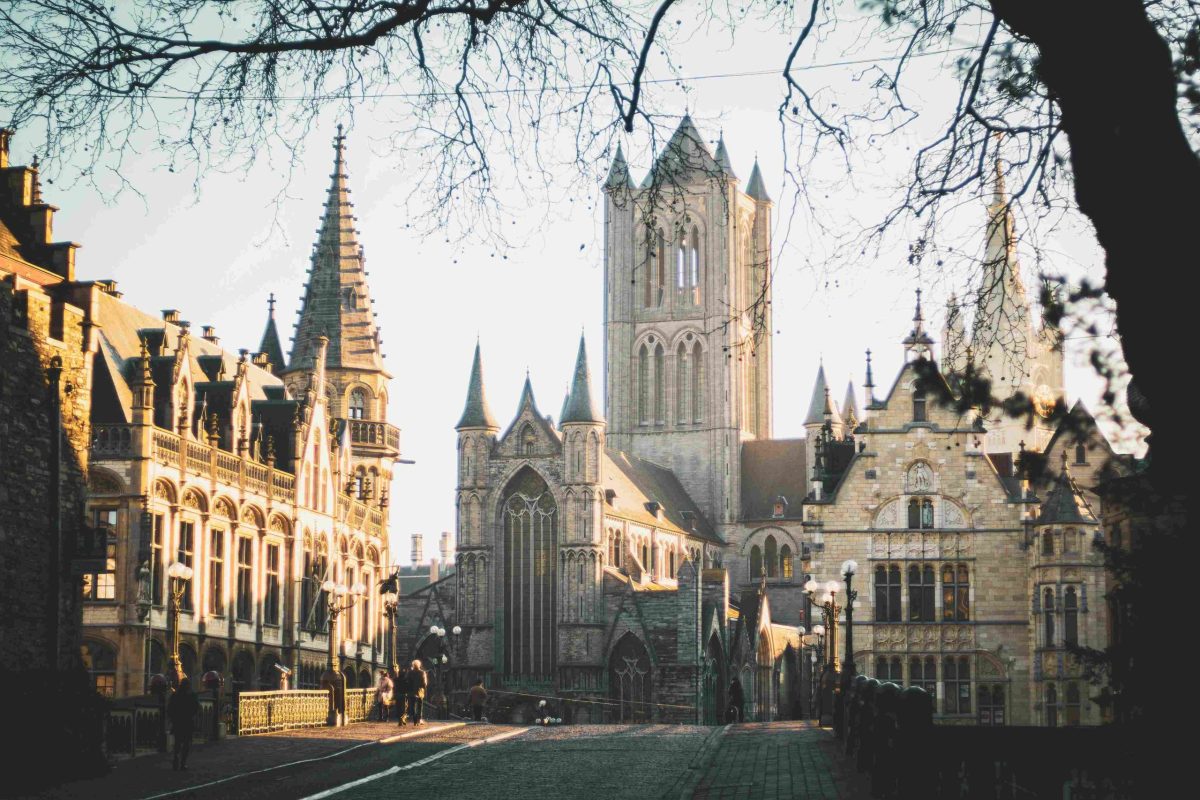
In Ghent, the past doesn't just linger in cobblestone streets and medieval facades. Sometimes it gets a second act. Take the old post office above Korenmarkt. Its clock tower still rises more than 50 meters, but the letters stopped flowing long ago. Today, the building hums with a different kind of energy: shoppers browse on the ground floor, guests sip cocktails upstairs, and travelers sleep in rooms named after stamps.
The structure was designed by Louis Cloquet, who broke ground in 1898. With pointed arches and carved stonework, it blends Neo-Gothic and Neo-Renaissance styles so convincingly that it looks centuries older than it is. That architectural drama is part of the appeal. But the real story is how a protected landmark became a place where people now linger for breakfast, brunch, or a full night's stay.
A Hotel That Almost Wasn't
When Geert De Paepe and Greet De Paepe-Kerkstoel bought the building in 2014, they had apartments in mind. Four large ones, to be precise. "We fell in love with the building," Geert told The Brussels Times. "We looked at the rhythm of the windows and started asking architects what else we could do. And we came across the idea of a hotel."
That pivot came with challenges. The building's three towers had floors that differed by as much as 20 centimeters. The result is that no two rooms are alike, which turned an engineering headache into a design quirk. The hotel, named 1898 The Post, opened in August 2017 with 38 rooms overlooking the Graslei, Ghent's historic quay on the river Leie. It has since earned a MICHELIN Key.
Postal Past as Decor
The hotel leans into its history rather than hiding it. Rooms carry names like Stamp, Letters, and Loft, with sizes ranging from a cozy 19 square meters to a spacious 65. The standout is the Tower Suite, an octagonal duplex with 360-degree views over the city. Interior designer Geraldine Dohogne mixed antique pieces with deep green walls and marble, and hung drawings by Cloquet himself near the reception. Vintage postcards sit on bedside tables, and original window frames and staircases were preserved wherever possible.
Downstairs, the De Post shopping center is open to everyone. Fashion, interior design, beauty shops, and places for breakfast or lunch fill the ground floor. You don't need a room key to soak in the atmosphere. Just wander through the arcade, then head up to The Cobbler, the hotel's cocktail bar, for a drink with a view of St Michael's Bridge and the Graslei.
Next Door, a New Chapter
The story continues in September with the opening of 1898 Porter's House, located in the former caretaker's house next door. The owners once lived there themselves. Now it offers four rooms, from the 21-square-meter Porter's Room, inspired by the postal past, to an 89-square-meter family suite with a sauna on its terrace. Marble bathrooms come standard, and the two largest suites have private terraces with copper ice baths. The entire house can be booked for up to ten guests.
This kind of adaptive reuse is gaining traction across Europe, as cities look for ways to balance tourism growth with preservation. It's a model that other destinations might study, especially as Europe adopts its first tourism strategy and grapples with how to manage visitor flows sustainably. Giving an old landmark a new purpose is one of the most elegant answers, and Ghent proves it can be done with style.
For travelers, the takeaway is simple: you can sleep inside a piece of postal history without sacrificing modern comfort. And even if you don't book a room, the building invites you in. Browse the shops, climb to the bar, and let the clock tower remind you that some stories don't end when the mail stops.