There's a reason traveling to Sicily requires flexibility. On August 10, Mount Etna decided it was time to remind everyone who really runs the show in this corner of Italy.
The volcano's latest eruption sent plumes of ash drifting into airspace around Catania Airport, one of the busiest gateways in the country. Airport operators quickly escalated from throttling incoming traffic to a complete suspension of all arrivals until 5:00 pm local time. Departing planes were allowed to leave, but getting in? Not a chance. It was the kind of disruption that ripples through an entire region during summer peak season, when hundreds of thousands of flights cross European airspace daily.
The scale of the disruption was substantial. Dozens of flights operated by Ryanair, easyJet, ITA Airways, and Wizz Air had been scheduled that day. Before the full suspension kicked in, authorities had limited inbound traffic to just five landings per hour, a dramatic reduction that still wasn't enough to manage the volcanic hazard ahead.
When a Volcano Becomes an Airport Problem
Catania isn't just any regional airport. It's Sicily's busiest hub and Italy's fifth-busiest by passenger volume, which means disruptions hit hard during the summer travel crush. The airport sits on the east coast, positioned uncomfortably close to one of Earth's most restless volcanoes. Etna has been erupting more or less continuously for decades, and its ash has repeatedly forced flight suspensions and diversions across the entire region.
The immediate threat came from volcanic ash at two active altitudes: around 2,750 meters and 2,360 meters, according to Italy's National Institute of Geophysics and Volcanology (INGV). Lava flows were pouring across extensive fields downslope, but ash posed the real aviation headache. That fine, abrasive powder can slash visibility instantly and damage aircraft engines. INGV kept the aviation alert at red, the highest warning level, signaling ongoing hazard.
Airport operators urged passengers to skip the unnecessary trip to the terminal. "Check your flight status with your airline first," they advised, knowing conditions could shift within hours. Weather patterns, the direction of the ash cloud, and Etna's temperament all play a role in whether the airport stays open or shuts down.
This Isn't the First Time This Summer
Just over a month earlier, on July 6, Etna had already forced a total airport closure. That eruption wiped out roughly 130 flights entirely and forced another 50 to divert elsewhere. Airports at Palermo, Comiso, and Trapani absorbed the overflow of stranded travelers and rerouted aircraft. For a region that depends heavily on summer tourism, these disruptions carry real costs.
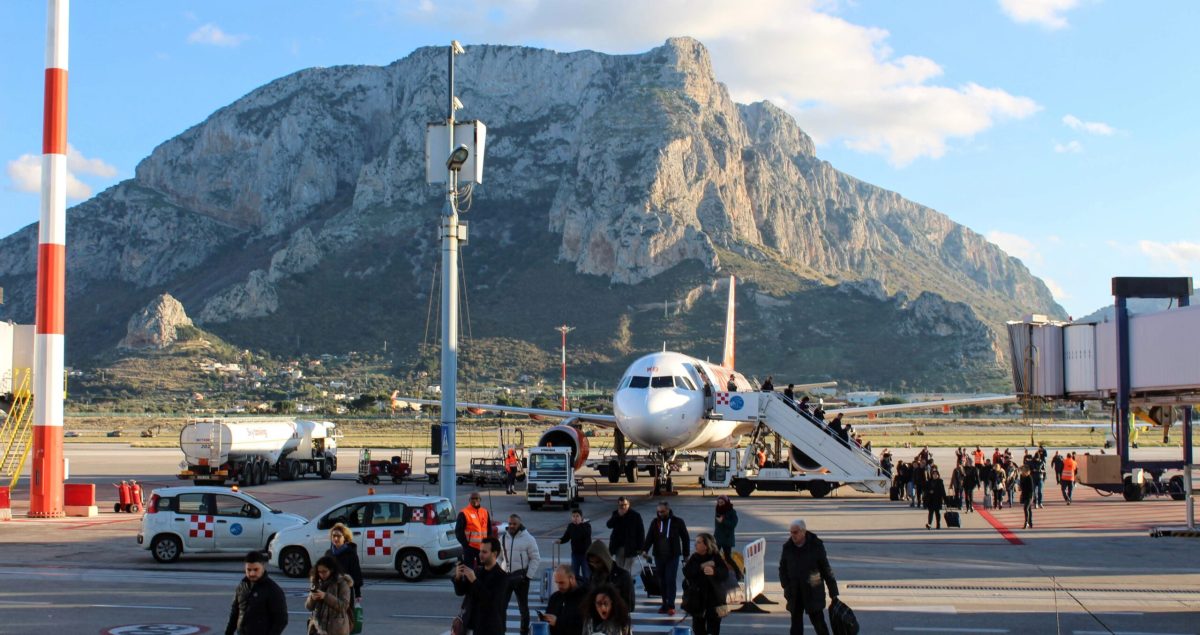
Sicily's other major airport at Palermo, sitting on the northwestern coast, managed to stay operational during the August 10 chaos, at least offering an alternative route for some travelers. But Palermo can only absorb so much traffic before it too becomes overwhelmed.
What Travelers Should Actually Do
If you're heading to Sicily and Catania is your gateway, accept one truth: volcanic activity trumps all your plans. Airlines and airports will make operational decisions based on real-time conditions, not schedules printed weeks in advance. Before leaving for the airport, contact your carrier directly. Before buying tickets, consider building in buffer time or flexible booking terms. This is the price of visiting one of Europe's most dramatic natural locations.
Etna is a draw for many visitors, a UNESCO-caliber natural wonder that pulls travelers from across the world. But living alongside an active volcano means accepting disruption as part of the experience. The good news: when flights do run, you're heading to one of the Mediterranean's most stunning islands. The trade-off is worth it for many, but only if you travel with realistic expectations about what nature might have in store.