For nearly a hundred years, the Albert Canal severed what had once been a thriving route between two communities. When engineers carved out this strategic waterway in the 1930s to link Belgium's industrial core with Antwerp's port (while sidestepping Dutch territory), they didn't just reshape the landscape. They erased centuries of movement, trade, and even some colourful smuggling operations that once ran gin and butter across these borders under cover of darkness.
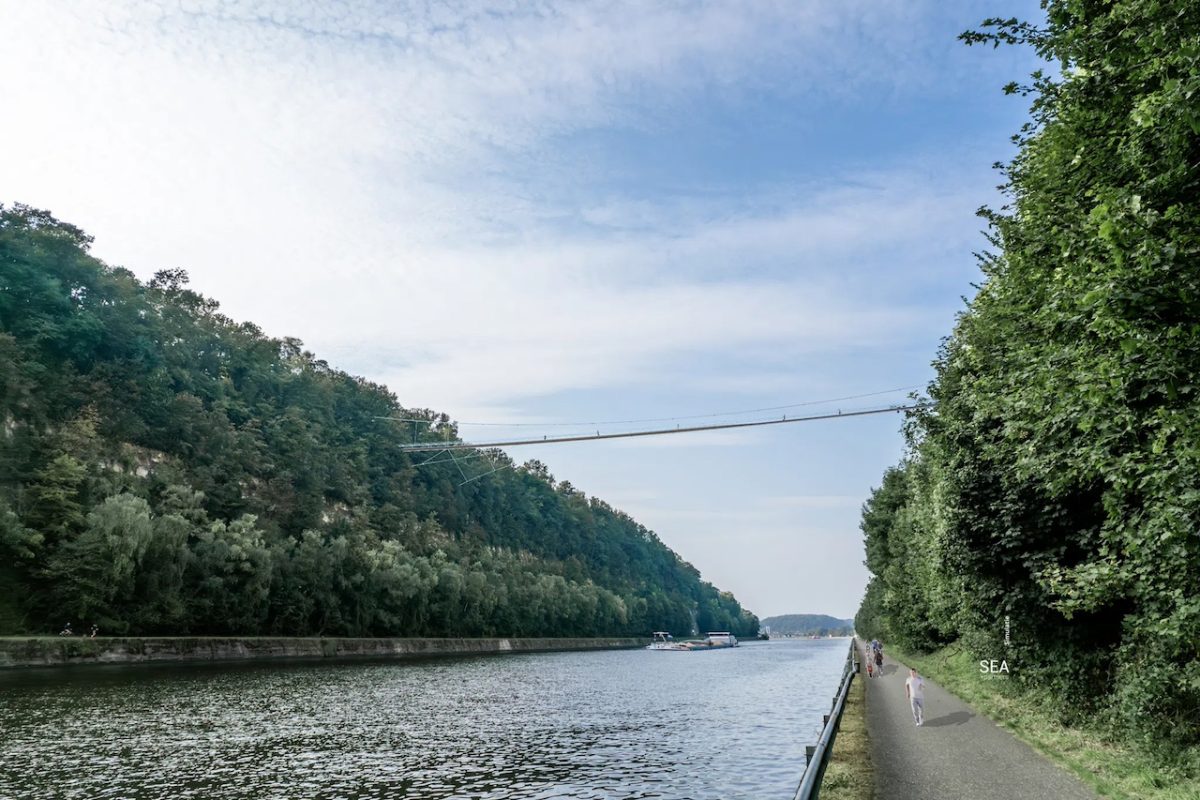
Now, the Passerelle de Caster has reknitted those threads. This 195-metre cable-stayed footbridge, the tallest in the entire Benelux region, stretches across the canal between Bassenge and Visé with a nerve-testing elegance. At 55 metres above the water, it's not designed for anyone queasy about heights. The walkway tapers from 2.5 metres wide down to 1.2 metres, and the only thing between you and a long drop is cable and conviction.
What makes this bridge remarkable isn't just its height. The engineering required real creativity. The terrain was steep, the surrounding nature reserves were protected, and heavy machinery couldn't move in without destroying the ecosystem. So in 2025, engineers deployed drones to fly the initial cable across the canal. It's the kind of problem-solving that turns infrastructure into architecture.
Walking Into Centuries of Forgotten Stories
Before the canal existed, this region hummed with activity. It sat squarely on a major military and trade route connecting Liège to Maastricht. Smugglers knew it intimately. The landscape itself tells stories: steep limestone cliffs, river valleys threading through small towns, nature reserves that feel genuinely untouched. Wallonia's hidden corners offer far more than most Belgium visitors ever discover, and this bridge is the newest reason to explore them.
The project came from Vialta, a non-profit backed by three local municipalities who understood something crucial: the bridge shouldn't stand alone. At a cost of 2.1 million euros (mostly funded through Walloon recovery grants), they also created four new circular walking routes ranging from 6.5 to 17 kilometres. One stretches all the way to Maastricht. The bridge is the centerpiece, but the real reward is the region itself.
Planning Your Visit to an Overlooked Border
Access to the footbridge costs €3 online or €5 on site. Currently limited to 600 walkers daily (eventually rising to 1,000), revenue goes directly back into maintenance and nature conservation. The footbridge sits near the Flemish municipality of Riemst and a short drive from Maastricht, making it easy to combine with exploring the Netherlands' flower region or a longer Dutch-Belgian border tour.
Jérôme Vandermaes, director of Vialta, frames it plainly: "The Caster footbridge is not a destination in its own right." Instead, he encourages visitors to stay multiple days, hiking the circular routes, eating in small towns, and discovering what a region looks like when tourism hasn't yet rewritten its character. The panoramic views from the bridge itself are extraordinary (360 degrees across the Geer and Meuse valleys), but they're just an invitation to explore further.
This matters right now. Across Europe, people are choosing shorter trips closer to home, which means quieter destinations like this thrive differently than before. The bridge opens a region that's been sleeping for decades, reconnecting not just countries but communities with their own past. It's a footbridge that works both directions: forward into new walking routes and back into the border's smuggling heritage, its military fortifications, its layered European identity.
For travellers tired of overcrowded sights, this corner of Belgium represents something increasingly rare. It's a place where engineering innovation serves place-making rather than spectacle alone. You'll get the thrill of height and the sweeping views, yes. But you'll also get something harder to manufacture: a region that still feels like it belongs to the people who live there.