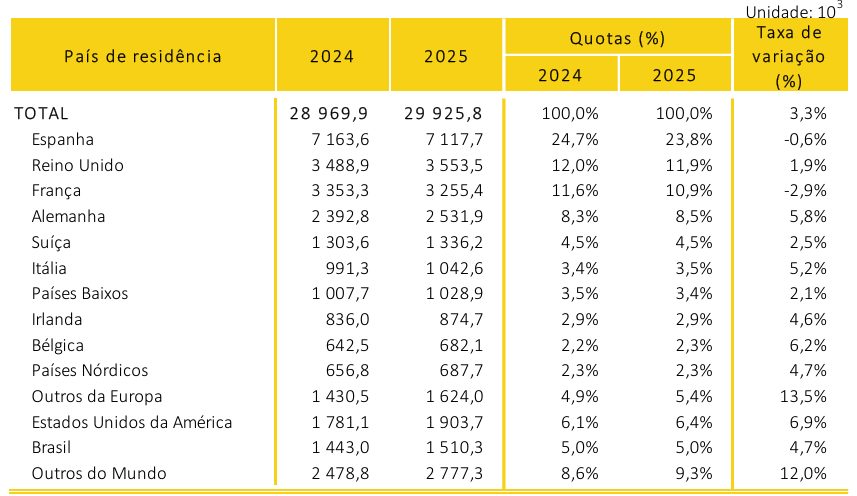
Portugal just wrapped up another record-breaking year. Nearly 30 million international travelers passed through the country in 2025, pushing arrivals to 29.9 million according to the latest data from Portugal's National Statistics Institute. That sounds like a victory lap, and it kind of is, but there's a plot twist buried in the numbers.
The growth rate dropped to 3.3% compared to 2024, a dramatic slowdown from the previous year's explosive 9.3% surge. Translation: the era of runaway tourism expansion in Portugal is cooling off. This matters for travelers because it signals a shift in how the country is positioning itself and what that means for your trip.
Spain still dominates, but the map is changing
Spanish visitors remain the biggest contingent, accounting for nearly a quarter of all international arrivals, even as that number ticked down slightly. The UK held steady in second place, bringing in 11.9% of foreign visitors and one of the few major markets that actually grew. France rounded out the top three, though French arrivals dipped by 2.9%.
What's genuinely interesting is where the growth is happening elsewhere. North American visitors jumped 6.9%, while lesser-known European markets and the rest of the world combined climbed 13.5% and 12% respectively. Poland, in particular, is surging, with overnight stays up 11.4%. This diversification matters because it means Portugal is actively working to welcome travelers from beyond its traditional Western European feeder markets.
British tourists stay longer than anyone else
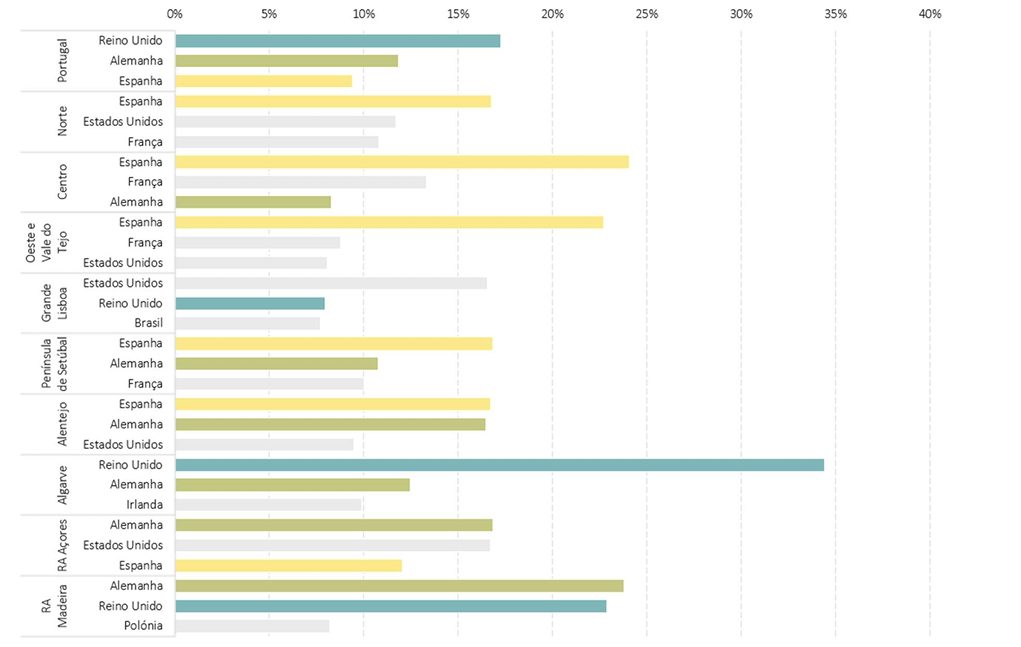
Here's a quirk worth noting: when you measure by overnight stays rather than raw arrivals, the UK jumps to first place. British visitors account for 17.3% of all foreign nights, suggesting they're not just dipping in for a quick Lisbon weekend. Germany follows with 11.8% of overnight stays, while the United States is strengthening its position with 9.1% and growing at a solid 5.3% annually.
For travelers planning trips, this hints at how different visitor profiles behave. Brits are settling in longer, spending more time exploring beyond the obvious highlights. If you're an American or German visitor, you're part of a growing wave, which means improving infrastructure and services aimed at your needs.
Portugal's tourists are spreading out across the year
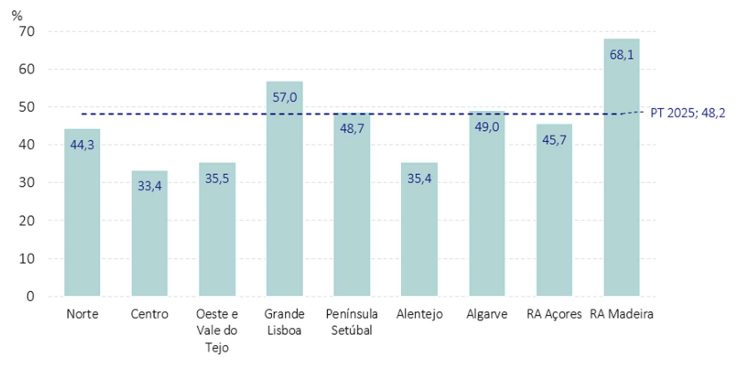
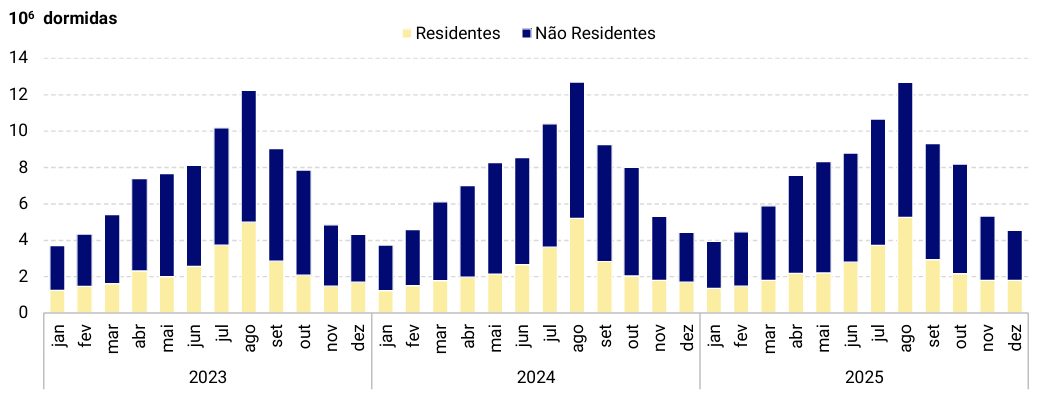
One of the biggest stories nobody's talking about is seasonality. For the first time since 2013, Portugal's tourism seasonality rate fell to 36.4%, meaning visitor traffic is distributed far more evenly throughout the year instead of crammed into summer months. This is intentional. The government has been aggressively promoting cultural and nature tourism in less-visited regions, encouraging travelers to venture beyond the Algarve and Porto.
Domestic travelers continue to show stronger seasonality than international visitors, with Portuguese residents favoring traditional summer and holiday breaks. But even their patterns are smoothing out. Spring and autumn are becoming legitimate seasons to visit, not just shoulder months to tolerate.
Locals are traveling more, but spending less
Portuguese residents took 26 million trips in 2025, a 13.7% jump from 2024. Most stayed within Portugal, with domestic trips climbing 14% to 22.2 million. Yet here's the catch: despite traveling more frequently, Portuguese tourists spent less per trip. Average spending dropped 4.2% to around 265 euros, with domestic trip budgets falling 2.9%.
This pattern mirrors what's happening globally. Travelers are moving more but economizing on individual journeys, whether because of tighter budgets or savvier trip planning. For anyone visiting Portugal, this suggests growing competition for your leisure dollar and more price-conscious fellow travelers on the ground.
Overtourism remains the real challenge ahead
The data comes with a warning. Strategic analysts are projecting Portugal could attract as many as 300,000 additional German visitors alone in coming years, potentially bringing 2.4 million more overnight stays. That's an enormous influx for a country already grappling with housing shortages and short-term rental pressures in its most popular neighborhoods. Similar pressures are reshaping Spain, where authorities are openly debating tourism caps.
The Portuguese government is explicitly steering new visitors toward central Portugal and less-frequented regions to relieve pressure on Lisbon, Porto, and the Algarve. That's actually good news for curious travelers willing to venture off the main trail. You'll find fewer crowds, more authentic experiences, and places where tourism dollars genuinely improve local economies rather than inflate housing costs.
Portugal's cooling growth rate is not a failure, it's a reality check. The country hit a ceiling and is now learning to manage it. For travelers, that means a travel destination entering a more mature phase where quality might trump quantity, where visiting in shoulder seasons becomes genuinely appealing, and where exploring beyond the big three cities offers the most rewarding experiences.