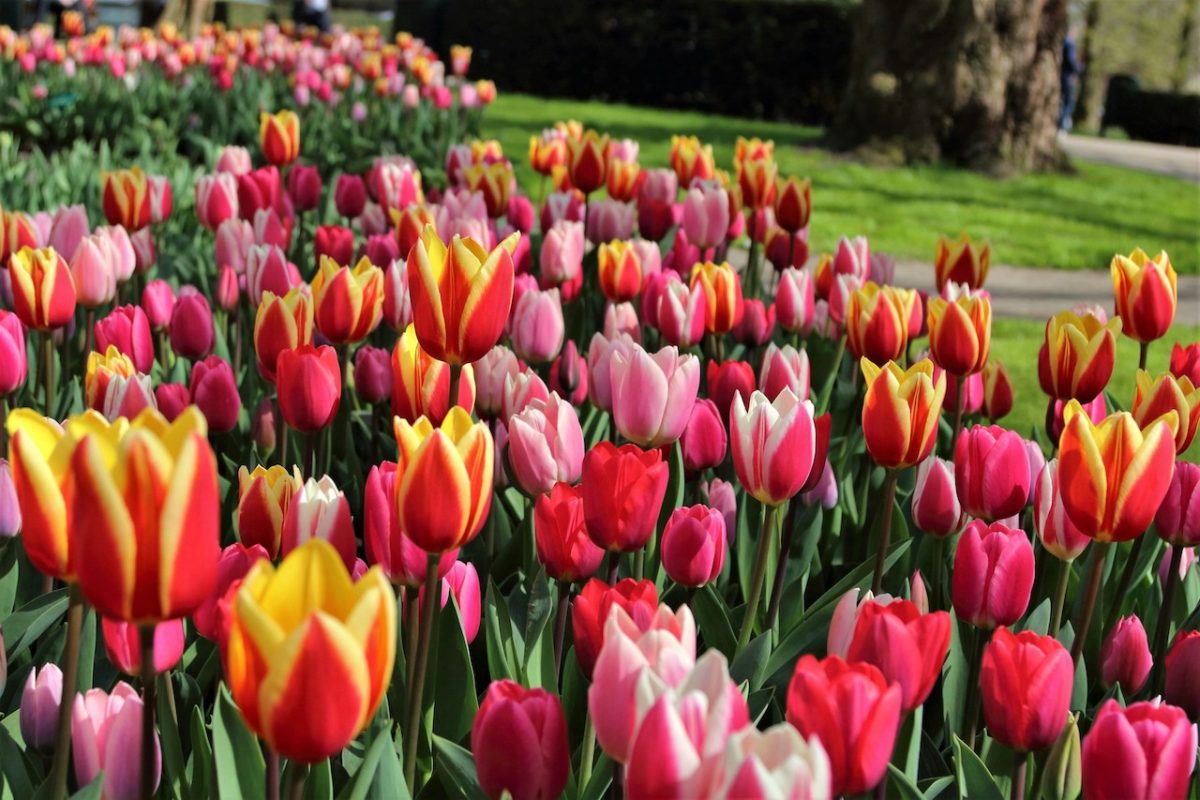
Spring arrived in South Holland on March 19, and it arrived in explosive colour. Keukenhof, the Netherlands' flagship flower park, officially unlocked its 2026 season to crowds eager to escape the last grey days of winter. Sunny weather had already lured visitors to queue before dawn, and by mid-morning the 32-hectare gardens were alive with people moving between blooming pavilions and manicured gardens that look almost unreal in their precision.
What you're walking into is less a park and more a horticultural laboratory. Seven million spring bulbs cover the grounds, cultivated by over 100 growers and arranged by a team of roughly forty gardeners who spent last autumn planting millions of individual bulbs to engineer the exact sequence of blooms you'll see over the next eight weeks (the park runs until May 10). The result is colour orchestrated down to the week. Early tulips are already showing their faces. By April, you'll see a different cast of characters entirely.
The scale alone deserves respect. More than 500 growers present 800 varieties of flowers across the property, including orchids, daffodils, hyacinths, irises, and lilies. Twenty-plus flower shows rotate through pavilions, with the season kicking off this week at the Oranje Nassau Pavilion, where Dutch growers displayed their rarest award-winning varieties. This isn't casual gardening. These are the results of centuries of selective breeding and billion-dollar agricultural infrastructure.
How tulips took over the world (starting here)
Tulips didn't originate in the Netherlands, though you'd never guess that from a visit to Keukenhof. They migrated from Central Asia through Persia and the Ottoman Empire before reaching Dutch shores in the late 1500s, thanks largely to botanist Carolus Clusius. Once they arrived, something clicked. The Dutch climate was perfect for bulb cultivation, and by the early 1600s, rare varieties were trading at eye-watering prices in what became known as Tulip Mania. A single exotic bulb could cost more than a house. The frenzy eventually cooled, but the Dutch obsession with breeding and exporting tulips never did. Today, the Netherlands controls the global tulip trade and continues to invent new varieties at a pace that would astound those 17th-century speculators.
The park itself carries centuries of Dutch history. Keukenhof began as a hunting ground and kitchen garden for nearby Teylingen Castle back in the 1400s (the name literally means "kitchen garden"). By 1641, a proper manor house stood on the estate. In the mid-1800s, landscape architects Jan David Zocher and his son Louis Paul Zocher reshaped the grounds in the English landscape style, adding winding paths and open sightlines that still define the park's character. Castle Keukenhof, the 17th-century estate building at the heart of the gardens, provides a stately backdrop. The park opened to the public in 1949, and its first season in 1950 drew over 236,000 visitors. Today, it regularly pulls 26,000 visitors per day.
Practical details for your visit
Keukenhof opens daily from 8 a.m. to 7:30 p.m. through May 10. Buy tickets online before you go. This cannot be overstated. Sunny spring days attract enormous crowds, and the queue to enter can become genuinely brutal if you show up without an advance booking. The park sits in South Holland, south of Haarlem and southwest of Amsterdam, in what locals call the Dune and Bulb Region. You can reach it by car, bus, or a combination of train and shuttle, which makes it a painless day trip from Amsterdam.
If you're timing a visit, check the full blooming schedule before you book. Different flowers peak at different weeks. Early crocuses are already visible, but the main tulip surge hits in mid-to-late April. By May, the park shifts toward lilies and other late-season bloomers. If you prefer fewer crowds and don't mind missing the peak tulip window, early May visits reward you with both solitude and excellent colour.
If Keukenhof captures your spring flower mood, consider timing a broader European tour around bulb season. Brussels hosts its own celebrated spring flower festival, and Sweden recently opened a 170-kilometre wildflower route that captures the continent's spring energy in a very different style. The Low Countries and Scandinavia truly become something else between March and May.
The Dutch spent centuries perfecting the art of growing flowers commercially and beautifully. Keukenhof is where that obsession reaches its most visible, most walkable expression. Eight weeks. Seven million bulbs. The window is open.