Europe's autumn travel season is shaping up to be a study in contrasts. While the overall pool of long-haul travelers has shrunk, the ones who are coming have already committed. New research from the European Travel Commission (ETC) and Interrail, the Long-Haul Travel Barometer 3/2026, shows that confirmed flight bookings to Europe are holding steady, even as fewer overseas travelers say they plan to visit between September and December.
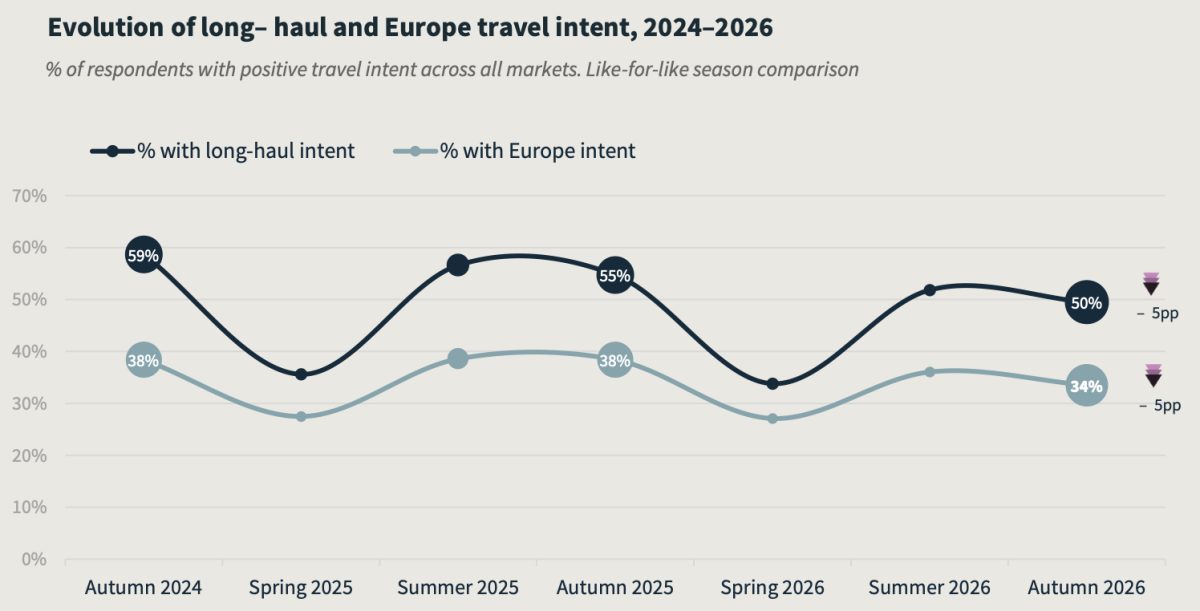
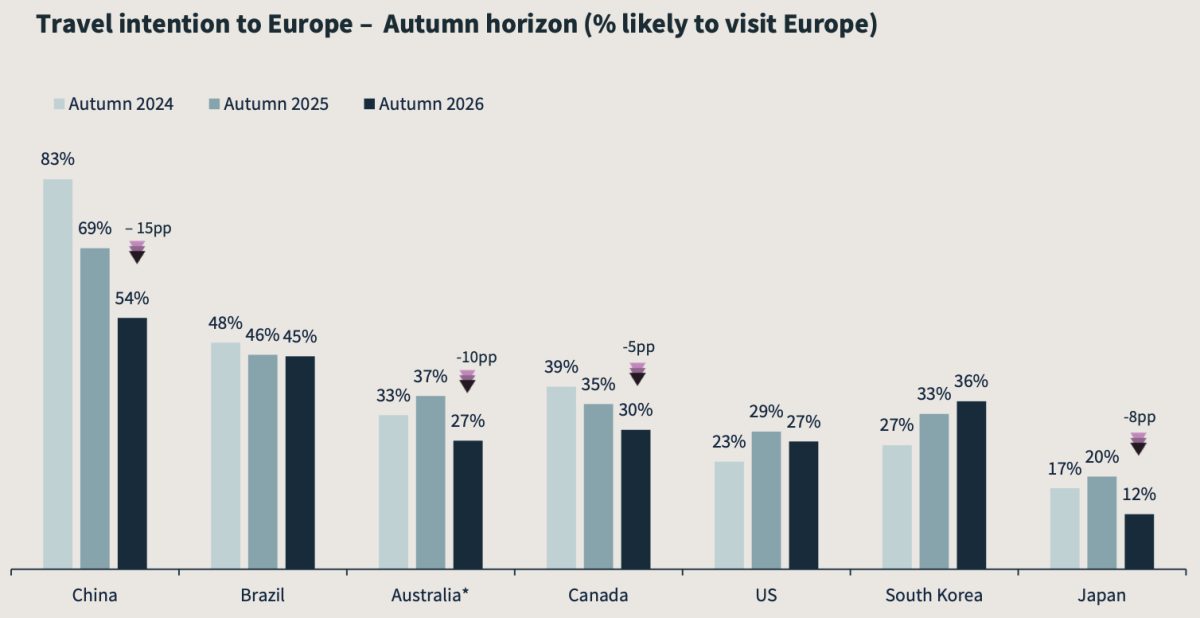
The survey, which tracks travel intentions across Australia, Brazil, Canada, China, Japan, South Korea, and the United States, found that half of respondents plan an overseas trip during the period, down from 55% last year. Interest in Europe specifically has dipped from 38% to 34%. But here's the twist: 17% of all respondents have already booked flights to Europe, exactly the same as last autumn. Because the pool of potential visitors is smaller, that means confirmed bookings now represent 52% of prospective visitors, up from 42% a year earlier. In other words, the travelers who are coming are more serious about it.
China remains the most enthusiastic market, with 54% planning a European trip and 37% already holding tickets, up from 33% last year. Brazil follows with 45% travel intentions. South Korea saw a modest uptick from 33% to 36%, though the ETC notes that change isn't statistically significant. The findings echo earlier evidence that European tourist arrivals are rising despite geopolitical tensions, with travelers increasingly prioritizing affordability and value.
Cost Still Looms Large
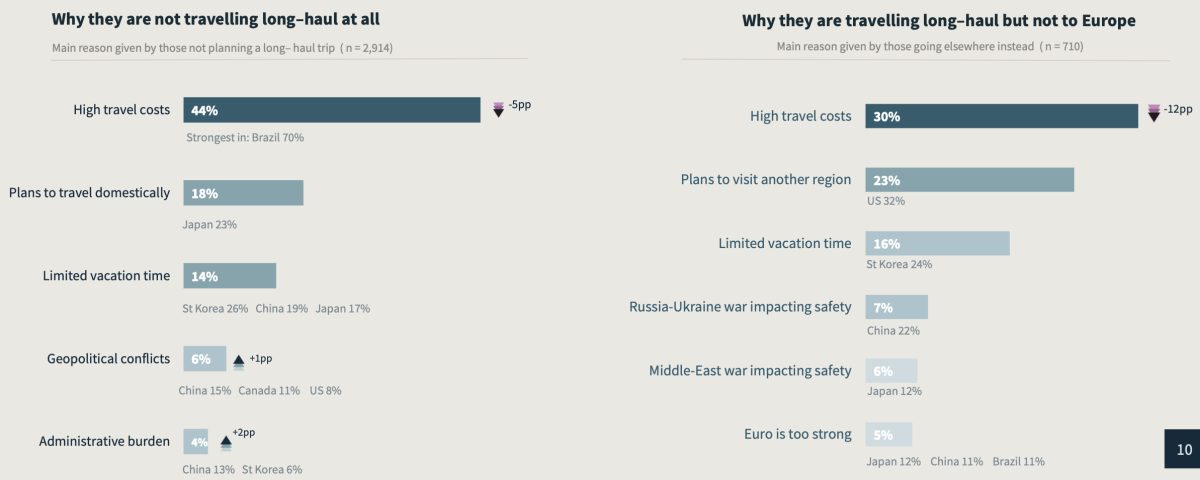
High travel costs remain the biggest deterrent, cited by 44% of those who aren't planning a long-haul trip, though that's down five percentage points from last year. Among travelers who are going overseas but skipping Europe, 30% point to cost as the barrier, a drop of 12 points. A preference for another region and limited holiday time also play a role.
For those who do make the journey, most plan stays of one to two weeks, with the largest group budgeting €100 to €200 per person per day. That's a practical range for many European destinations, especially if you mix pricier cities with smaller towns. If you're looking for value, consider destinations like Sofia, which just beat Lisbon and Copenhagen for Europe's best city break.
Multi-Country Itineraries and Rail on the Rise
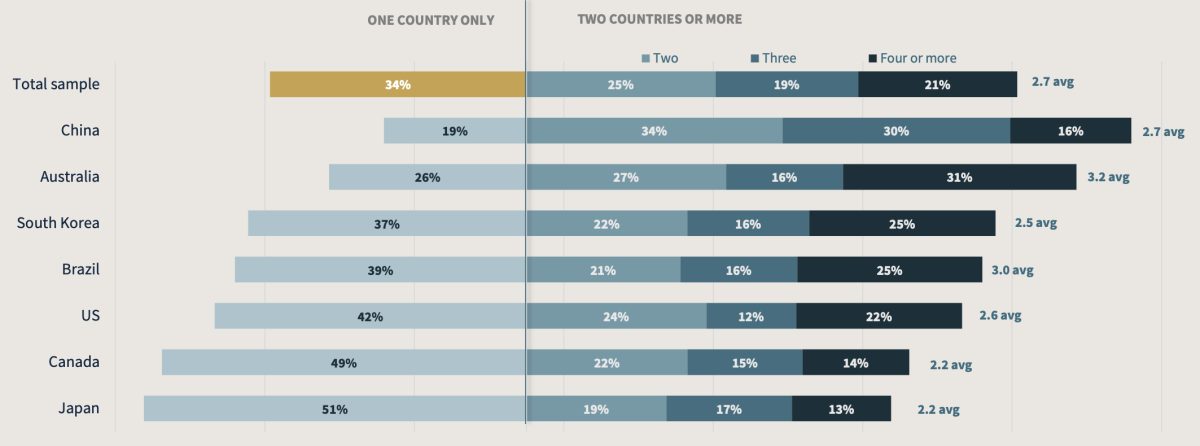
Europe's appeal has always been its variety, and that's reflected in the data. Two-thirds of prospective visitors plan to explore two or more countries, with the average itinerary covering 2.7 nations. Rail is a big part of the plan: 40% expect to use rail passes and 39% point-to-point tickets. Flights remain popular too, with 45% considering low-cost airlines and 44% full-service carriers. Europe's expanding autumn and winter flight connections offer even more options for getting around.
First-time visitors make up 53% of prospective arrivals, rising to 61% among Chinese travelers and 57% among Americans. That's a lot of fresh eyes on the continent. For those planning multi-country trips, the growing high-speed rail network is worth a look. Europe's high-speed rail dream just got a big political push, which could make train travel even more seamless in the coming years.
ETC President Miguel Sanz noted that connectivity and shared travel systems help reinforce Europe's appeal as a collective destination, making cooperation between countries central to its international promotion. The survey uses a new data collection panel, but the ETC says long-term trends across all markets are consistent with previous editions.
So what does this mean for travelers? If you're thinking about an autumn escape, you're in good company. The crowds may be thinner, but the commitment is real. And with rail passes and multi-country itineraries on the rise, Europe is ready to be explored as a whole, not just a collection of individual spots. For more inspiration, check out seven European cities where Halloween gets a local twist or autumn from orbit looks like a planet changing its mind.