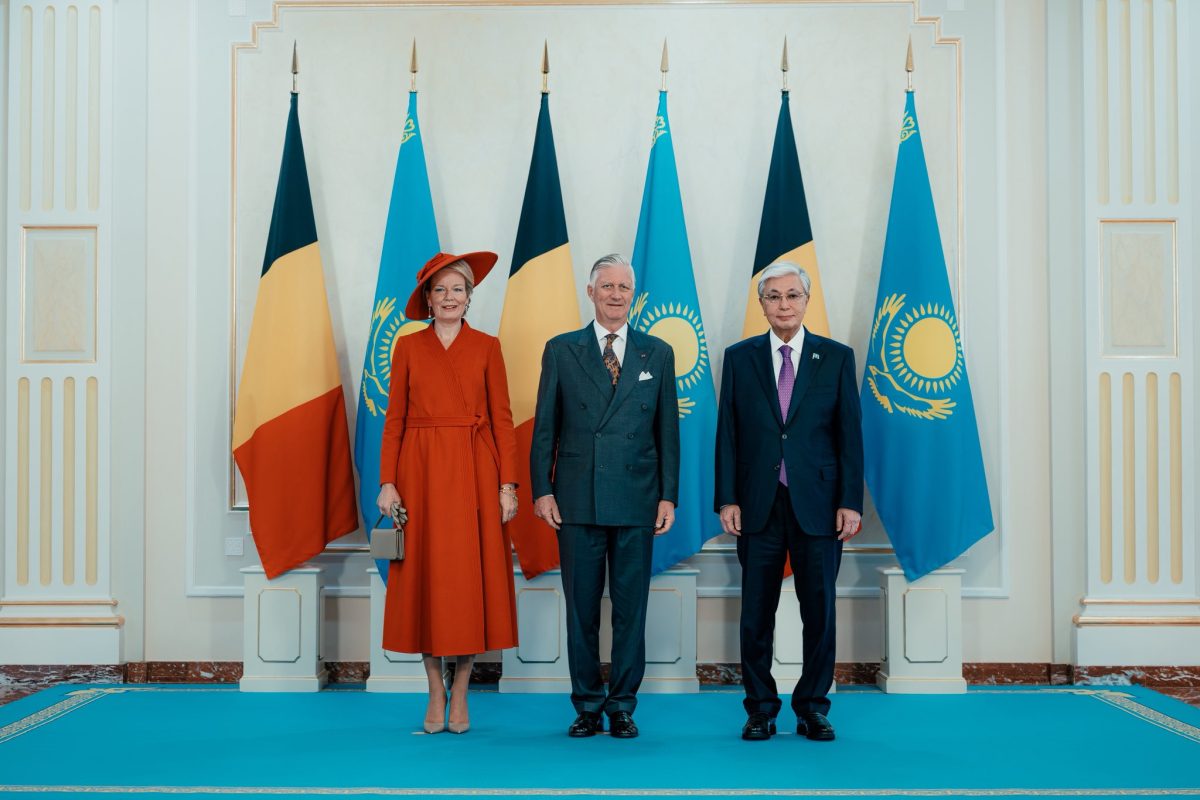
When King Philippe and Queen Mathilde touched down in Astana on October 12, 2026, they weren't just ticking off a diplomatic box. Their three-day state visit to Kazakhstan, the first ever by Belgian monarchs to Central Asia, sent a clear signal that this vast country is ready for its close-up. And for travelers, that could mean a whole new world of possibilities.
The royal program was packed with high-level talks, a business council, and cultural stops in both Astana and Almaty. But tucked between discussions on critical minerals and artificial intelligence was a surprising star: tourism. In his address to the Kazakh-Belgian Business Council, the King called the sector "an area with considerable potential for closer cooperation," praising Kazakhstan's "extraordinary landscapes and rich cultural heritage." It's the kind of royal endorsement that money can't buy.
And the numbers back it up. Kazakhstan welcomed 15.7 million foreign visitors in 2025, with 11.1 million of those classified as tourism visits. Investment in the sector has hit roughly €2.4 billion, and the country added 179 new accommodation facilities last year alone, bringing the total to 4,482 places to stay. That's over 232,000 beds, a serious upgrade for a destination that's often been overlooked.
So what will Belgian travelers find? Astana, the capital, is a showcase of futuristic architecture, with the Bayterek Tower and the National Museum offering a deep dive into Kazakh history. Almaty, the former capital, is the cultural heart, with its leafy streets, bustling bazaars, and the dramatic Trans-Ili Alatau mountains looming just outside the city. Skiing, hiking, and mountain excursions are all within easy reach, making it a perfect base for adventure. For a deeper look at how these cities are positioning themselves, check out our earlier piece on Europe's new tourism crown contenders.
Culture was a key thread throughout the visit. At the National Museum in Astana, works by Belgian artist James Ensor were displayed alongside Kazakh heritage pieces, a tangible symbol of the growing artistic dialogue. The royal couple wrapped up their trip at the Almaty Museum of Arts, where a performance co-produced with KANAL-Centre Pompidou in Brussels showed how far the institutional ties have come. These exchanges aren't just diplomatic niceties; they're building bridges that travelers can cross.
Beyond the museums, the visit also put a spotlight on transport. The Trans-Caspian International Transport Route, better known as the Middle Corridor, was a major talking point. King Philippe called for closer integration with European ports and railways, and President Kassym-Jomart Tokayev proposed practical cooperation between the Port of Antwerp-Bruges and Kazakhstan's Caspian ports of Aktau and Kuryk. For travelers, this could eventually mean smoother overland journeys across Central Asia, though for now, flying remains the most practical option.
Education is another bridge being built. The Kazakhstan-Belgium Rectors' Forum brought together 29 universities, resulting in more than 20 agreements on academic mobility and joint research. Ghent University, KU Leuven, and the University of Mons are all on board. That's good news for students and researchers, but it also hints at a deeper cultural exchange that could enrich any visit.
For the curious traveler, Kazakhstan offers something genuinely different. It's a country of steppe and sky, of ancient traditions and hyper-modern cities, of warm hospitality and vast, empty spaces. The royal visit has put it on the map in a new way. As the King said, more Belgians will discover this country in the coming years. Maybe it's time you did too. If you're planning a trip, don't miss our guide to Belgium's own hidden natural wonders for a contrast, or consider how global tourism's rebound is shaping destinations like this.