Picture this: you're heading from Dublin's bustling streets to Belfast's Victorian architecture, but instead of struggling through traffic or wrestling with flight bookings, you're sipping coffee aboard a brand new train. That's the future about to unfold on the Irish railways, thanks to a jaw-dropping 700-million-euro makeover officially announced in May.
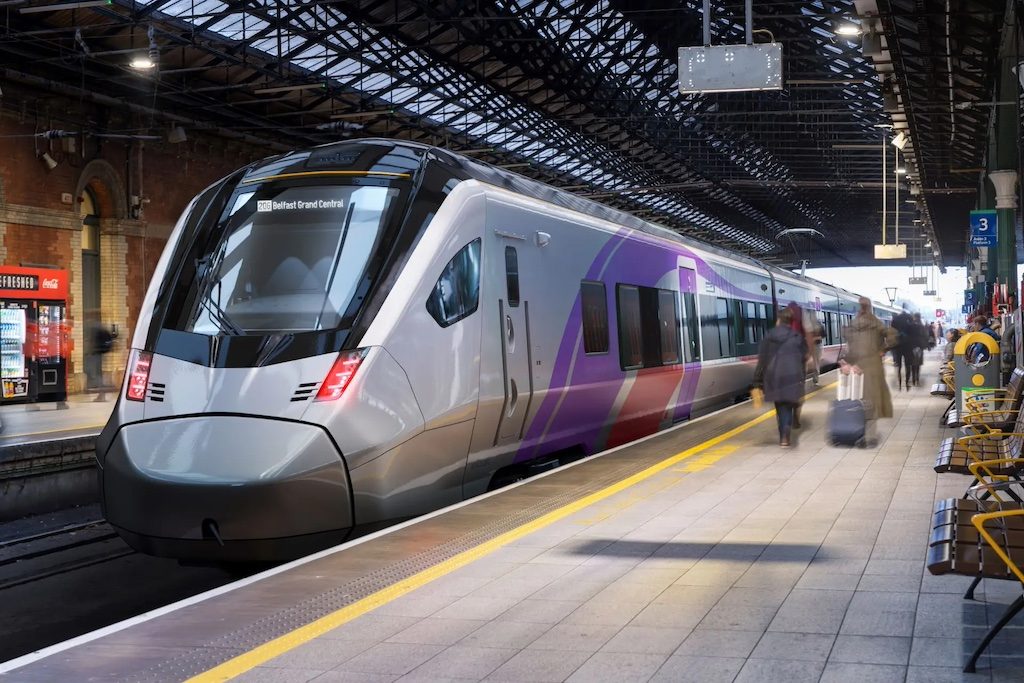
Leaders from both sides of the border, Ireland's Taoiseach Micheál Martin and Northern Ireland's First Minister Michelle O'Neill, unveiled the vision at Belfast Grand Central station. The plan is audacious: eight new trains manufactured by Swiss firm Stadler will revolutionize the 180-kilometer route that currently takes two hours and 15 minutes. By 2028, you'll complete the journey in under two hours, with as many as 16 departures daily instead of the current handful.
What you'll actually experience on board
The new Enterprise trains aren't just faster. They're designed for actual human comfort. Each one seats 400 passengers, with power outlets and USB charging at every seat because apparently someone finally asked travelers what they actually want. There's a dining car and a bar area for those longer journeys. Step-free interiors and level boarding eliminate the awkward shuffle up high stairs with luggage, making travel genuinely accessible for everyone.
The trains run on a tri-mode system, switching between electric, diesel, and battery power depending on the route section. That means quieter rides and significantly lower carbon emissions, with full electrification on the horizon. For travelers concerned about the planet, this matters.
Why this matters beyond just trains
The Belfast-Dublin corridor is home to two million people, and demand for this connection has been climbing steadily. When hourly departures launched two years ago, passenger numbers jumped 40 percent. Officials clearly read the room: people want this connection to work. The investment signals confidence that better infrastructure creates better business, tourism, and cross-border opportunity.
Governments on both sides are backing this heavily. The Irish Government and Northern Ireland Executive are pumping in 698 million euros, while the UK and EU's PeacePlus funding program contributes 165 million more. It's the kind of joint effort that shows how serious the commitment is.
The current route winds through Drogheda, Dundalk, Newry, and Portadown, making stops that feel like a proper journey rather than a bullet-point itinerary. That character doesn't disappear with the new service, though things move considerably faster.
When you can actually book these trains
Here's where patience comes in: 2028 is the target date for these new trains to roll out. That gives Irish Railways and Translink time to build the necessary infrastructure upgrades and get everything running smoothly. If you're planning a trip to the island in the next few years, the current service still works fine, though you might envy travelers in a few years who'll make the same journey in less time.
This isn't an isolated infrastructure project, either. Similar rail investments across Europe are reshaping how people move between cities. Prague to Copenhagen is finally connected by direct train again, and The Hague is getting back on Europe's train map by 2029. The momentum toward better rail connectivity is real and accelerating.
For travelers, this matters because it changes how you plan trips around the island. A quick hop from Dublin to Belfast becomes genuinely quick. Business travelers get serious time back. Tourists get more flexibility. The economic corridor connecting these two cities opens up in tangible ways.
Whether you're a rail enthusiast who gets excited about tri-mode trains or just someone tired of sitting in traffic between major cities, 2028 looks promising. Until then, the existing service still connects two genuinely fascinating cities with character, history, and plenty to explore. Just know that soon, getting between them will feel a lot less like a commitment and a lot more like simply stepping on board.