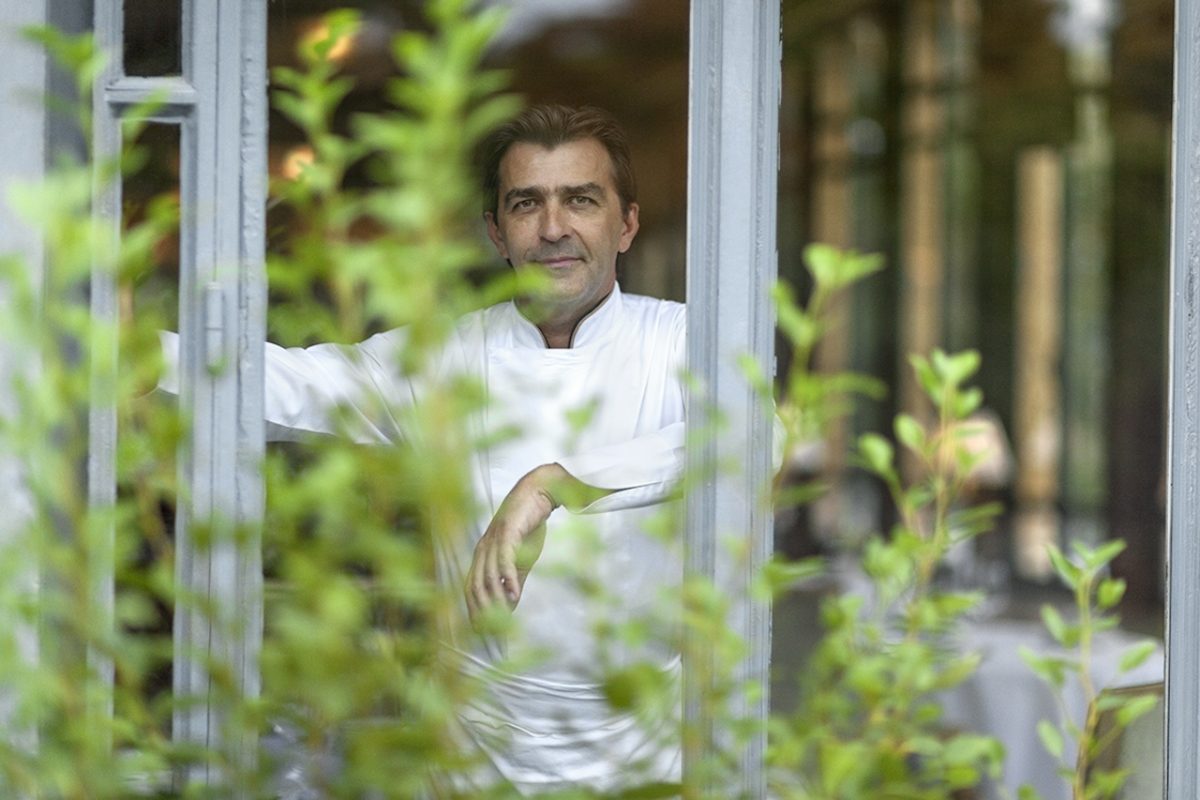
In March 2026, Yannick Alléno crossed a threshold that few chefs ever reach. He claimed his 18th Michelin star, surpassing Alain Ducasse to become the most decorated chef on the planet. The achievement landed almost quietly, announced without the fanfare you might expect for such a record. That restraint tells you something essential about Alléno: he builds empires in the shadows.
The Michelin Guide has shaped culinary prestige since 1926, when those glowing stars first began sorting the world's restaurants into tiers of excellence. Each year, national committees gather to crown new stars and reaffirm old ones, a ritual that turns restaurant reservations into pilgrimages. This year, France's edition awarded Alléno his latest star for Monsieur Dior at 30 Montaigne in Paris, a venue that opened just months before earning recognition. Such rapid elevation is rare. The timing, combined with Alléno's new title as the most-starred chef globally, cemented 2026 as his coronation year.
What makes Alléno unusual is not just his star count, but his invisibility. Internationally, few outside culinary circles know his name. This is by design. He guards his privacy fiercely and lets his food do the talking instead of his personality. Behind the scenes, however, his influence runs deep. Over four decades, he has mentored more than 40 chefs who went on to earn their own stars. In 2024, the Michelin Guide recognized this legacy by awarding him the Chef Mentor Award, an honor few receive.
Alléno's reputation rests on technical mastery that borders on obsessive. His sauces have become legendary in fine dining circles, the product of extraction techniques that pull flavor from ingredients with scientific precision. He pioneered methods in fermentation and cryoconcentration (freezing ingredients to intensify their essence) that other chefs now chase. These innovations don't make headlines, but they reshape how professional kitchens work.
Where to Find His Restaurants
Alléno operates 21 restaurants globally, with 10 currently holding at least one Michelin star. His portfolio spans luxury hotels, exclusive resorts, and standalone destinations. Two restaurants wear three stars: Alléno Paris at Pavillon Ledoyen in the 8th arrondissement, and Le 1947 à Cheval Blanc in Courchevel, high in the French Alps. Paris itself hosts three of his starred venues under one roof at Pavillon Ledoyen, a rare concentration of excellence.
Beyond France, his reach extends across Europe and the Gulf. L'Abysse operates in both Paris and Monte-Carlo with two stars each. Pavyllon, his more relaxed dining concept, has locations in Monte-Carlo, London (at the Four Seasons), and Paris. In Dubai, STAY at One&Only The Palm serves contemporary cuisine with a Gulf sensibility. La Table de Pavie in Saint-Emilion brings his touch to Bordeaux wine country. Each restaurant maintains Alléno's signature approach while adapting to its setting and clientele.
When asked why he pursues this relentless expansion, Alléno offered a disarmingly simple answer to CNN Travel. "I pursued this profession to give others pleasure and happiness," he said. "I'm just beginning my career." This from a man with nearly two decades of stars to his name. It suggests ambition that transcends accolades.
What's Next for Alléno
Even at the peak of his recognition, Alléno refuses to plateau. In 2026, he took control of COMO Le Beauvallon in Saint-Tropez, a newly opened property that slots into his growing hospitality empire. More ambitiously, he accepted an appointment as executive chef of the Orient Express Corinthian, the world's largest sailing yacht. Aboard this floating palace, he oversees not one kitchen but five restaurants, each with distinct menus and identities.
This yacht project encapsulates Alléno's philosophy. He does not simply cook; he creates dining ecosystems. Like other luxury ships reimagining what travelers expect from ocean voyages, the Corinthian positions dining as the centerpiece of the voyage. For passengers, meals become the memory, not just a service between ports.
For travelers seeking Alléno's food, the barrier remains booking. His Paris restaurants demand reservations months in advance. The London location at Four Seasons offers slightly better access but still carries the prestige tax. Monte-Carlo and Dubai options provide alternatives outside France's gravitational pull. None come cheap. But for those who believe that food is art, that technique matters, and that precision in flavoring represents a form of genius, a meal at one of his tables becomes a pilgrimage worth taking.
Yannick Alléno may never become a household name. That suits him fine. He traffics in excellence for those who recognize it, not for fame. The 18 stars simply confirm what his peers already know: he remains one of the finest chefs alive, expanding his vision while the world finally catches up.