Imagine being a traveler in 2020. Planes stopped flying. Hotels closed. The entire world seemed to pause. Yet here we are in 2026, and the travel industry doesn't just recovered, it shattered records. Last year, travelers spent $2.02 trillion globally on trips. That's not a coincidence. It's a pattern.
The World Travel and Tourism Council just released a major study that examined 100 significant crises spanning four decades. The findings, unveiled aboard the Crystal Serenity sailing through the Suez Canal in Egypt, sent a clear message: travel always comes back. And in most cases, it comes back stronger.
What makes this research particularly striking is what it reveals about the variables that actually matter. Recovery isn't random. The study found that the timing and strength of any comeback depends almost entirely on policy choices. Yes, natural disasters, terrorism, pandemics, and financial crises all shake the tourism sector. But none of them kill it permanently. The question isn't whether destinations recover. It's how quickly they choose to make it happen.
The Data Proves It
The numbers tell a compelling story. After the 2004 tsunami devastated Phuket, the beach town didn't just rebuild. By 2010, it was welcoming record numbers of visitors. Tunisia was hit hard by terrorist attacks in 2015, losing tourism revenue overnight. Within three years, the country had bounced back to 8.3 million arrivals. Nepal faced a similar crisis after the earthquake that same year and rebounded similarly.
The pandemic tested everything. In 2020, international arrivals collapsed by 72 percent. This wasn't a small dip. This was the tourism sector falling off a cliff. Yet by 2024, visitor numbers had returned to 2019 levels. By 2025, they exceeded them. Today, travel and tourism generates $11.6 trillion annually, roughly 10 percent of global GDP, and supports 366 million jobs worldwide.
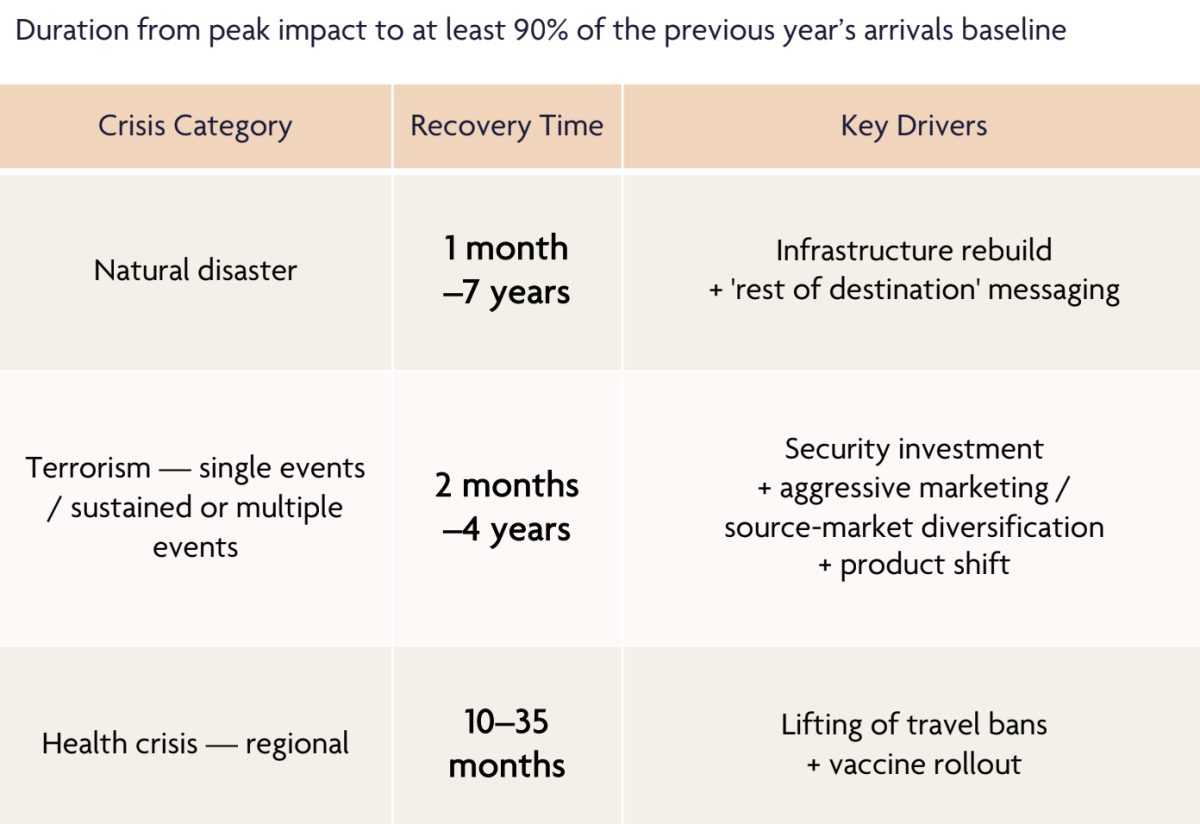
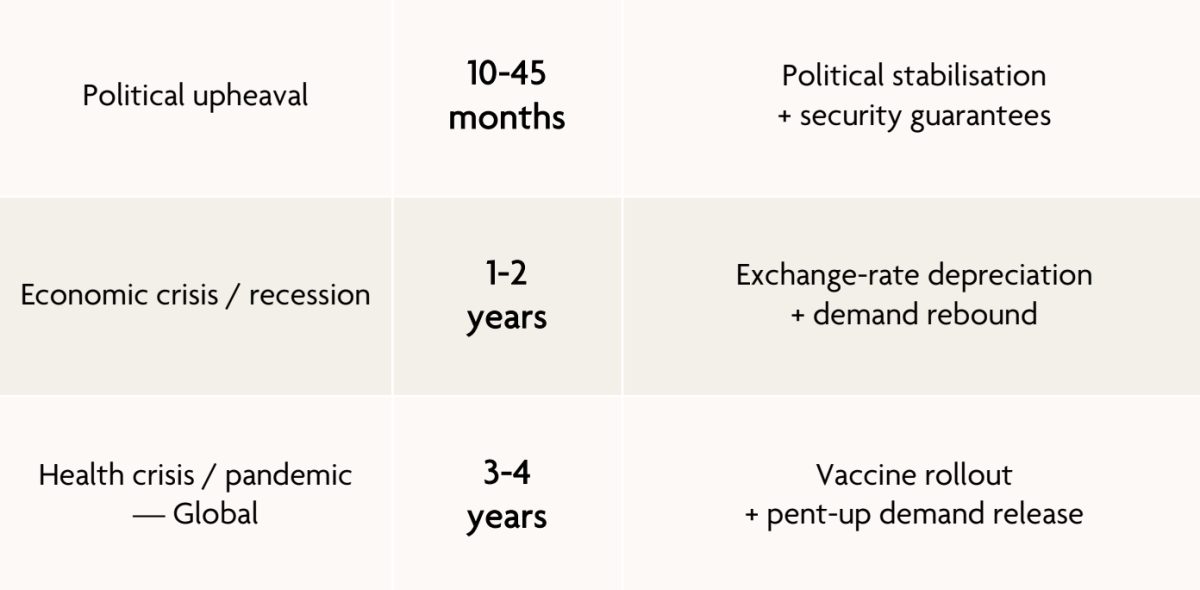
Recovery timelines vary by crisis type. Natural disasters range from one month to seven years, depending on infrastructure damage. Terrorist attacks typically require two months to four years. Regional health crises take between 10 and 35 months. Economic recessions usually resolve within one to two years. Europe's tourism just shrugged off a regional crisis, demonstrating how travelers adapt their choices rather than abandoning travel altogether.
What Actually Drives Faster Comebacks
The research identified four pillars for resilient recovery. First, destinations must restore traveler confidence quickly. Second, business continuity matters, especially for small operators and air connectivity. Third, institutions need to respond decisively and without delay. Fourth, disruption must become an opportunity for structural change and diversification.
Destinations that emerged stronger weren't lucky. They combined three things: strong leadership, coordination between government and private business, and sustained support for the small hotels, restaurants, and tour operators that form the backbone of any tourism economy. These aren't fancy strategies. They're practical, unglamorous choices to keep the sector functioning during the worst moments.
How Emirates turned crisis into record profits offers a compelling case study in how one organization transformed a downturn into advantage through swift decision-making and strategic investment.
Why This Matters Right Now
The report was launched against a backdrop of ongoing geopolitical tension in the Middle East, with disruptions in the Strait of Hormuz and the Red Sea creating fresh uncertainty for travel routes and pricing. Yet the data suggests something unexpected. Rather than abandoning travel altogether, travelers are simply shifting destinations. Europeans aren't staying home. They're choosing new places to explore.
This points to something fundamental about human nature. Travel isn't a luxury that vanishes when times get tough. It's woven into how we live. Crises don't kill the desire to explore. They reshape it. They force the industry to invest in new infrastructure, develop overlooked regions, and build stronger foundations for future growth.
For anyone planning a trip right now, this research offers real reassurance. The destination you're eyeing might face challenges. But the industry's track record over the past 40 years proves it will recover. The infrastructure you're counting on will hold. The hotels will reopen. The flights will resume. What the data actually reveals is that tourism has resilience built into its DNA. The only real question is what policies decision-makers implement to accelerate the bounce-back.