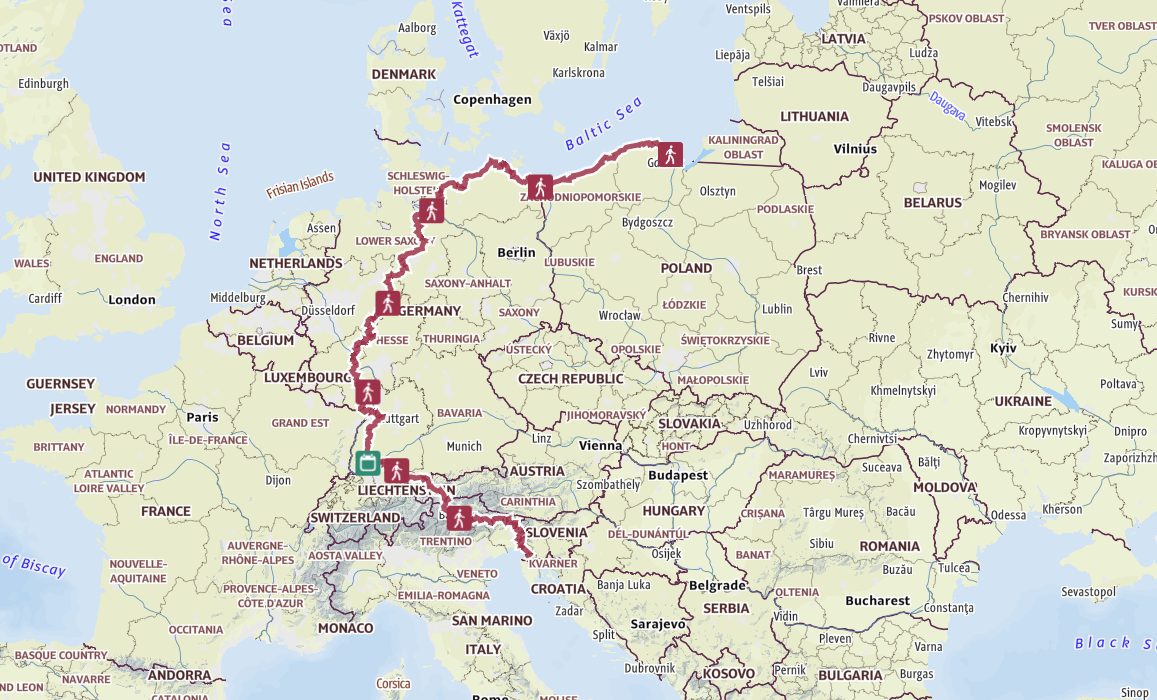
Outdoor brand Jack Wolfskin just launched something that might redefine your relationship with European hiking. The Wolf Trail is a 3,493-kilometre thru-hiking route that connects Poland's Baltic coast all the way to Trieste on Italy's Adriatic Sea, threading through six countries without a single tourist coach in sight.
The route is brilliant in its simplicity. Rather than carving thousands of kilometres of brand new path, the Wolf Trail weaves together established European long-distance routes like the E1, E9 Coastal Path, and the Via Alpina into one flowing adventure. Think of it as the greatest hits of European hiking, arranged so you can walk from sand to sea across an entire continent.
From Polish beaches to Alpine summits
The journey starts in Hel, a small town on Poland's northern coast, and immediately immerses you in landscape variety. The opening section passes through sandy beaches, coastal forests, and Slowiński National Park before pushing westward into Germany. This first 430-kilometre stretch feels gentle, which is kind for what comes next.
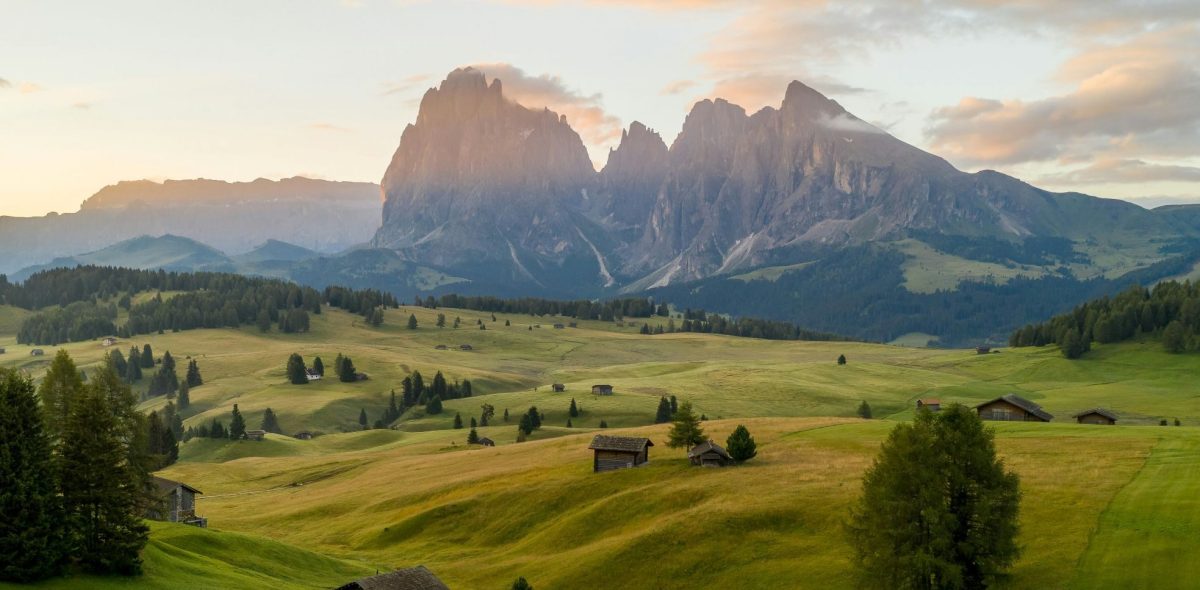
The trail gradually turns mountainous. After crossing German plains and wine country, including the famous Palatinate region, hikers encounter the Black Forest and Lake Constance. Then the serious terrain begins. The final 558 kilometres between Oberstdorf and Trieste demand real mountain chops, crossing the Dolomites and Julian Alps through passes between 2,500 and 3,000 metres. UNESCO-listed landscapes and Triglav National Park rank among the highlights as the route finally descends toward the Adriatic.
The sheer elevation gain throughout the complete journey equals climbing Mount Everest nine times from sea level. That sounds punishing until you remember you have four to six months to do it.
Seven sections let you hike at your own pace
Not everyone has half a year to disappear into the wilderness. The route splits into seven manageable sections ranging from 373 to 573 kilometres each. Some people will tackle the whole thing as one glorious push. Others will return year after year to complete one section at a time, slowly collecting the miles and memories. Europeans are increasingly choosing multi-stage adventures like this, breaking up long-distance hiking across multiple trips.
- Baltic Start: 428 km
- Rivers & Plains: 543 km
- The Green Heart: 487 km
- Forests & Wine: 583 km
- High Watch: 581 km
- Alpine Gateway: 394 km
- Alpine Crossing: 591 km
Multiple towns and villages sit along the route, meaning you're never far from resupply and accommodation. This isn't a wilderness slog where you pitch a tent wherever you collapse. The trail works with local infrastructure, using approved trekking camps, mountain huts, and village lodging. It's thru-hiking with a safety net, which appeals to serious hikers and curious travelers alike.
Timing matters when mountains are involved
The biggest wildcard is weather. Northern sections play nice most of the year, but the Alps demand respect. Alpine passes can be exposed to brutal conditions and heavy snow from autumn through early spring. If you're planning a full thru-hike, schedule it carefully. Late spring through early autumn offers the best window, though even summer can bring surprises at elevation.
Canadian long-distance backpacker Lauren Roerick tested the complete route to assess navigation and practicality. Four renowned thru-hikers are scheduled to document their full journeys starting late April, sharing real-time footage of conditions and trail challenges as they go. Following along might just convince you to book your own adventure.
What makes this trail worth the effort
Beyond the physical challenge, the Wolf Trail offers something increasingly rare: a slow journey through genuinely different European regions. You'll pass through Baltic fishing towns, German wine valleys, Alpine villages that feel frozen in time, and finally Trieste, a multicultural port city that doesn't quite feel European but somehow does anyway. Travelers are increasingly choosing experiences over souvenirs, and hiking the same trail for months absolutely counts.
Whether you're planning a four-month epic or a two-week section hunt, the Wolf Trail proves that Europe's best experiences sometimes require slow feet and open eyes. Start planning now, because trails this thoughtfully designed don't stay quiet for long.