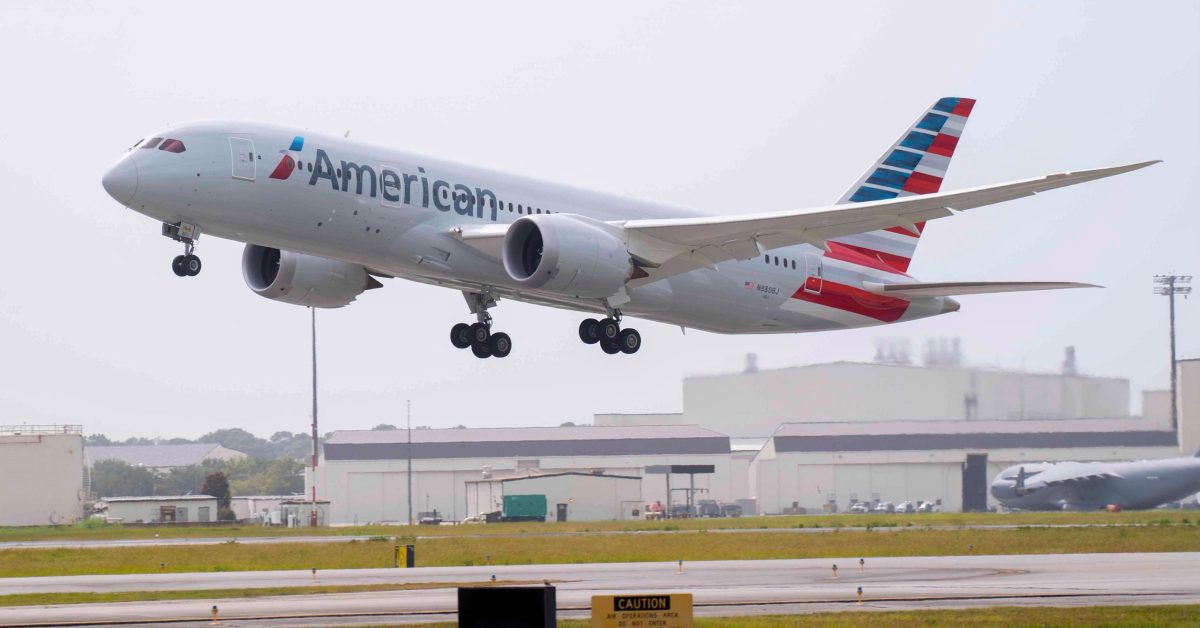
Landing is usually the most routine part of any flight. But for the 234 passengers aboard American Airlines Flight 41 from Barcelona to Chicago, the touchdown on Tuesday afternoon turned into a moment none of them will forget.
The Boeing 787-800 touched down at O'Hare around 2:30 pm local time. Almost immediately, something felt off. Passenger WoodJohn Abbate told CBS News Chicago that the landing was accompanied by a sound he had never heard before on a plane. "It was a nice big boom," he said. Fellow travelers were shocked, though not panicked, he added.
The crew had reported a possible brake issue before landing. Air traffic control audio captured one pilot saying, "We've got a right brake that might be dragging. We'd like them to follow us to the gate." After touchdown, the aircraft blew tires, and emergency responders met the plane on the runway as a precaution.
Passengers were taken off the aircraft via stairs on the tarmac and bused to the terminal. No injuries were reported from the incident itself, though one person who had become unwell during the flight was taken to hospital and later reported to be fine.
American Airlines confirmed the plane was taken out of service for inspection. The airline apologized to customers and thanked its team for their professionalism. The Federal Aviation Administration will investigate, as it does with any such event.
This wasn't an isolated scare. At least four planes blew tires at O'Hare in a two-week span in August 2026, affecting American, United, and Southwest. Federal authorities have not found a single common cause. The incidents happened on different runways, during different phases of flight, and under different conditions. Possible factors include brake malfunctions, weather-related stress on equipment, runway debris, or plain bad luck.
While tire problems sound dramatic, they are relatively rare in the broader picture of aviation safety. Data from the National Transportation Safety Board over the last two decades shows tire-related issues appear in roughly 0.3 to 0.6 percent of recorded aviation events. Still, for the passengers on that flight, the experience was anything but routine.
If you're flying soon, it's worth remembering that crews train for these scenarios and handle them with calm precision. The fact that everyone walked away without injury is a testament to that. For more on how airlines manage unexpected mid-flight issues, check out our story on a power bank fire that forced an IndiGo flight to land early.
O'Hare has had its share of runway drama this year. But travelers shouldn't overthink it. The aviation system is built to absorb these shocks, and the response to this incident showed exactly how that works. If you're planning a trip and want to avoid stress, consider booking flights with extra buffer time, especially through busy hubs like Chicago. And if you're curious about how new airport infrastructure might change your future travels, take a look at Sydney's new airport and its 24-hour runway.
For now, the passengers of Flight 41 have a story to tell. The plane is grounded, the investigation is underway, and the skies remain as busy as ever. The FAA will determine the exact cause, but for travelers, the takeaway is simple: even when things go wrong, the system is designed to keep you safe.