The news from climate scientists has been grim lately. August 2026 tied as the hottest month ever recorded, with global average surface temperatures hitting 16.96°C, a full 1.65°C above pre-industrial levels. The Paris Agreement's dream of holding warming to 1.5°C has slipped out of reach, at least temporarily. But a new report from the UN Environment Programme (UNEP) insists that overshooting 1.5°C is not the end of the story. We might still pull the planet back to that threshold by 2100, if we act with unprecedented speed.
The Emissions Gap Report 2026, titled "The Point of Return," lays out a timeline that would keep the overshoot to a manageable 1.7 to 1.8°C around mid-century, then gradually bring temperatures back down to 1.5°C by the end of the century. The catch? Global greenhouse gas emissions must drop by 18% by 2030, 45% by 2035, and 69% by 2040, all relative to 2025 levels. That's a steep cliff, and current national pledges would only deliver a fraction of those cuts.
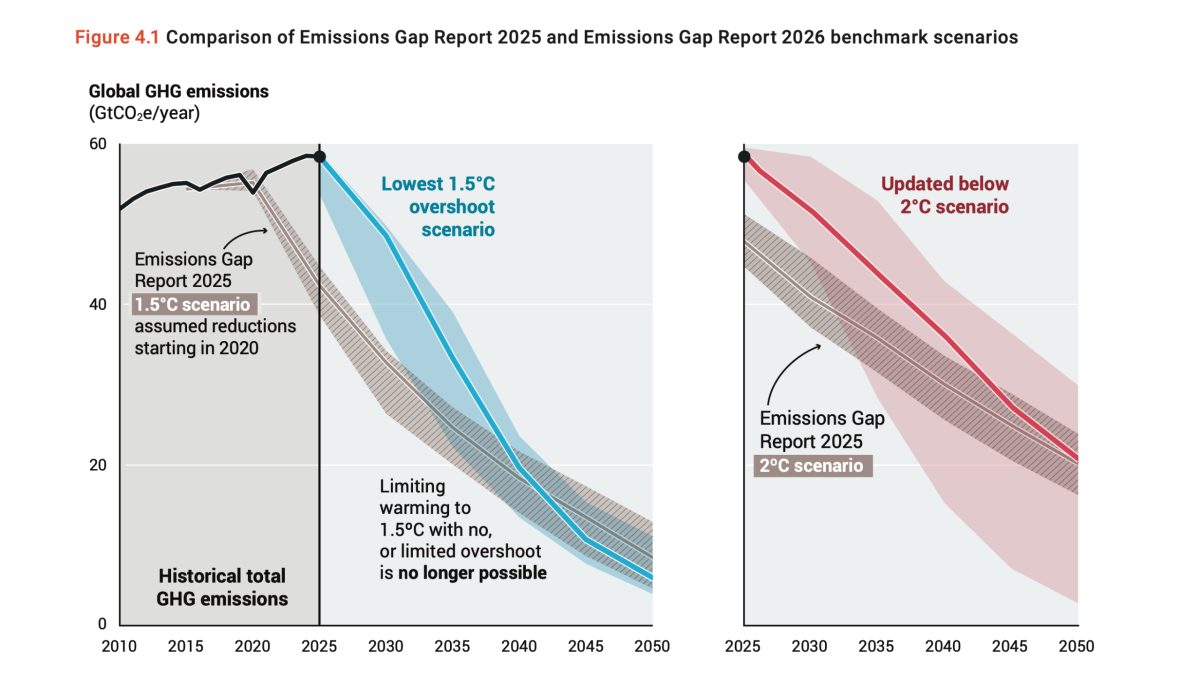
UN Secretary-General António Guterres framed it as a challenge, not a concession. "Overshoot is not surrender," he said. "We can still keep it as small and as short as possible, and bring temperatures back below 1.5 degrees by the end of the century." The report gives roughly a 50% chance of success if the guidelines are followed. That's not a guarantee, but it's a fighting chance.
For travelers, this isn't abstract. The deadly floods, heatwaves, and wildfires that have disrupted trips and devastated communities this year are direct consequences of the warming we've already locked in. Every fraction of a degree matters, and the report warns that every five years of delay at current emission levels adds about 0.1°C to peak warming. The window for action is closing fast, but the report also points to reasons for hope.
Renewable energy has boomed since the Paris Agreement was signed in 2015. Coal and oil are growing slower than projected, and climate policies have already cut emissions in many places. "We have a wealth of success stories showing that emissions can be cut quickly," said Inger Andersen, UNEP's Executive Director. The tools exist. What's missing is the political will to deploy them at the scale required.
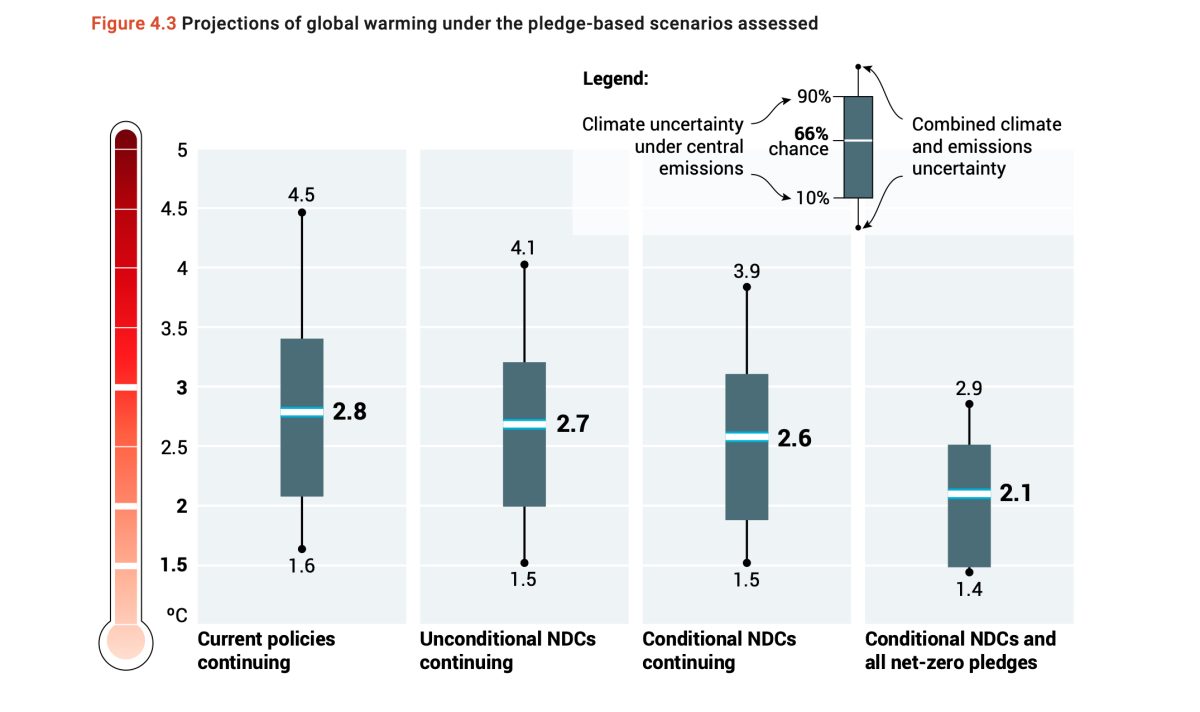
If current policies continue unchanged, the report projects warming of 2.8°C by 2100, with further increases after that. Even if all current national pledges were fully implemented, we'd still hit 2.6°C. The most optimistic scenario, which includes additional net-zero targets, would cap warming at 2.1°C. The US withdrawal from the Paris Agreement and revised historical emission estimates have made the outlook worse over the past year.
So what does this mean for someone planning a trip? It means the places you love to visit are changing. Coastal cities are facing more frequent flooding, ski resorts are seeing shorter seasons, and Mediterranean summers are becoming dangerously hot. The good news is that travel can be part of the solution. Choosing trains over planes, supporting eco-friendly accommodations, and being mindful of your carbon footprint are all small but meaningful steps.
For inspiration, consider how some travel icons are adapting. The return of Pan Am's glamour to the high seas shows how the industry can reinvent itself with lower-impact options. Or look at how global tourism is booming again, but with a new focus on sustainability. Even rail travel is making a comeback in the Nordic north, offering a greener way to explore.
The UNEP report is a stark reminder that the future isn't written yet. The choices we make in the next few years will determine whether we can return to 1.5°C by 2100 or face a much hotter, more unstable world. For travelers who care about the places they visit, that's a call to action. The point of return is now.