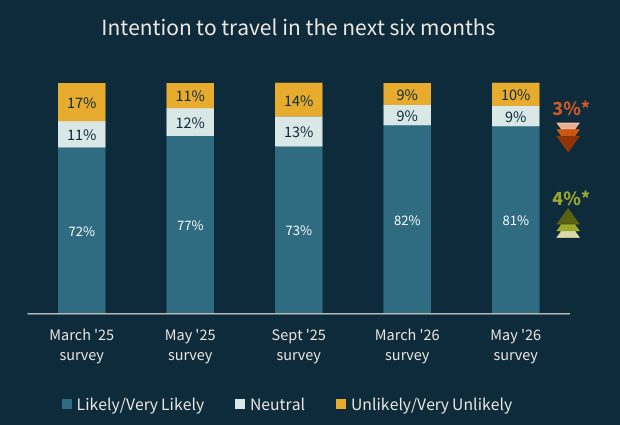
The mood across Europe is surprisingly upbeat when it comes to travel plans. Despite headlines about conflict, inflation, and climate anxiety, four out of five Europeans intend to travel between June and November 2026, marking a four-point jump from last year. That's not just stable sentiment. That's people voting with their wallets even when the world feels uncertain.
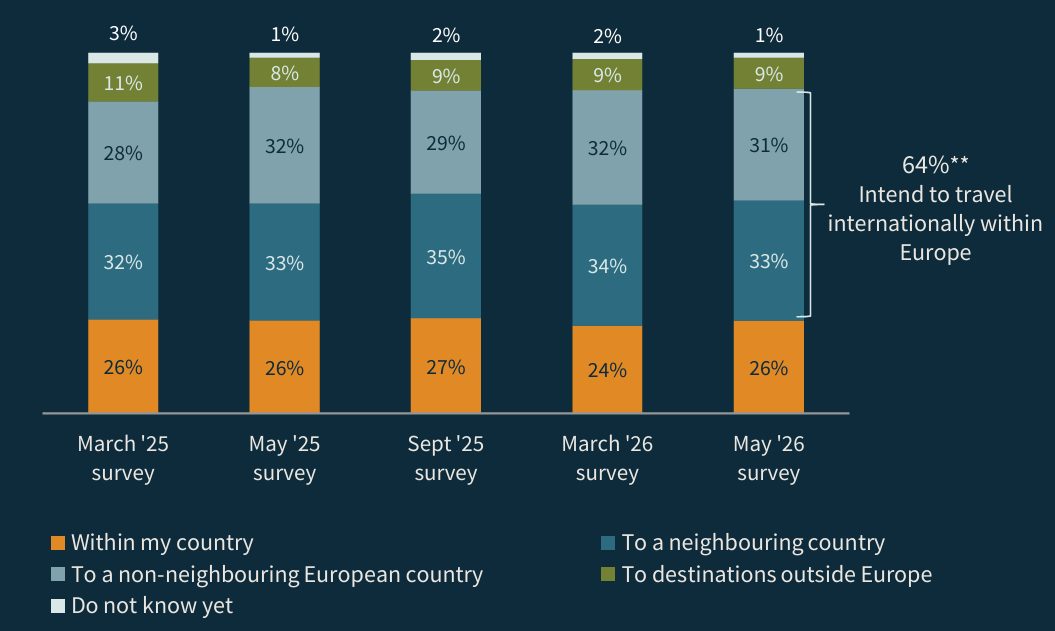
The data comes from the European Travel Commission's latest pulse check on intra-European travel patterns. What stands out isn't just the volume of would-be travelers, but their mindset shift. Folks aged 45 to 54 are the keenest explorers at 86% planning a trip. More than half of all Europeans want to take two or more holidays in that six-month window. The continent remains the destination of choice, with nearly two-thirds planning to stay within Europe's borders.
The Sun Belt Still Wins, But Only Just
Unsurprisingly, the Mediterranean still dominates vacation dreams. Southern and Mediterranean regions attract 61% of intended travelers (up from 57% a year ago), with Spain, Italy, France, and Greece claiming the top four spots. Spain alone pulls in 14% of planned trips. That's a lot of terracotta roofs and paella plates being reserved right now. The appeal is straightforward: sun, culture, history, and coastlines that deliver.
But here's where travel behavior is genuinely shifting. Over half of all Europeans now prefer quieter, lesser-known destinations to the tourist hotspots everyone knows. One in ten travelers explicitly cite avoiding crowded sites as a priority. Overtourism has entered the mainstream conversation, and it's changing where people actually want to go.
Safety and Wallet Space Matter Most
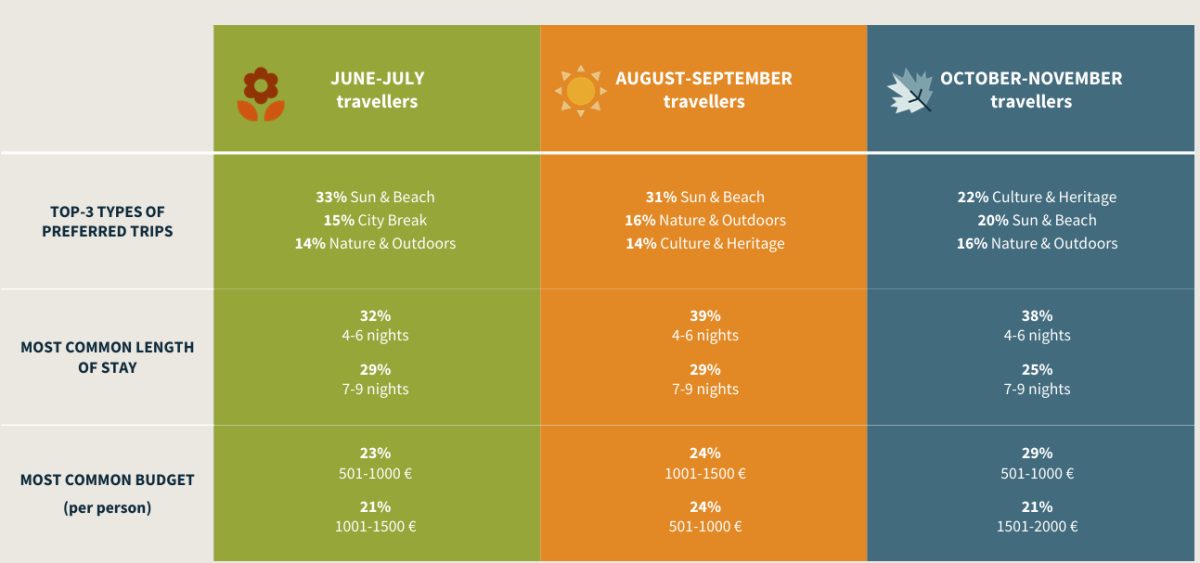
Money concerns dominate the decision-making checklist. Rising trip costs worry 22% of travelers, while personal finances and the hunt for better deals round out the top financial anxieties. Yet it's not killing travel dreams. The most common spending band remains 1,500 to 2,500 euros, with accommodation, food, and activities taking the bulk of budgets. Those curious about where their euros vanish fastest should check which destinations remain priciest in 2026.
Safety ranks as the top non-financial concern at 20% of travelers. Geopolitical worries about Middle East tensions have doubled to 14%, while Ukraine-related concerns persist for 11%. These aren't trivial numbers, yet they're not derailing vacations either. Europeans appear to be traveling more selectively, but traveling nonetheless.
Flying Still Dominates Despite Price Shocks
High fuel costs haven't deterred air travel. Fifty-three percent of travelers still choose flying as their preferred transport. That's an interesting resilience given airfare spikes. Summer months (June through September) remain peak season for 86% of travelers, though shoulder season travel is creeping up. June bookings have risen three points year-over-year, suggesting some are learning to escape the July and August crunch.
Climate anxiety is reshaping itineraries too. Over three-quarters say climate factors influence where they go. Some actively seek cooler destinations, while others dodge heat extremes. Two-thirds would alter plans if climate disruption or government travel warnings demanded it. Travelers looking to stay comfortable while adapting to warmer conditions should explore which gadgets actually deliver relief.
The Thoughtful Traveler Emerges
What the numbers really show is a European traveler moving beyond the simple "where can I get a cheap flight?" mentality. People are weighing safety, carbon footprint, value, and crowd levels in ways they didn't a few years ago. They want authentic experiences, not Instagram replicas. They're choosing quality over quantity, depth over speed.
European Travel Commission President Miguel Sanz framed it simply: Europeans are "travelling more thoughtfully," balancing safety, cost, and environmental responsibility. That thoughtfulness creates opportunities for lesser-known regions to capture interest and for established destinations to rethink overcrowded models. The peak summer machine is humming, but the shoulder seasons are finally getting their moment.
The bottom line: the appetite for European travel isn't flagging despite global noise. It's just getting smarter about where it goes and what it values.