The United Arab Emirates is about to get its first passenger rail network, and the country is treating the arrival with unusual seriousness. Rather than simply cutting a ribbon and hoping people figure it out, Etihad Rail is running a nationwide safety initiative called "Safety is Care" across all seven Emirates, because rail travel is still new enough here that many residents have never boarded a train.
This isn't paranoia. Rail incidents worldwide often stem from distraction, habit, and simple unfamiliarity. So instead of plastering warning signs everywhere, Etihad Rail is using behavioral science and relatable everyday scenarios to teach people how to move safely around tracks and stations. Schools, community groups, and public institutions are part of the rollout. The campaign spans broadcasts, digital platforms, and outdoor advertising, reaching people however they consume information.
A Network That Connects What Distance Has Separated
Once operational, the rail system will link 11 cities across the UAE, including Abu Dhabi, Dubai, Sharjah, and Fujairah. The journey times are reasonable enough to reshape how people travel domestically. You'll cross from Abu Dhabi to Dubai in under an hour. A trip to Fujairah takes one hour and 45 minutes. The network spans 900 kilometers of track, with hundreds of bridges, multiple crossings, and tunnels carved through mountains. Freight operations have already been running since 2023, so the bones of the system work.
Stations are being integrated with existing metro systems, buses, and taxis, so the train fits into the broader transit ecosystem rather than existing as an isolated novelty. The ambitions here are significant. In 2025, Etihad Rail already contributed to reducing more than one million truck trips and lowered carbon emissions by 70 to 80 percent per journey, supporting a more sustainable transport network. By 2030, the passenger network is projected to carry 36.5 million riders annually, cutting 8.2 million tonnes of CO2 and offering a genuine alternative to domestic flights and driving across the Gulf.
The Views Are the Unexpected Bonus
What hasn't been widely discussed is what you'll actually see from your window. The route crosses endless desert plains and open skies, features salt flats, passes through industrial zones heading to Ruwais, and climbs into mountain scenery on the Oman stretch. For many residents and visitors, this will be the first chance to experience these landscapes at all, let alone from a train moving slowly enough to actually absorb the details.
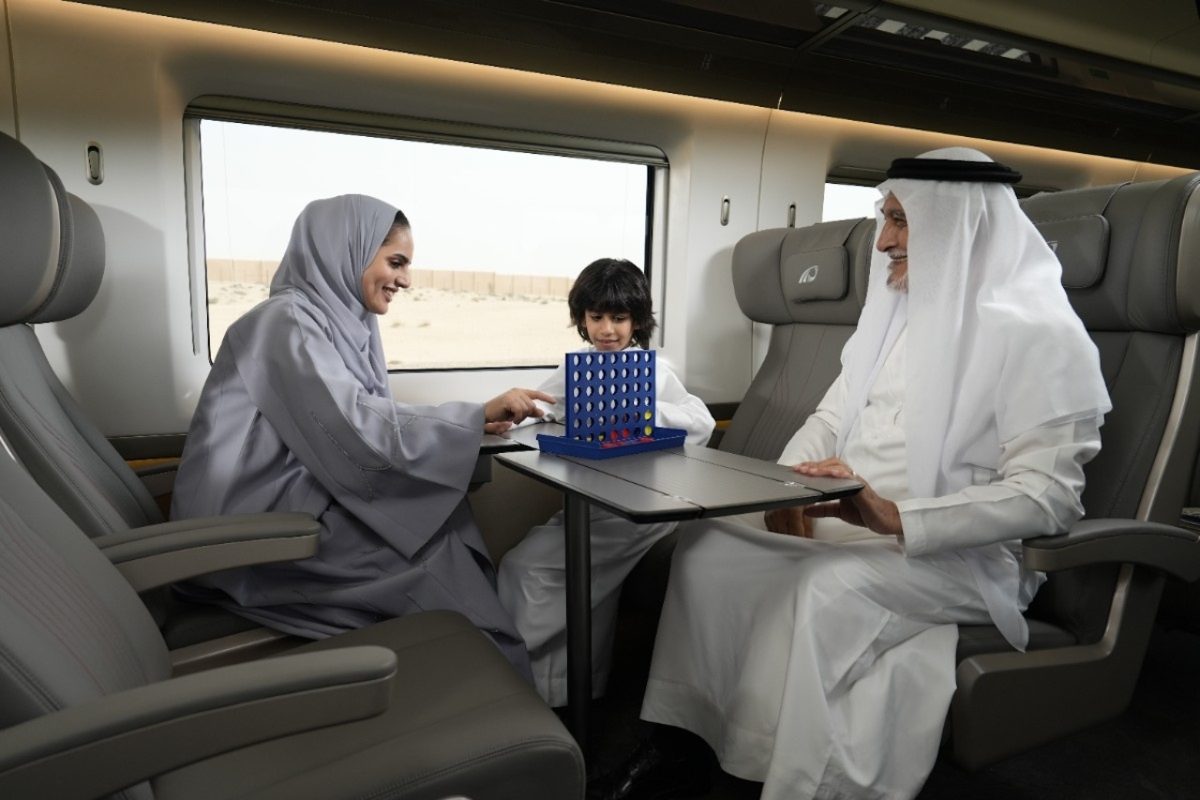
Trains will offer first, business, and economy classes, all designed with distinctly Emirati character. But this is just the beginning. Future high-speed trains between Abu Dhabi and Dubai could reach 350 km/h. Even more intriguing, a luxury rail cruise experience is in development with Italian company Arsenale, attempting to resurrect the glamorous era of rail travel in an Arabian desert setting.
Rolling Out Carefully, Not Hastily
Rather than opening the entire network at once, passenger services are being introduced gradually throughout 2026 in a phased approach designed to prioritize safety and reliability from day one. This measured rollout protects both passengers and the system itself. Similar rail projects across Asia show that careful implementation pays off, creating better long-term experiences than rushing to open.
The safety campaign is the final piece before inaugural journeys begin. Adhraa Almansoori, director of public policy and sustainability at Etihad Rail, frames this as building shared responsibility: "This campaign is about building a culture of care and shared responsibility, ensuring that our communities, our passengers, and our employees all play a role in maintaining the highest safety standards."
For travelers, this means the UAE's rail debut isn't just infrastructure. It's a gateway to landscapes most visitors never see, journey times that make domestic exploration feasible, and a country that's thoughtful enough to teach people how to use something new rather than assuming they'll figure it out. That's worth paying attention to when you're planning your next trip to the Emirates.