The moment you spot a hidden gem on TikTok, your instinct has always been the same: screenshot, Google it, jump to a booking site, hunt for availability, compare prices somewhere else. TikTok just eliminated every single one of those steps.
The platform launched TikTok GO this month in the United States, a feature that transforms your endless scroll of travel content into actual reservations. Watch a video of a boutique hotel in Kyoto. Click through to see rooms and rates. Book your stay. All without closing the app. This is what happens when a social media giant decides it wants a piece of the travel booking pie.
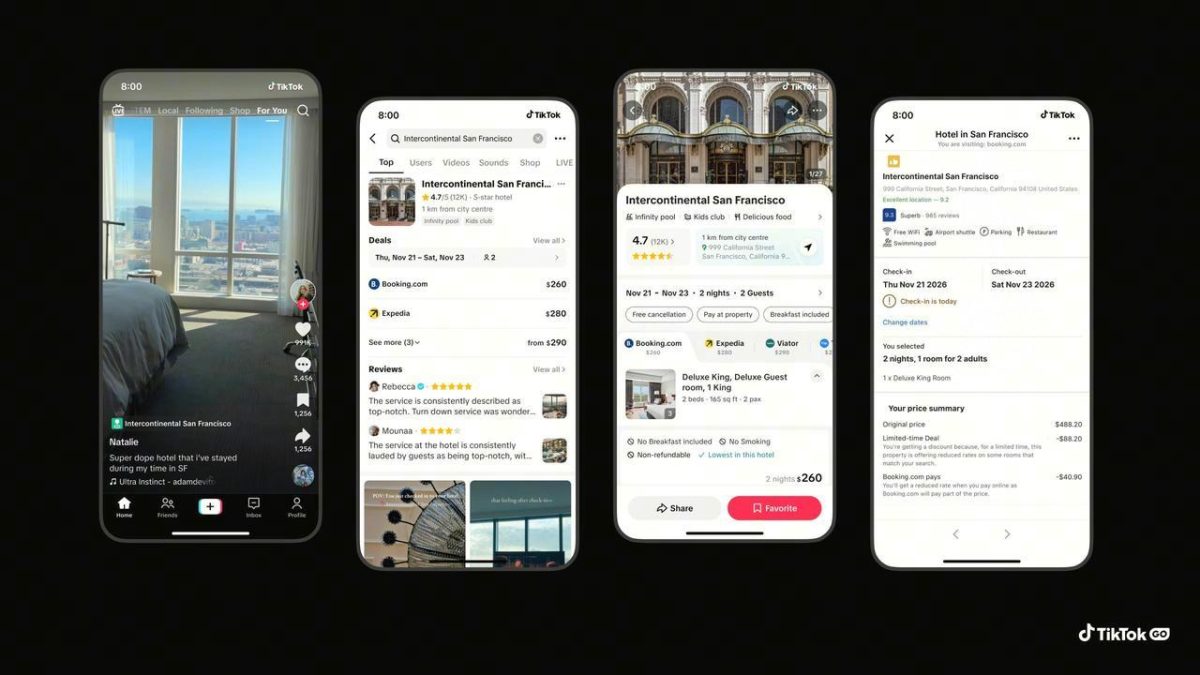
More than 200 million Americans use TikTok, and the company is betting that plenty of them are already getting travel ideas from their feeds. The new system works by embedding hotel availability, tours, and local experiences directly into your search results and location pages. Find something that catches your eye, and you can view full details and pricing in seconds. The friction between "that looks amazing" and actually booking it has shrunk to almost nothing.
Who's Behind This
TikTok partnered with the big names in travel booking: Booking.com, Expedia, Trip.com, Viator, GetYourGuide, and Tiqets. That last one matters. GetYourGuide alone offers over 200,000 experiences across more than 12,000 destinations, which gives you a sense of the scale here. Whether you're looking for a cooking class in Rome or a guided trek in New Zealand, it's all accessible through your TikTok feed now.
Each partner sets its own pricing, so rates stay competitive. You're not paying a TikTok premium just for the convenience, which is refreshing. The company tested these booking features with a smaller group before rolling out wider, so they've had time to work out the kinks.
Why This Matters for Content Creators
Travel creators just got a new revenue stream. They can now link their videos directly to bookable services and earn commissions when viewers actually book. No more relying solely on brand partnerships or sponsorship deals. If you build an audience sharing your travel adventures, TikTok GO lets you monetize that in a direct, tangible way.
For tourism boards and hospitality businesses, the opportunity is equally compelling. They gain access to millions of potential customers who are already watching travel content and showing genuine interest. A hostel owner in Barcelona or a lodge operator in Costa Rica can now reach TikTok users the moment they're feeling inspired to travel, not three days later when they've moved on to other content.
A Broader Shift in How We Travel
This isn't just TikTok being clever about capturing bookings. It reflects a real change in how people plan trips. Social media has become the primary source of travel inspiration for millions of users. You see a video of someone hiking to a waterfall, eating street food at night markets, or exploring a museum, and suddenly you're thinking about your next vacation differently. The question TikTok is solving is simple: why make people search somewhere else when they could just book right here?
Similar features already exist in markets like Indonesia and Japan, so this U.S. launch signals that TikTok sees travel booking as a core opportunity globally. The company has been expanding its travel advertising tools for months, showing this isn't an experiment but a strategic push into a new business area. TikTok's official announcement emphasized the idea of turning discovery into action in just a few taps.
The bigger picture is that social platforms are gradually merging with travel agencies. Netflix is experimenting with TikTok-style feeds to influence what travelers watch, and now TikTok itself is stepping into the booking business. The line between inspiration and transaction keeps blurring.
Right now, TikTok GO is only available in the U.S., and only for users 18 and older. But watch this space. If the feature works as smoothly as TikTok hopes, expect it to roll out more widely. Travel booking was already fragmented across a dozen different sites and apps. Now the biggest video platform on earth wants to own that entire experience, and honestly, it just might pull it off.