
The world is moving again. After years of uncertainty, the latest Travel & Tourism Development Index from the World Economic Forum reveals that travel and tourism conditions are the strongest they've been since 2019. A whopping 101 out of 110 economies improved their scores since 2024, with an average jump of 2.1%. That's a massive leap compared to the sluggish 0.2% growth seen between 2021 and 2024.
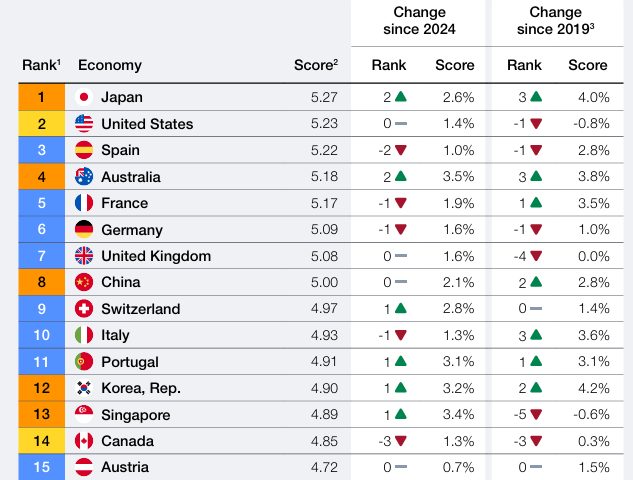
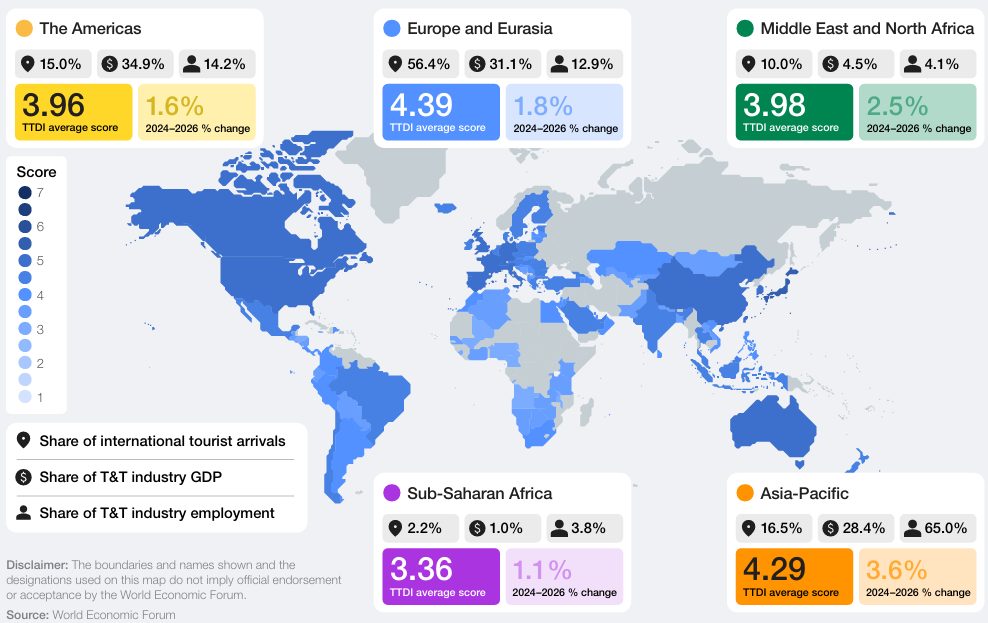
So what's driving this rebound? The report points to better cultural attractions, improved tourism infrastructure, and stronger air connectivity. Countries are investing in making themselves more accessible and appealing, and it's paying off. Japan, the United States, Spain, Australia, and France lead the pack, with Europe dominating the top 10. But the real movers are further down the list. Albania improved the most, with a 7.0% score boost, followed by Vietnam and Laos. Southeast Asia is advancing faster than any other subregion, and seven of the ten most-improved spots are in Asia-Pacific.
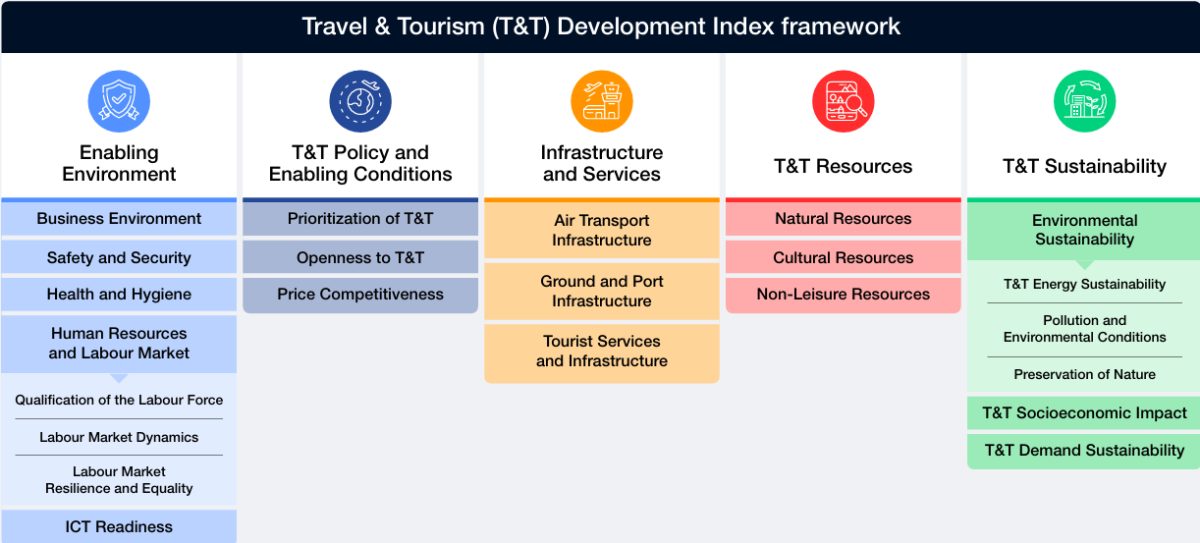
Yet beneath this sunny outlook lies a growing concern. The index also shows that travel has become less affordable in 75% of the economies surveyed. Prices for flights, hotels, and even a simple meal out have risen faster than inflation. For travelers, that means the dream vacation is getting pricier. For destinations, it's a warning sign that they might be pricing out the very visitors they want to attract.
Investment in tourism infrastructure hasn't kept pace with demand either. The report warns this gap could persist until 2033. Labor shortages are another headache, with many destinations struggling to find enough staff to run hotels, restaurants, and attractions. And the benefits for local communities are weakening, as tourism growth doesn't always translate into better lives for residents.
"The best destinations are still those with the most to see," says Cara Morton, CEO of Global Businesses and Operations at Zurich Insurance Group. "But today, it's also about whether they can absorb a shock and keep going, when flights are grounded, when a heatwave hits, when the systems people rely on go down." That resilience is becoming a key competitive advantage. Places that plan for disruption recover faster and maintain traveler trust.
The report outlines five priorities for governments and businesses to build a more resilient industry. First, spread demand more widely across source markets, traveler types, and seasons. Second, keep destinations open and accessible, even when disruption occurs. Third, compete on value rather than price, focusing on service quality and trusted experiences. Fourth, ensure tourism delivers tangible benefits to local communities. And fifth, invest in workforce skills and retention.
These challenges aren't just theoretical. In Spain, the tourism boom has become so intense that the country is now planning its own rescue measures to manage overtourism. Meanwhile, destinations like Georgia are betting big on tourism to transform their economies, as our analysis of Georgia's $10 billion tourism bet shows. And in Lisbon, the city's happiness index success is drawing even more visitors, raising questions about how to balance growth with quality of life, as we explored in Why Lisbon Just Topped the Global Happiness Index for City Breaks.
The report was launched at the World Economic Forum's inaugural Beyond Tourism Day in Geneva, with discussions focusing on resilience, workforce readiness, and innovation. The conversation continued on World Tourism Day, themed around digital agenda and AI to redesign tourism. As the industry looks ahead, the message is clear: the next chapter isn't just about attracting more visitors, but about creating greater value for everyone involved.
For travelers, this means being smarter about where and when you go. Consider off-peak seasons, lesser-known destinations, and supporting local businesses. The world is more open than ever, but the way we travel is changing. Those who adapt will find richer experiences, and destinations that invest in resilience will be the ones worth visiting.