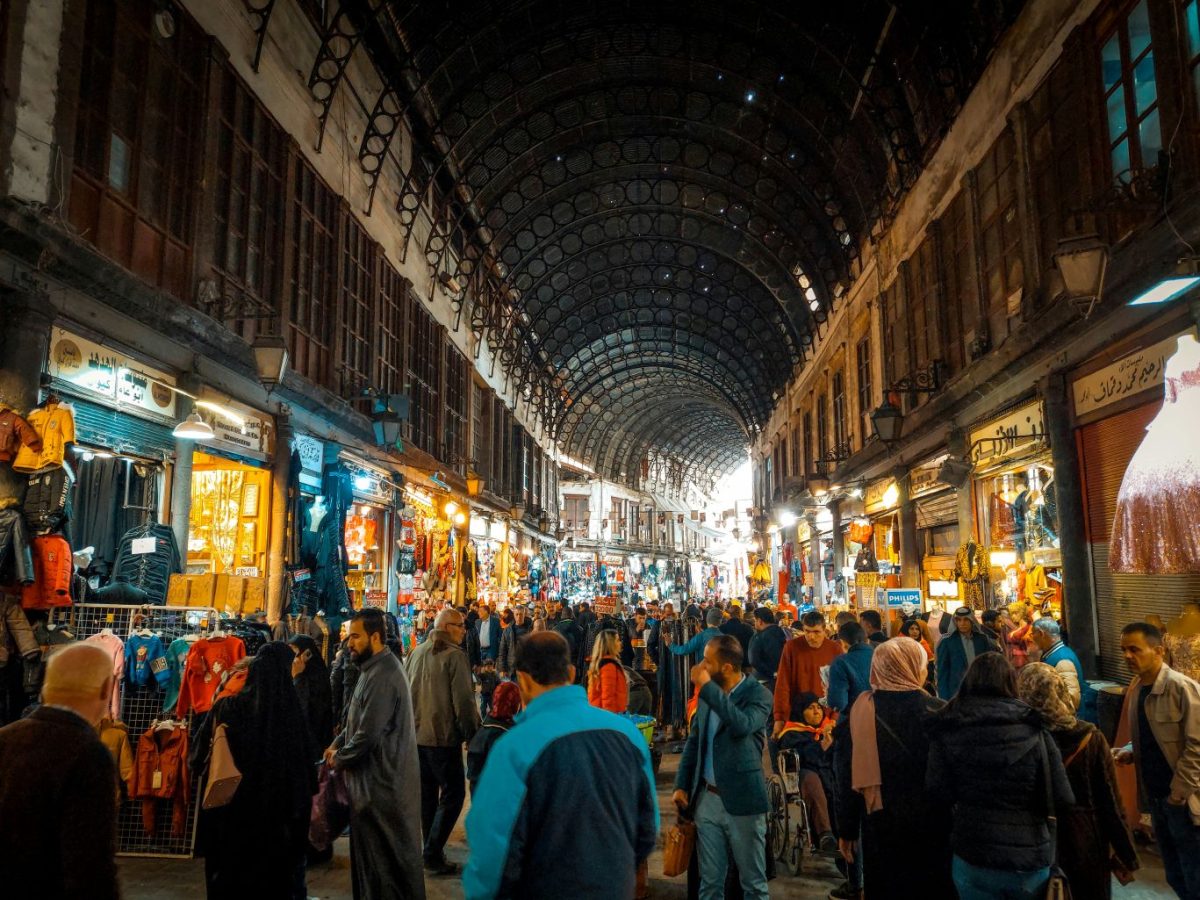
Syria is trying to write a new chapter, and the world's hotel giants are leaning in to read it. Accor, Wyndham Hotels & Resorts, and Minor Hotels are all exploring projects in the country, drawn by the promise of historic cities and a Mediterranean coastline that has been off the tourist map for over a decade. The interest is real, but so are the hurdles.
The numbers tell a story of cautious momentum. Government data puts tourist arrivals at 3.52 million in the first half of 2026, more than double the same period a year earlier. But dig into the details and the picture sharpens: about 2.13 million of those visitors were Syrian expatriates returning to see family or reclaim property. Another 660,000 came from Arab countries, and roughly 720,000 from elsewhere. In other words, the majority of the traffic is diaspora, not leisure travelers booking beach holidays.
Still, the potential is enough to get developers sketching. UAE's Eagle Hills signed a framework agreement with Syria in early October for a massive 10 million square metre development in Damascus and a 4.3 million square metre project in coastal Latakia. That's a memorandum of intent, not a shovel-ready plan, but it signals serious appetite. Mohamed Alabbar, Eagle Hills' chairman, has even suggested Emaar, already working on a separate Damascus project, could join the effort. Another UAE developer, Arada, has floated a $7 billion scheme.
Hotel operators are moving at different speeds. Accor is in advanced negotiations for two properties, according to Duncan O'Rourke, its CEO for the Middle East, Africa, and Asia-Pacific. Wyndham's president for Europe, the Middle East, and Africa, Dimitris Manikis, says a first signing is imminent. Minor Hotels is eyeing conversions, including turning historic Damascus homes into boutique hotels, a model that already thrives in the capital's old quarters.
But the gap between ambition and reality is wide. Security remains the biggest question mark. The US State Department still advises against all travel to Syria, and outbreaks of violence continue. President Ahmed al-Sharaa is courting Western investment, but protests have already broken out in Damascus suburbs over large-scale developments. For travelers, the risks are not abstract.
Practical barriers are just as stubborn. Many existing hotels are relics of a pre-war era, tired and under-maintained. Amir Golbarg, Minor Hotels' COO for the Middle East and Africa, puts it bluntly: the inventory is "very tired." Payment systems are another headache. Visa and Mastercard announced plans to launch in Syria in September, but for now, electronic payments are limited to certain foreign cards at select locations. Cash is still king, and that complicates everything from booking a room to buying a meal.
Air access is improving, though. Qatar Airways and flydubai already serve Damascus, and Etihad is set to increase its service from four flights a week to daily. But as global tourism rebounds, airlines are restoring routes at different speeds. An open airport doesn't mean every carrier is back.
The scale of the rebuild is staggering. The World Bank estimated Syria's reconstruction costs at $216 billion in 2025, with $75 billion for housing and $59 billion for non-residential buildings. That's not just tourism infrastructure; it's the entire country. The hotel boom, if it happens, will be a small piece of a much larger puzzle.
For now, Syria's tourism story is one of potential, not reality. The visitors are coming, but they're mostly Syrians reconnecting with home. The international chains are circling, but deals are still being signed, not built. And the country's own diplomatic push to attract investment is a work in progress. If you're thinking of visiting, the advice remains the same as it has been for years: check the latest security guidance, plan for cash, and expect a country that is both ancient and painfully new.