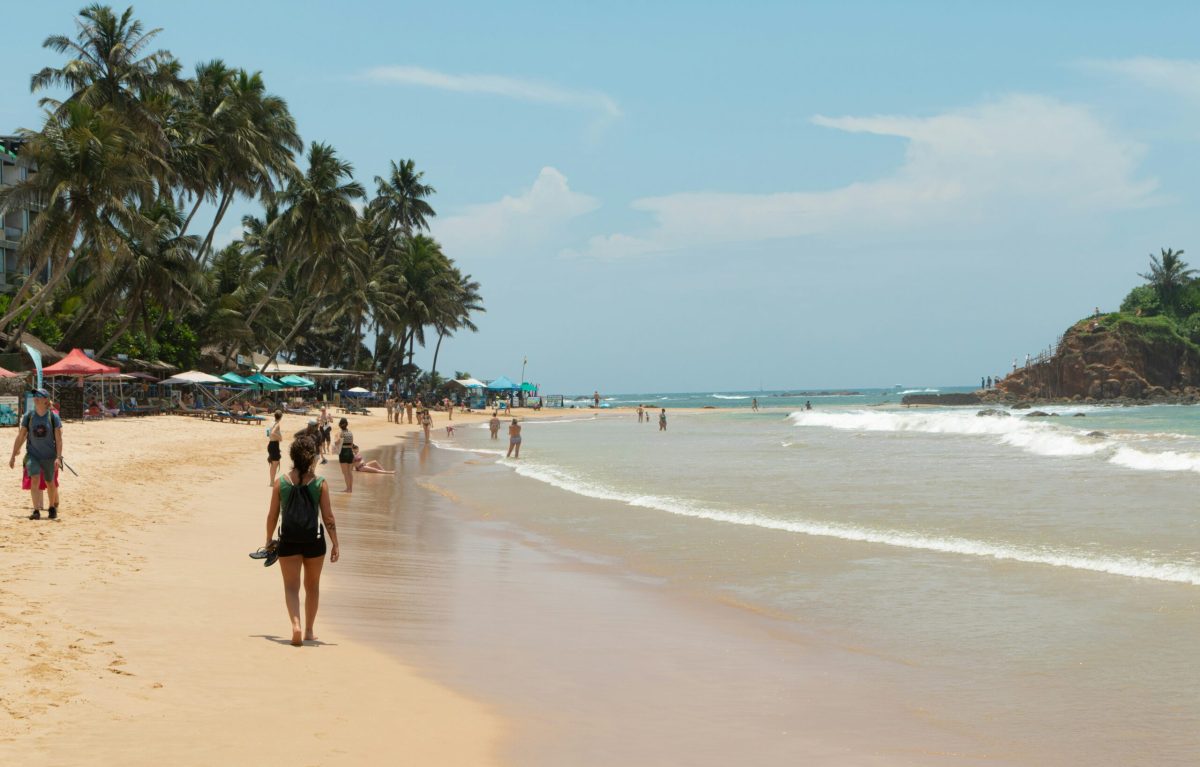
Starting May 25, 2026, citizens from 40 countries can now skip the visa fee when traveling to Sri Lanka. You'll still need to apply for an Electronic Travel Authorization online, but the cost disappears. It sounds simple, yet this move represents something bolder than a typical tourism play.
Sri Lanka's government approved the scheme in March 2026, and Parliament rubber-stamped it in May. The new system grants a free 30-day visa to eligible travelers. Don't mistake this for a visa waiver, though. You'll complete the standard ETA application process before arrival, just without opening your wallet.
The Numbers Behind the Gamble
Here's where it gets interesting. The government expects to lose roughly $75 million in annual revenue. That's a staggering hit. But officials are counting on a different payoff: an extra 247,000 tourists flowing into the country, generating about $317 million in tourism spending. On paper, it's a $242 million net gain. Whether reality cooperates is another question entirely.
The government is treating this as a one-year pilot. After six months, they'll reassess whether the math actually works. Some in Sri Lanka's tourism sector remain unconvinced. Malik J. Fernando, chairman of the Sri Lanka Tourism Alliance, warned in 2025 that a visa fee waiver alone won't solve the industry's real problem: the lack of a coherent international marketing campaign. "What truly matters to most visitors is an efficient online visa process, which Sri Lanka already offers," he noted. The country had done both before this initiative kicked off.
Which Countries Get In Free
The 40-country list skews heavily toward Asia and Europe, with scattered representation from North America and Oceania. Austria, Belgium, Canada, China, Czech Republic, Denmark, Finland, France, Germany, India, Indonesia, Iran, Israel, Italy, Japan, Kazakhstan, Kuwait, Malaysia, Nepal, Netherlands, Norway, Oman, Pakistan, Poland, Qatar, Russia, Saudi Arabia, South Korea, Spain, Sweden, Switzerland, Thailand, Turkey, the United Kingdom, and the United States all made the cut. Bahrain gets coverage from the Middle East side of things.
Australia and New Zealand represent Oceania. Curiously, the Maldives, Seychelles, and Singapore aren't explicitly named but are still eligible. Maldivian citizens receive special treatment, nabbing a 90-day tourist visa through reciprocal agreement.
If you fall outside these 40 countries, you're still subject to Sri Lanka's standard ETA rules and fees. And if you're one of the lucky 40 and want to stay beyond 30 days, extensions exist. You'll just pay the usual fee for those extra weeks.
The Tourism Sector Watches Closely
This isn't Sri Lanka's first attempt to shake up how travelers access the island. Like Canada's recent moves to remove barriers to travel, the strategy hinges on volume. The hope is that removing friction and cost triggers a surge in arrivals that more than compensates for lost visa revenue.
The scheme had been floating in tourism circles throughout 2025 before becoming official in 2026. Anyone who applied for an ETA before May 25 and paid the fee won't get a refund, so there's no windfall for early travelers.
Whether this gamble pays off depends on factors beyond Sri Lanka's control: global economic conditions, travel trends, airline capacity, and word-of-mouth. For budget-conscious travelers from the eligible nations, though, the calculus just shifted. The island's tea plantations, beaches, and ancient temples are about to become a little less expensive to explore.