The night sky is having a moment. Travelers are ditching city lights to chase solar eclipses, with Europe bracing for the crowds in 2026 and Egypt preparing for totality in 2027. But eclipse chasing is just one flavor of celestial tourism. Stargazers everywhere are hunting for dark skies, remote locations where the cosmos actually puts on a show.
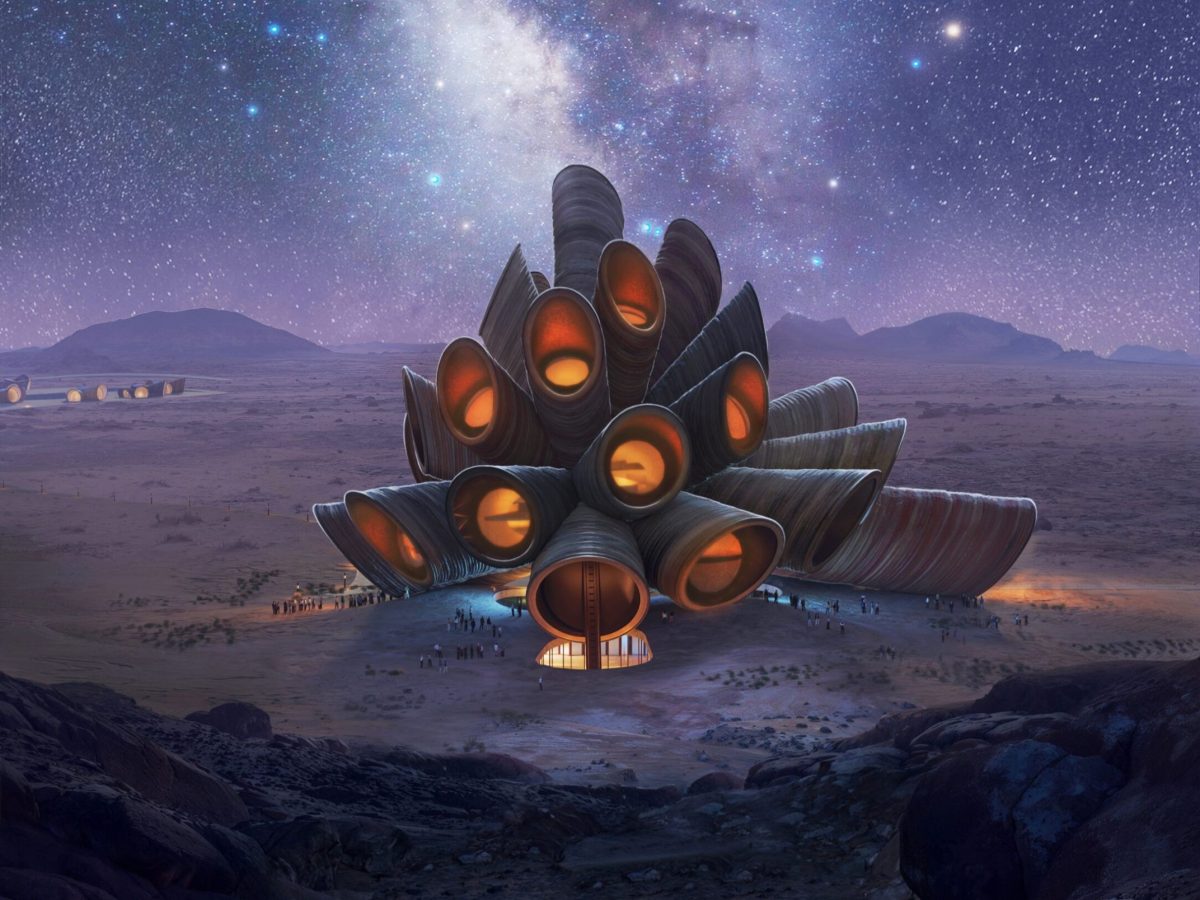
Saudi Arabia is betting big on this trend. In the remote northwestern desert near AlUla, a new Dark Sky Park is taking shape. It's not just any observatory. The London-based design studio Heatherwick won an international competition to create what will become one of the world's largest research facilities for studying the heavens, complete with a visitor experience that's meant to feel genuinely magical rather than sterile and technical.
What's Actually Being Built
The facility includes a planetarium, restaurant, and rooftop observation deck, alongside serious scientific infrastructure. Heatherwick's design relies on striking tubular, shell-like structures that echo the surrounding sandstone landscape. These aren't random shapes. The architect envisioned the building as a conversation between earth and cosmos, with three telescope-like towers spiraling upward while staying visually grounded in the desert itself.
Stuart Wood, a group leader at Heatherwick Studio, explained the thinking behind the approach: "Space observatories are often remote, sterile places that feel distant from the public. We saw an opportunity to dissolve those barriers and create a place where visitors can step inside the wonder of the cosmos." The building will use sophisticated shading devices by day to preserve dark skies at night, and energy-efficient windows that respond to desert weather while framing views of both the heavens and the surrounding landscape.
When Can You Actually Go
No opening date has been announced yet, so patience is part of the deal. Saudi Arabia has been aggressively expanding its tourism infrastructure, and AlUla is already a major draw for travelers interested in ancient history. The city is home to Hegra, a UNESCO site featuring over 100 rock-cut tombs carved into soaring sandstone cliffs. Once the Dark Sky Park opens, visitors will have layered reasons to make the journey.
Getting there requires some planning. AlUla International Airport exists, but there are no direct flights from Europe yet. Travelers can connect through Jeddah, Riyadh, or major Gulf hubs like Doha and Dubai. Saudi Arabia is aggressively expanding its aviation capacity, so direct European routes could arrive sooner than expected.
Beyond the Observatory
The park isn't the only draw. The wider masterplan includes hiking trails, remote accommodation pods, and a stargazing lodge. Think of it as a full desert immersion with the bonus of a world-class observatory. For travelers serious about escaping light pollution and actually seeing the Milky Way in stunning detail, this is shaping up to be a genuine pilgrimage destination.
The architecture itself hints at something special. Heatherwick has a reputation for bold, conceptual designs that spark conversation (even if not every project endures without incident). This time, the studio is channeling inspiration from the spiraling geometries found in both the solar system and the natural desert. The result should feel both scientifically rigorous and genuinely inspiring to visitors.
For now, AlUla remains most famous for its ancient monuments and vast open skies. Add a cutting-edge observatory designed to be as visually stunning as it is functionally advanced, and the calculus shifts. Astrotourism is real, growing fast, and Saudi Arabia is making a serious play to capture that market. Watch this space, quite literally.