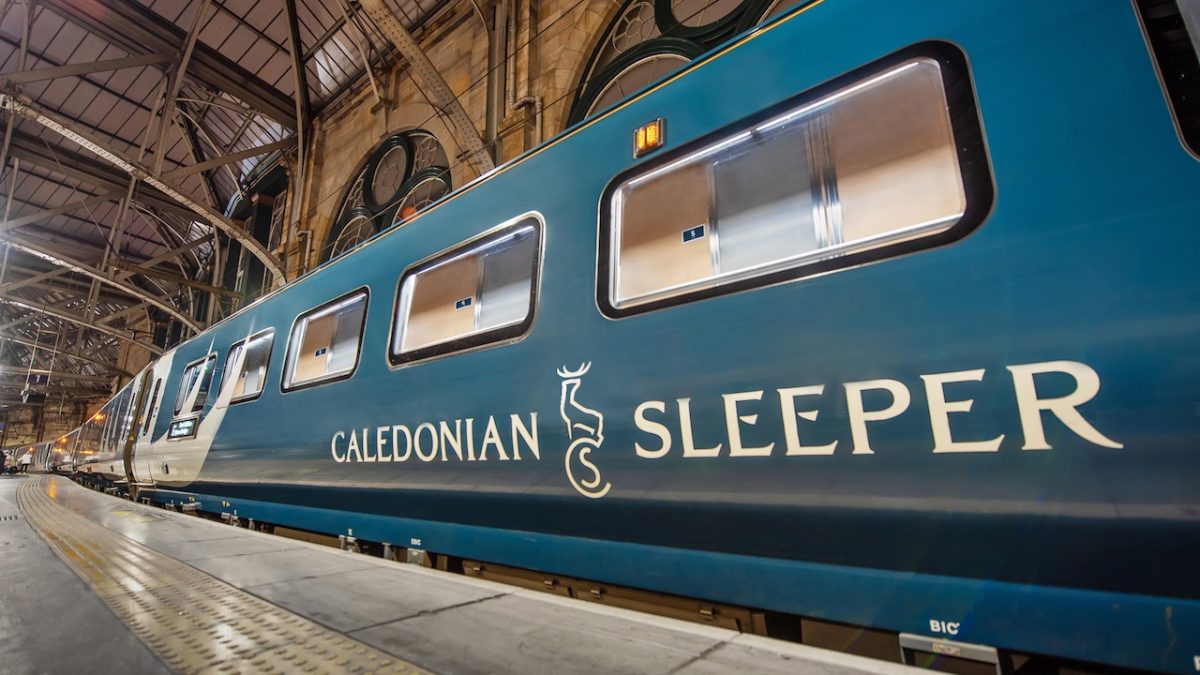
For decades, getting from Scotland to the European mainland meant a frustrating puzzle of connections. Travelers boarded sleeper trains heading south through England, arrived at London Euston, and then had to catch another train to St. Pancras before finally boarding a service to France, Belgium, or the Netherlands. It was doable, sure, but it felt unnecessarily complicated.
Now, something genuinely exciting might change that. Transport Scotland has assembled a working group with Caledonian Sleeper and Scottish Rail Holdings to investigate whether a true Scotland-to-Europe sleeper service could work. The service would tunnel beneath the Channel and connect major Scottish cities directly to continental destinations. This isn't a done deal. It's a feasibility study, the very first formal step. But it's a step nonetheless.
Currently, Caledonian Sleeper operates five northbound and southbound night trains per week, shuttling passengers between Scottish destinations like Aberdeen, Inverness, Fort William, Glasgow, and Edinburgh down to London Euston. All southbound services terminate there, making that transfer to St. Pancras mandatory if you're continuing to Europe. A direct route would eliminate that friction entirely, cutting hours from journey times and reducing the carbon footprint of getting from Scotland to cities like Prague, Lille, Paris, Brussels, and Amsterdam.
Why This Matters for Both Directions
The upside works both ways. Scottish travelers gain seamless access to Europe without playing connection roulette. Europeans, meanwhile, unlock easier routes to Scottish experiences: Edinburgh Castle and its world-famous festival season, island-hopping adventures along the coast, whisky tastings, golf courses, and Glasgow's cultural offerings. Right now, those trips require extra planning and time. Make it one overnight train, and suddenly Scotland becomes far more appealing to continental visitors.
Stephen Flynn, Scotland's Cabinet Secretary for Economy, Tourism and Transport, framed the working group's formation as "an important first step" toward delivering on a Scottish government manifesto commitment to strengthen European rail connections. But he tempered expectations too, noting this is "early-stage" and the study will need to examine "practical, technical and commercial considerations."
The Obstacles Are Real, But Not Insurmountable
Don't expect this to happen overnight. The Channel Tunnel has strict security and border clearance requirements that will need addressing. European services might initially be limited to major stations with existing border infrastructure, like Paris Gare du Nord or Brussels-Midi, rather than every city you might dream of reaching. Customs and practical logistics could keep the network tight, at least at first.
This isn't the first time someone has floated this idea. In the 1990s, a joint venture between Eurostar, French national railways (SNCF), German railways (DB), and Dutch railways (NS) actually built advanced locomotives and coaches for a similar concept. The project collapsed in 1997 when costs spiraled and budget airlines began reshaping how Europeans traveled. The landscape has shifted dramatically since then.
Night Trains Are Experiencing a Genuine Renaissance
The timing now feels genuinely different. Night train services are enjoying a real surge across Europe as travelers increasingly prioritize sustainable travel options and seek experiences that feel more intimate than a budget flight. There's something almost romantic about boarding a train in one country and waking in another. Climate consciousness matters too. Sleeper trains beat flying on environmental impact every time, and that resonates with travelers who care about their carbon footprint.
The feasibility study will take time. Questions linger about whether the economics work, whether stations can handle the volume, whether European partners would cooperate, and whether demand justifies the investment. But for the first time in decades, those questions are being asked seriously by people with actual power to make decisions.
For now, Scotland-to-Europe dreamers will have to stick with the current routine of London transfers. But if this working group produces the right answers, that frustrating middle step could become history. The sleeper train from Edinburgh to Paris might actually be closer than you think.