Picture yourself at Dublin airport, booked on a flight to Barcelona. You're already at the gate when the captain makes an announcement: your flight is cancelled, not because of weather or mechanical issues, but because French air traffic controllers are working to rule. Your plans are derailed. Your money is tied up. And you're caught in a chaos that ripples across an entire continent.
This scenario plays out far more often than it should. Earlier this summer, a bombshell report from French Senator Vincent Capo-Canellas painted a devastating picture of France's air traffic control system (known as DSNA). The numbers are staggering: in 2025 alone, the system created 6.6 million minutes of flight delays. That translates to roughly 800 million euros in losses for airlines and countless ruined vacations for passengers. Without intervention, those costs could balloon to 1.7 billion euros by 2035.
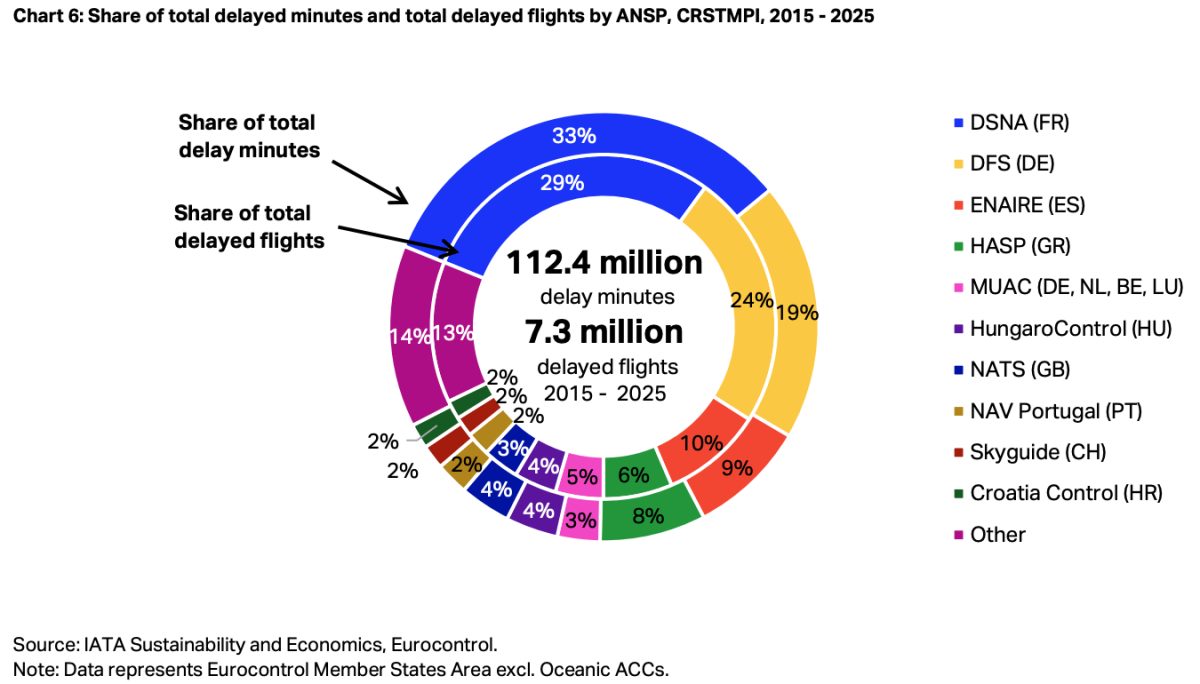
What makes this crisis particularly infuriating is that it's entirely avoidable. France isn't struggling with infrastructure or funding shortages. The problem is management failure. The country is still operating on paper flight strips and using radio systems that belong in a museum, while most of Europe has modernized. Meanwhile, a modernization program that should have been completed a decade ago remains stuck in neutral.
Why France Matters More Than You'd Think
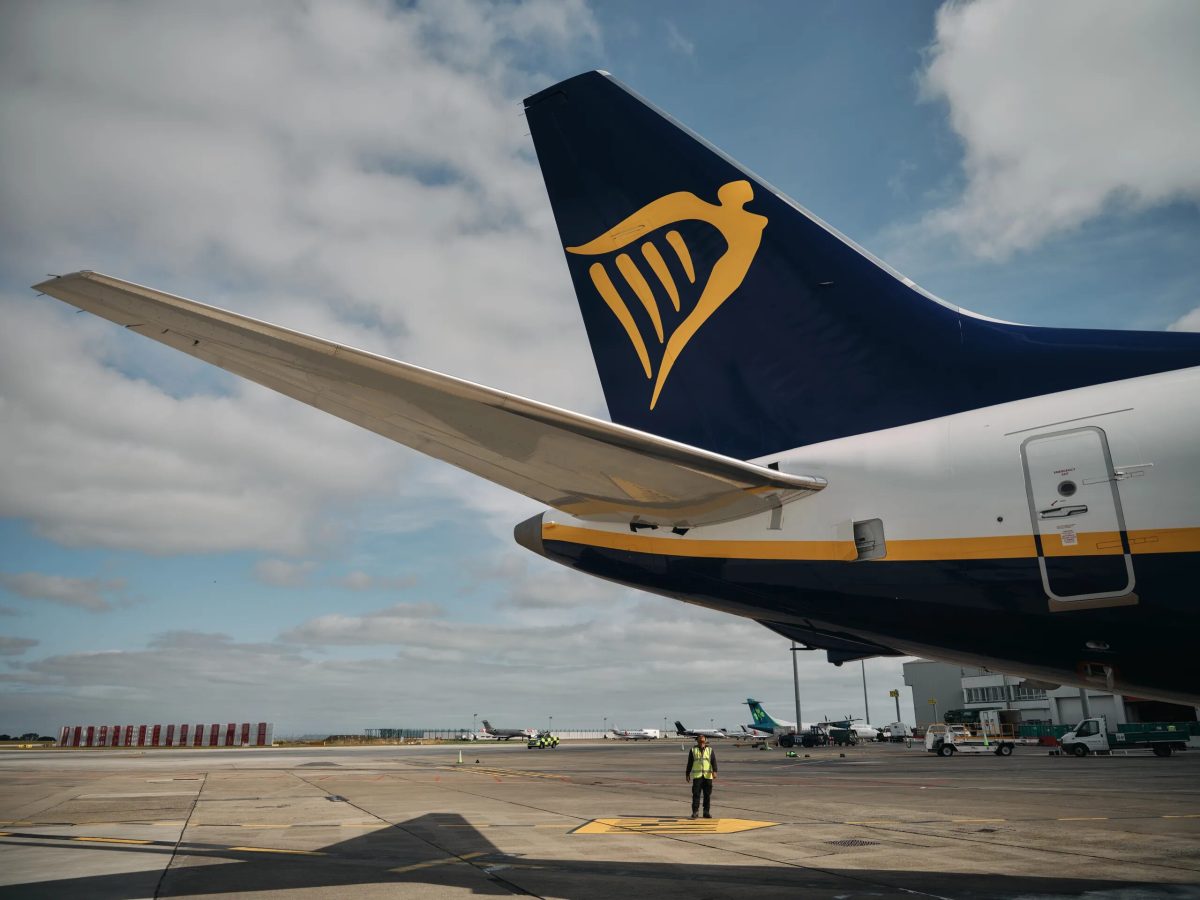
France sits in a geographically crucial position. Planes flying from the UK to Italy, from Ireland to Spain, or between countless other European pairs pass through French airspace. That's not a sideshow. That's the main event. When France's system hiccups, the entire European air network feels the shock. Ryanair has published a letter calling on the French government to reform the DSNA, warning that without action, France could become the weak link that destabilizes continental aviation.
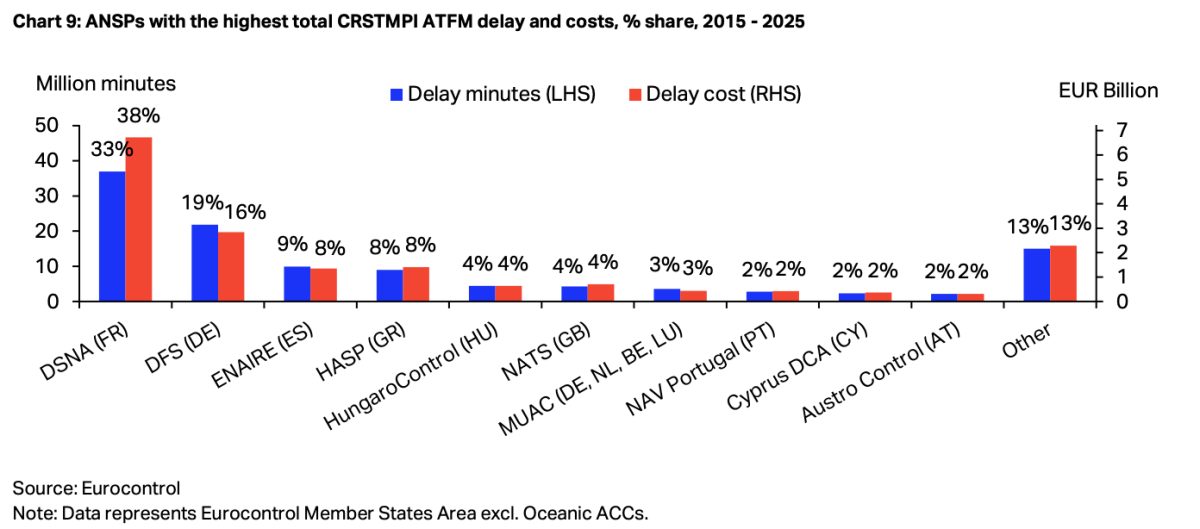
The staffing crisis adds another layer of urgency. About 30 percent of France's air traffic controllers will retire between 2029 and 2035. Without massive recruitment and training efforts, the system will become even more clogged. Ryanair's chief operations officer, Neal McMahon, was blunt in his assessment: "French ATC Europe's weakest link: woefully mismanaged, understaffed, underproductive and still using technology that belongs in a museum."
What Reform Actually Looks Like
The Senator's report and Ryanair's response both outline concrete fixes. Uncapped recruitment of controllers through 2030. Shorter training times to get new staff operational faster. Better staffing schedules that improve overall productivity. A dedicated budget that ensures fees go back into the system for modern technology instead of disappearing into the general budget.
There's also the strike problem. When French controllers walk off the job, France protects domestic flights with minimum service rules. But passengers flying over France between two non-French countries get no such protection. A person traveling from Dublin to Milan can find their flight cancelled because of a labor dispute they have nothing to do with. The EU and French government need to guarantee overflight protection while still respecting controller unions' right to strike. It's not an impossible balance.
The Domino Effect on Your Travel Plans
If you're a frequent flyer, this matters more than you realize. Budget carriers have already started abandoning routes when costs spiral, and cascading delays from air traffic control bottlenecks only accelerate that trend. Route cancellations mean fewer options, higher fares for remaining flights, and less competition overall. The cheap fares that have democratized European travel for millions depend on system efficiency.
The irony is that France has the expertise and resources to fix this. The government published the diagnosis. The carriers have made their demands. The only missing ingredient is political will. Reform requires uncomfortable decisions, investment, and the willingness to challenge entrenched interests. But the cost of inaction is already being paid by travelers and businesses across Europe, one delayed flight at a time.