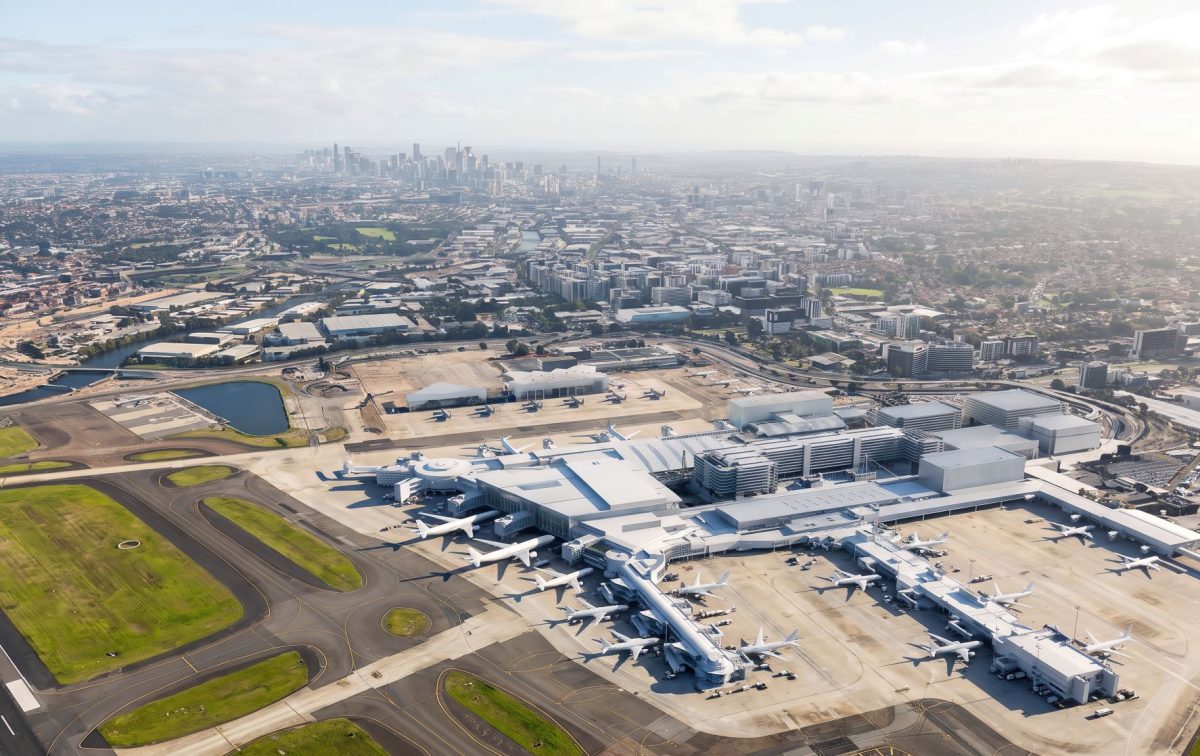
The Australian government has stamped approval on an ambitious blueprint for Sydney Airport that reads like a city planner's dream: by 2045, the hub will shuttle 72 million passengers per year, a staggering jump from current volumes. The Master Plan 2045 unfolds across two decades and promises to remake the airport's bones while pumping economic muscle into the nation.
The most visible change will reshape how travelers move between terminals. Airport officials are sketching plans for a more unified domestic precinct, with future capacity to absorb international flights as well. The vision includes faster pathways for connections, cleaner operations, and the kind of infrastructure that lets passengers breathe instead of sprint. This builds on a current AUD$200 million facelift of Terminal 2, which is already speeding up check-ins and beefing up security processing.
More planes, more ambition
Beyond the terminals, Sydney Airport wants to plant new aircraft parking stands across the apron. More spots mean more flexibility to handle everything from regional turboprops to massive international widebodies, meeting the unpredictable swings in travel demand across all three flight categories.
The numbers behind this expansion are genuinely staggering. Airport leaders expect economic activity to balloon by 56 percent, reaching roughly AUD$70 billion annually. By 2045, the airport could support as many as 204,000 jobs. For perspective, a single A380 service to international markets generates AUD$329 million in annual economic value while sustaining 2,100 jobs. The airport's total contribution to Australia's GDP already hovers around 1.5 percent, and these plans could amplify that considerably.
Sydney Airport CEO Scott Charlton framed the approval as essential arithmetic: "As Sydney grows, Sydney Airport must grow with it." He emphasized that the plan charts a path for sustainable expansion while minimizing environmental footprint and maintaining dialogue with surrounding communities. That language matters because airport expansion rarely wins neighborhood popularity contests.
But turbulence ahead
The approval celebration, however, has been dampened by recent safety scares. Over two weeks, Sydney Airport logged three near-miss incidents between aircraft, triggering sharp criticism from the airport union. Union secretary Robert Car has blamed cost-cutting measures and contractor reliance for eroding safety standards, claiming the facility has become unsafe for the traveling public.
When pressed on these incidents, airport officials countered that safety remains their top priority and that Australia runs one of the world's most rigorous aviation safety systems, overseen by regulators, airlines, and air navigation authorities. It's the kind of assurance travelers hear at every airport, and whether it lands with confidence depends partly on what unfolds in the coming months. Similar labor tensions have rippled through other major hubs as contractors have gained ground in airport operations.
For travelers planning trips to Sydney in the coming years, the expansion means a modernized experience but also years of construction activity. Patience will be required, though the payoff could be worthwhile. For businesses and workers in the region, the job creation numbers suggest substantial opportunity, assuming the safety questions get resolved to everybody's satisfaction. The next two decades will reveal whether Sydney Airport can balance growth, economics, and the basic safety that every passenger deserves.