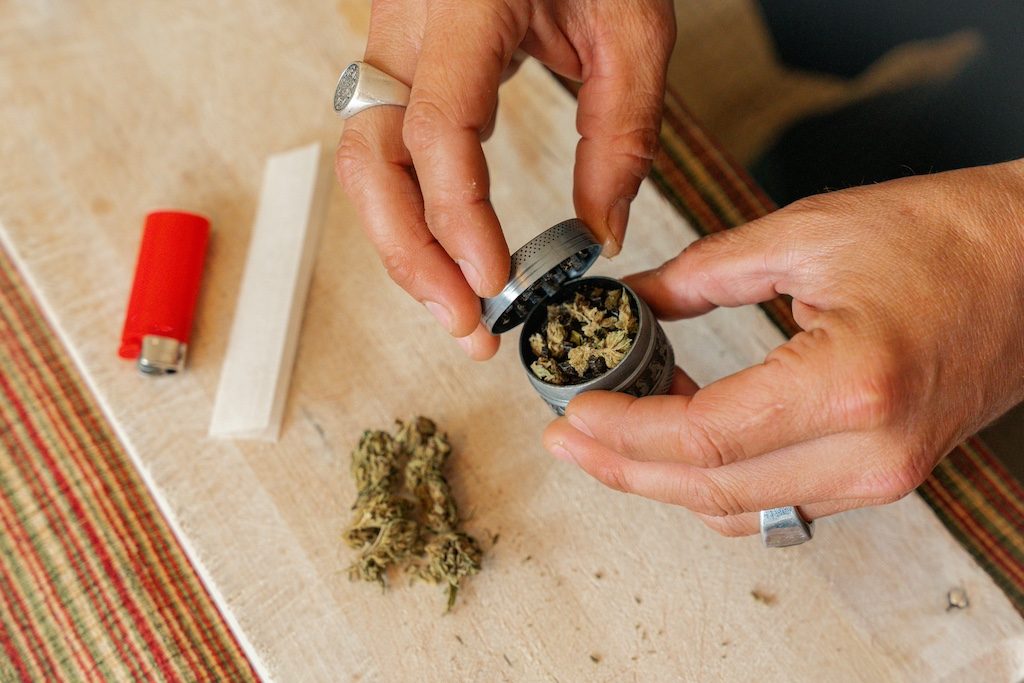
In late April, the TSA quietly updated its screening rules to permit passengers to carry medical marijuana aboard commercial flights in both carry-on and checked baggage. This shift marks a watershed moment for cannabis policy in the United States, though the details matter enormously for anyone planning to travel with their medication.
What changed and why it matters
The update appeared on the TSA's "What Can I Bring?" page, noting that medical marijuana is now allowed in both carry-on bags and checked luggage with special instructions. The change came just days after the Trump administration's acting U.S. Attorney General Todd Blanche reclassified cannabis from Schedule I to Schedule III, removing it from the same regulatory category as heroin and LSD. Instead of being labeled a substance with "no currently accepted medical use," medical marijuana is now recognized as having "moderate to low potential for physical and psychological dependence."
This reclassification doesn't mean marijuana is federally legal. What it does mean is that the TSA no longer treats cannabis as a security threat to aviation. The agency's mission focuses on detecting actual dangers to flights and passengers, not policing substances that pose no direct threat to aircraft safety.
Michael Bronstein, president of the American Trade Association for Cannabis and Hemp, called the shift "the most significant federal advancement in cannabis policy in over 50 years." He's right. The decision opens doors for state-licensed producers and distributors to register with the DEA and claim tax benefits previously unavailable to them. It also reflects reality on the ground: nearly all U.S. states have now approved cannabis in some form. Two dozen states plus Washington DC permit adult recreational use, 40 authorize medical marijuana, and eight more allow low-THC cannabis or CBD oil for medical purposes. Only Idaho and Kansas remain complete holdouts.
The critical fine print you must know
Before you pack your medication for your next flight, understand that this is not a free-for-all. The TSA website notably does not specify how much medical marijuana each passenger can legally carry. That's a problem, because state laws vary wildly, and the final decision rests with the TSA officer at your checkpoint. That officer has discretion to refer you to law enforcement if they believe you're violating local or state law.
Consider what happened to a 23-year-old traveler who attempted to bring over 34 kilograms of cannabis through Miami airport and was arrested for trafficking. The TSA's guidance makes clear that officers do not actively search for drugs, but if they discover cannabis during screening, they will turn you over to police if they suspect illegal activity.
Traveling smart with medical cannabis
If you're bringing medical marijuana on a flight, here's what matters: check your home state's limits on what you can possess, verify the rules at your destination, carry documentation from your doctor or cannabis dispensary proving it's for medical use, and pack amounts that align with your state's legal allowances. Keep the product in its original, labeled container whenever possible. Some travelers use TSA PreCheck and Global Entry programs, though these don't change screening rules for cannabis specifically.
The TSA's shift doesn't mean local law enforcement has changed their approach. If you're flying from California with a legally purchased ounce of medical cannabis to a state where only minimal quantities are permitted, you're technically breaking that destination's law at the moment you land. The agency's updated policy acknowledges this complexity: "TSA security officers are focused on security and are designed to detect potential threats to aviation and passengers." They're not there to enforce drug law uniformly, but they will cooperate with law enforcement if they observe what appears to be illegal activity.
This moment captures the tension between federal policy evolution and the patchwork of state regulations that still governs travel across America. The TSA has moved, but you'll still need to navigate dozens of different local laws to stay safe. Do your homework before you pack.