Eighty-two percent of Europeans are gearing up for spring and summer trips, marking the strongest appetite for travel since 2020. That's the good news. The catch? Nine out of ten of them are staying put within Europe, and the reasons tell a story about how the world has shifted.
Sammy, a Belgian father, ditched his family's annual Dubai getaway for a Spanish holiday. Sabrina, a retail worker, had her Tel Aviv trip cancelled twice and couldn't scrape together the money for anywhere else. Greta, based in Hamburg, abandoned plans to attend her nephew's graduation in the US when she saw the airfare quotes. These aren't edge cases. They're the new normal.
According to the European Travel Commission's latest monitoring report, travel intentions for April through September 2026 have climbed 10 percent compared to last year. The surge is sharpest among younger travelers, with those aged 18 to 24 showing a 21 percent jump and 25 to 34-year-olds up 16 percent. Europe itself has become the safer bet, both financially and psychologically.
The New Rules of Travel
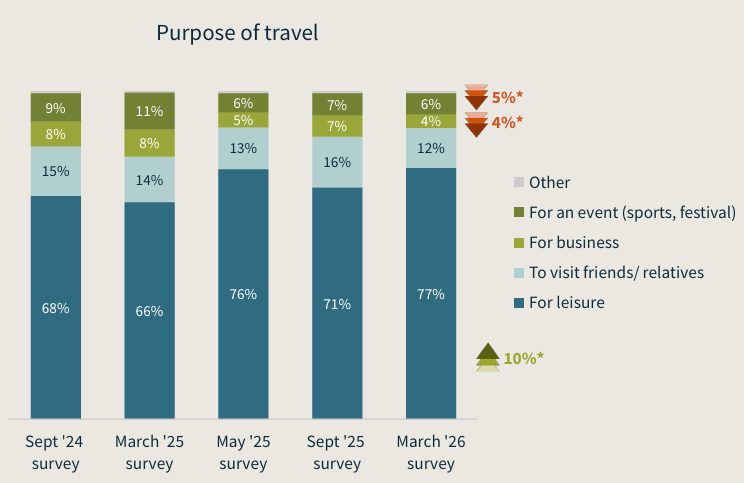
But this rebound comes with strings attached. Trips are shorter, fewer, and pickier. Four to six-day stays now account for 38 percent of planned holidays, up 3 percent from last year, while longer week-plus getaways have shrunk to 37 percent. Budgets reflect the squeeze too. More travelers are capping spending at 1,000 euros or less per trip (up 4 percent), while those planning to spend 1,500 euros or more have dropped by 9 percent. Thirty-nine percent of Europeans plan just a single trip this season, up 7 percent year-on-year.
The trade-offs are telling. Rising costs and geopolitical uncertainty loom largest, but safety has become the top factor when choosing where to go, followed by weather and finding a good deal. Concerns about Middle East tensions have jumped 9 points to 18 percent of the population. Yet here's the interesting twist: travelers won't sacrifice comfort. Hotel spending has barely dipped, suggesting people would rather book a short luxury stay than stretch a budget trip across two weeks.
The Mediterranean Advantage
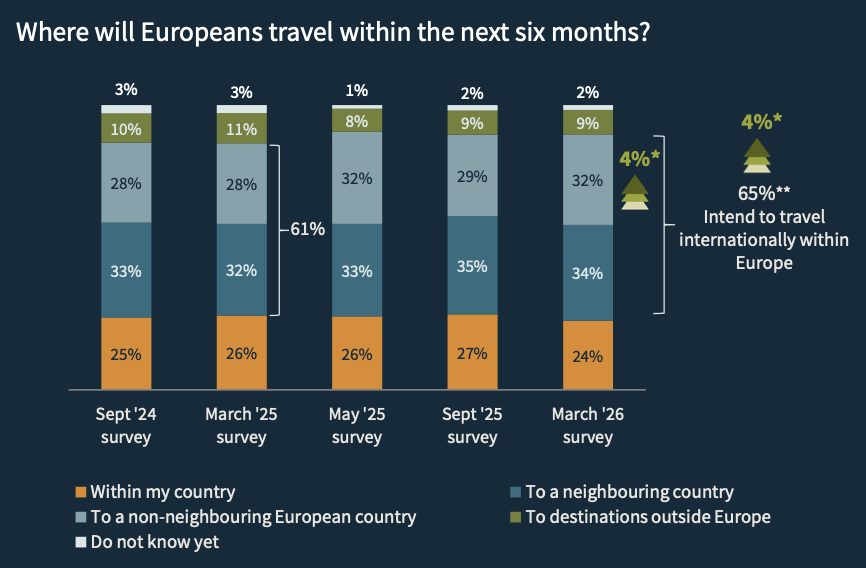
Southern and Mediterranean Europe are cleaning up. Spain leads the pack at 14 percent of intended visits, trailed by Italy (11 percent), France (8 percent), Greece and Portugal (6 percent each). The region as a whole captures 60 percent of all planned trips. Sammy exemplifies this shift: instead of one long-haul escape, he's booked three separate stays across Spain, spreading the adventure and the cost.
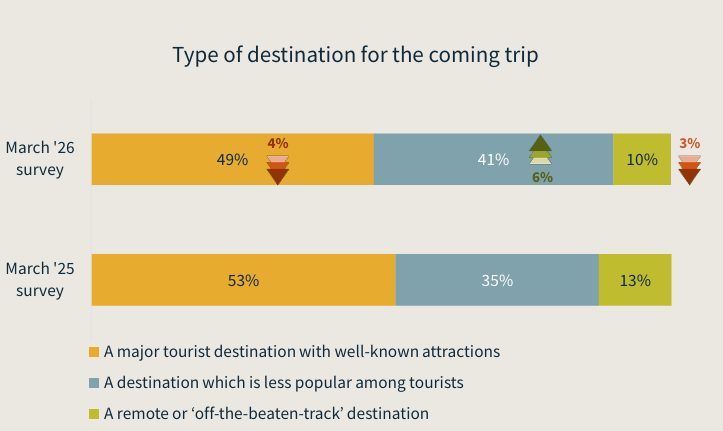
There's also momentum toward cross-border exploration within Europe, with 65 percent planning to hop between countries. Some are venturing to lesser-known European corners, while others are simplifying their approach entirely by picking one base and exploring nearby cities rather than juggling multiple destinations. It's less about ticking boxes and more about actually savoring a place.
What This Means for Travelers
Miguel Sanz, President of the European Travel Commission, summed it up plainly: Europeans remain "highly motivated to travel, even in a more complex global environment," but they're adopting "a more selective, value-driven approach" with "shorter stays, flexible plans, and carefully managed budgets." That's not pessimism. That's pragmatism. Budget-conscious travelers might find inspiration in how some European destinations are rewriting what affordable travel looks like, offering quality experiences without the premium price tag.
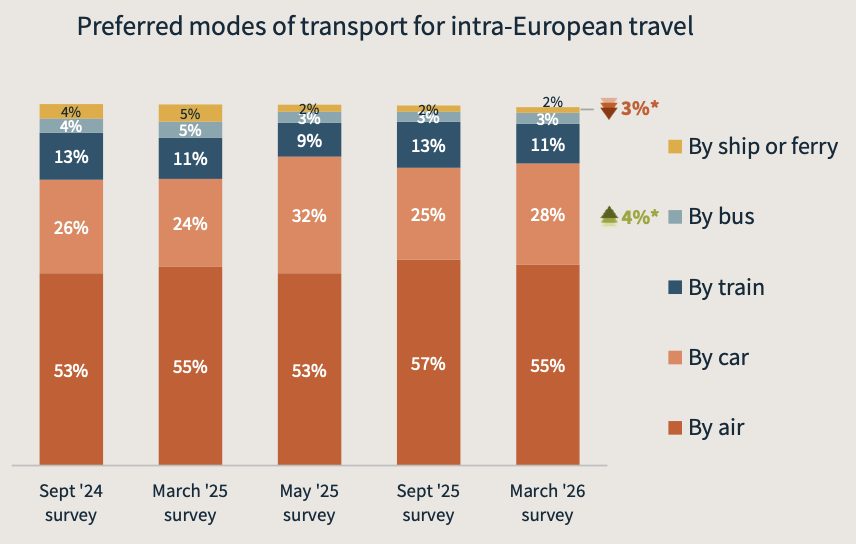
The flip side is sobering. Travelers like Sabrina have given up entirely after repeated cancellations and pricing that wouldn't budge. Greta will still escape to Europe, but she'll miss a family milestone. Some haven't bounced back at all. Meanwhile, Europe's reliance on imported jet fuel (around 30 percent) adds another layer of fragility to cross-border travel. The situation remains tight, with officials weighing whether to unlock emergency reserves.
What emerges is a portrait of travel in transition. The wanderlust is there, especially among younger generations who are ramping up their plans faster than anyone else. Flights aren't dead. Hotels aren't empty. But everyone is traveling smarter, closer to home, and with their eyes wide open to what they can actually afford. That's not a story about travel dying. It's about travelers adapting to reality and finding ways to make it work.