The European Union's new Passenger Package (EUPP) arrived with real fanfare and genuine intentions. For anyone who's felt burned by a missed train connection or cancellation that left them stranded, it seemed like relief was finally coming. The protections sound solid on paper: compensation for delays, free rebooking, meals and accommodation covered when things go wrong. Compared to the patchwork of rules that governed international rail travel before, it's undeniably progress.
But here's where the story gets messy. The moment your journey requires more than one operator or crosses borders, those protections start evaporating like morning mist. Book a single ticket and you're covered across multiple carriers. Book separate tickets, and you're on your own. The catch? On many major routes, buying a single ticket is barely possible.
The loopholes are nearly as wide as the continent
The EUPP allows national governments to exempt huge swaths of service. Urban trains, suburban lines, regional services, long-distance domestic routes, historic trains, tourist trains - the list keeps growing. In reality, most trains across Europe fall into one of these categories, which means most travelers get minimal protection. International trains heading to non-EU countries? Exempt. The result feels less like a unified framework and more like a very ambitious suggestion that countries are free to ignore.
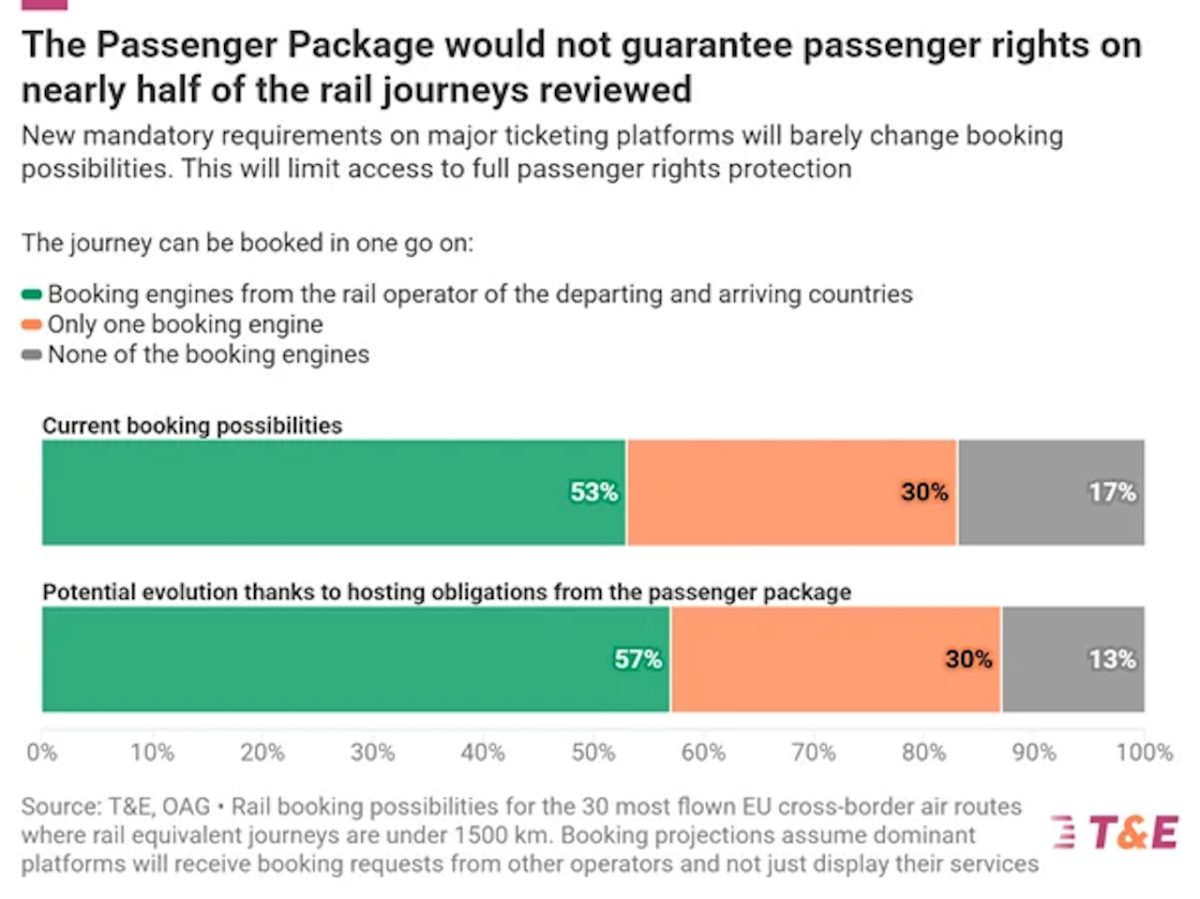
Then there's the booking problem. Transport and Environment (T&E), a watchdog coalition, found that 43% of Europe's 30 busiest cross-border rail routes cannot be booked as a single ticket. Want to travel from Paris to Rome or Barcelona to Milan? Popular routes that should anchor sustainable travel across the continent, and yet they remain stubbornly fragmented across multiple booking platforms. National rail operators control up to 90% of ticket sales on their home turf, and they have little incentive to sell competitors' seats on the same platform.
When connections break, wallets suffer
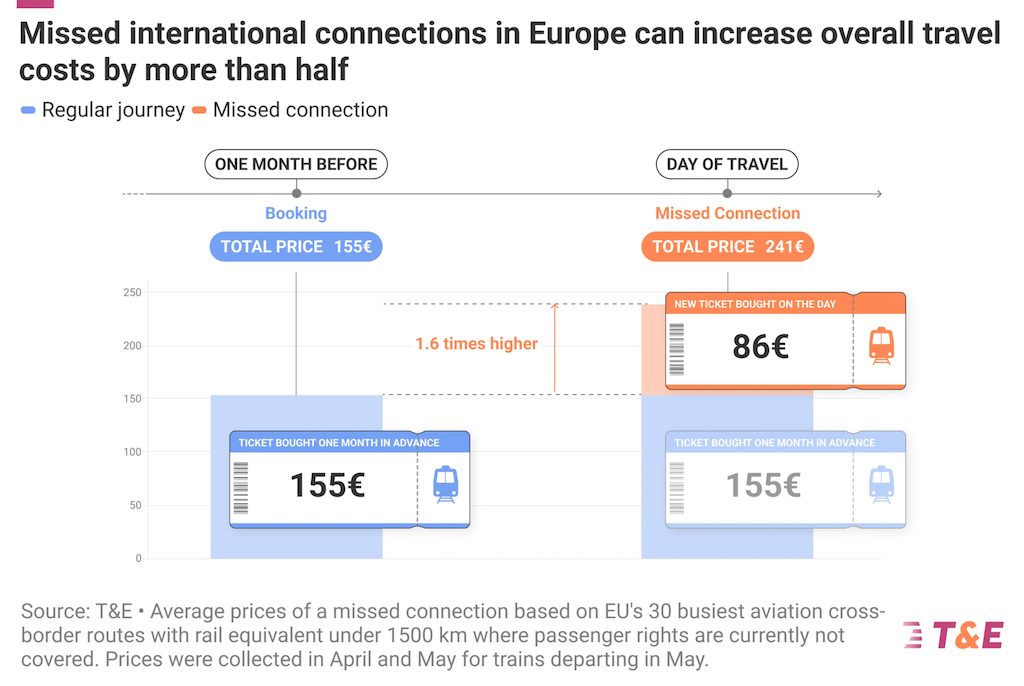
This fragmentation creates real financial pain for travelers. Miss a connection because your first train was delayed, and you're not automatically entitled to a free seat on the next one. You're buying a new ticket at whatever fare the operator is charging in the moment. According to T&E research, passengers face an average penalty of 86 euros when they miss connections on unprotected routes - that's 1.6 times what they paid booking a month in advance. On some routes, last-minute fares spike to 2.6 times the original price. Add overnight accommodation to that bill because the next connection leaves in the morning, and a missed transfer becomes genuinely expensive.
This matters because it's not rare. A joint survey by Que Choisir and T&E found that 44% of passengers on multi-operator journeys have missed at least one connection. Nearly half. That's not an edge case or worst-case scenario; that's the normal experience for train travelers crossing borders.
The rail industry has always relied on voluntary cooperation between operators, and the EUPP technically strengthens that requirement. Operators must now share ticket data when asked. But the regulation stops short of requiring them to sell each other's tickets on major routes through dominant platforms. The contrast with aviation is stark - airlines have been required to cooperate like this for years. Rail, the supposedly greener option, still operates like competing fiefdoms.
Why this matters for your next trip
These aren't abstract policy problems. They affect your decision about how to travel. Europeans increasingly favor short breaks - long weekends, quick city escapes - where every hour counts and reliability is essential. When you're cramming Paris into 72 hours or visiting three cities in a week, a missed connection or sudden rebooking at premium prices can wreck your plans. The EUPP was supposed to make rail competitive with flying and driving as a fast, trustworthy option across borders. Instead, for anyone taking international rail journeys, the package barely scratches the surface. The protections exist, but they're so riddled with loopholes and booking limitations that many travelers still can't actually access them.
Rail and Environment campaigners have been clear: obligating major platforms to offer single-ticket bookings on Europe's busiest corridors isn't just nice to have. It's essential if rail travel is ever going to convince people to leave the car at home and skip the airport. Until that happens, passengers will keep defaulting to the safer bets: the road and the plane. And that decision gets made quietly, one missed connection at a time.