If you've been keeping half an eye on travel news, you've probably heard whispers about ETIAS, Europe's new travel authorization system. The chatter suggests it's coming soon. The reality is messier: the EU still has no firm launch date, despite initially promising it would arrive by the end of 2026.
For travelers from the UK, US, Canada, Australia, and dozens of other visa-exempt countries, this rolling uncertainty is getting old. You don't need to do anything right now, but the clock is ticking on Europe's border overhaul, and the timeline keeps shifting.
What exactly is ETIAS anyway
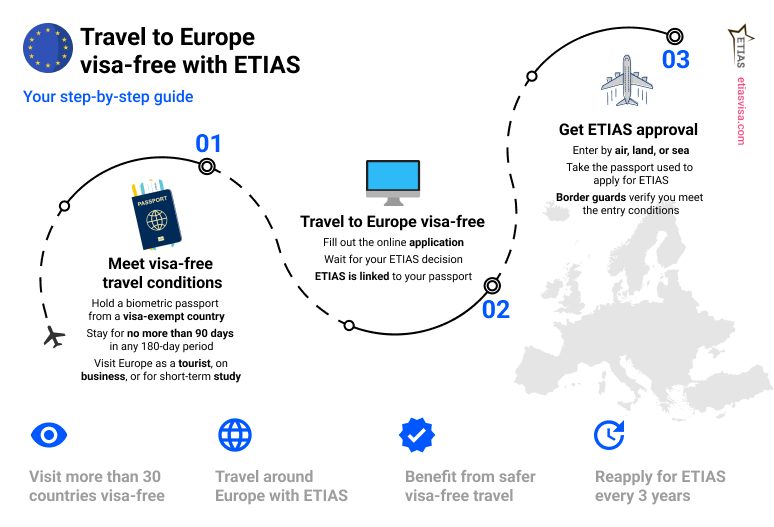
ETIAS stands for the European Travel Information and Authorisation System. Think of it as a pre-travel clearance, similar to ESTA for the United States. Once it launches, anyone from a visa-free country wanting to visit 30 European nations for short stays will need to apply online beforehand.
The application will cost you 20 euros (a jump from the original 7-euro price tag). Travelers under 18 or over 70 get a free pass, as do certain family members of EU citizens. You'll submit your passport details, personal information, and answers to security questions covering things like previous travel to conflict zones or criminal records. Most approvals happen within minutes, though complicated cases can take longer.
Once approved, your authorization sticks around for three years or until your passport expires, whichever comes first. You can make multiple trips during that time, staying up to 90 days within any rolling 180-day window. Here's the catch: having ETIAS doesn't actually guarantee entry. It's permission to apply, not a guaranteed golden ticket.
Why the delays keep happening
The EU's official line still pegs ETIAS for "late 2026," but that promise has weakened considerably. Behind the scenes, EU officials have been discussing pushing it to 2027. The agency managing the system, eu-LISA, reportedly doesn't believe the 2026 timeline is realistic anymore.
A big part of the problem stems from the botched rollout of EES, Europe's Entry/Exit System. EES already went live on April 10, 2026, and it's been a disaster in slow motion. Airports and border crossings across the continent have suffered massive queues as travelers get registered with facial scans and fingerprints for the first time. Airlines and airport operators are begging for flexibility during peak travel periods. EU Commission President Ursula von der Leyen admitted in July there was "still a lot to do" to fix the technical headaches.
Since ETIAS and EES are technically linked, with ETIAS depending on EES infrastructure to function properly, the earlier system's troubles are now poisoning ETIAS's timeline too.
ETIAS versus EES, why it matters
These two systems do different jobs, and that confusion alone has created headaches for travelers trying to understand what's coming. EES operates at borders and tracks everyone who isn't an EU citizen coming in or leaving. It replaces old passport stamps with digital records and collects biometric data. ETIAS, by contrast, is a pre-departure check. It doesn't collect fingerprints or facial images. It just confirms you got approval before you left home.
Think of it this way: ETIAS decides if you're allowed to go; EES records when you actually show up. You need both, but they're separate processes.
What you should do right now
Absolutely nothing. The EU will announce ETIAS's official start date several months before applications open, so you'll have plenty of notice. Don't fall for dodgy websites claiming they can submit your ETIAS application already. They can't. The system isn't live, and the EU is crystal clear that no applications are being accepted.
For summer 2026 travel, you still won't need ETIAS. For trips after that, keep an eye on official EU announcements. When the system finally launches, the application process takes about five minutes if your information is straightforward.
If border chaos is a concern, you might explore alternatives. Some corners of Europe still offer easier entry routes for British travelers, and options like new rail connections launching in 2027 might reshape how you reach certain destinations.
Europe's new border systems represent a genuine overhaul, and teething problems are inevitable when governments try to digitize something this complex. Frustrating as the delays are, they suggest the EU is taking security seriously rather than rushing something half-baked. Your European adventure isn't going anywhere. The paperwork, unfortunately, just got a bit more complicated.