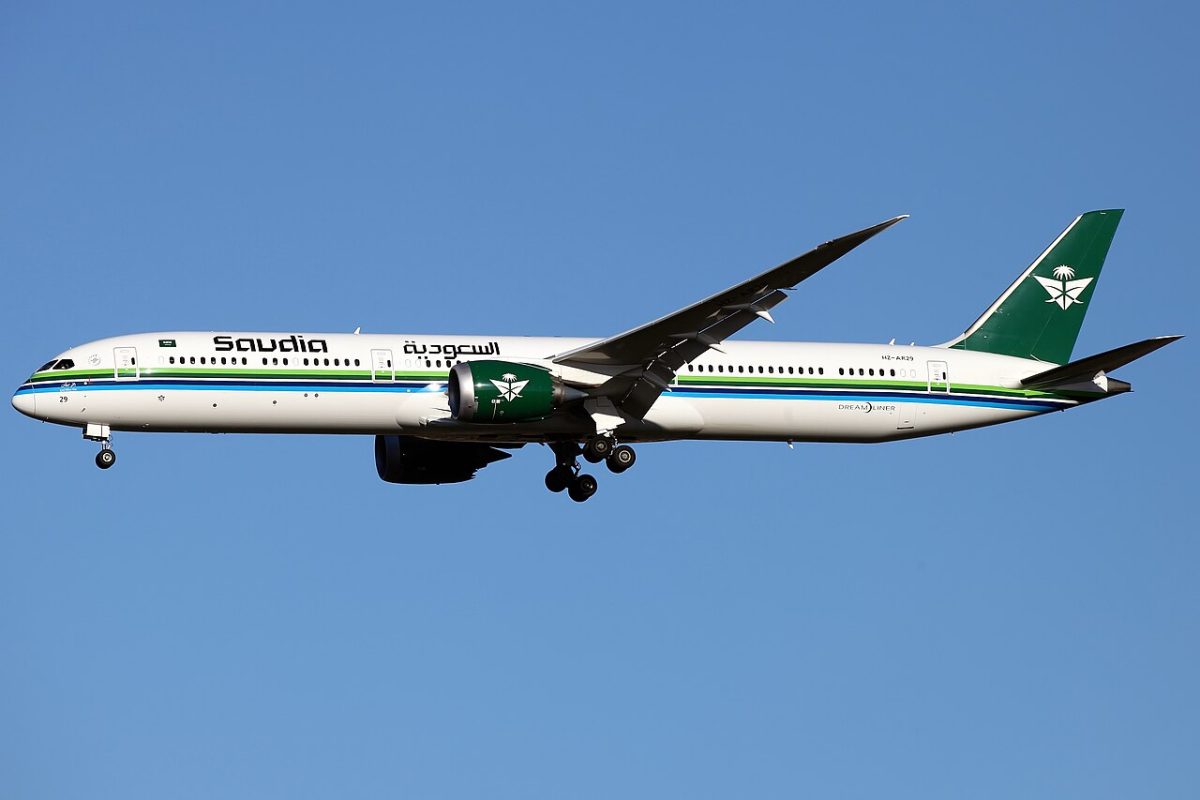
When a US president walks out of talks with China's leader clutching a 200-aircraft order, most people celebrate. Boeing's shareholders didn't get the memo. Within a day of the announcement, the company's stock tanked 4.1 percent, erasing weeks of gains and signaling that sometimes more isn't what the market wants.
The deal emerged from a presidential visit to Beijing last week, styled as a commercial mission with the heads of major American corporations in tow. Boeing's CEO, Kelly Ortberg, was there. Trump appeared on Fox News to announce the win: "One thing he agreed to today, he's going to order 200 jets." Simple enough. Except the aviation industry had been expecting something far larger before the talks began.
Industry sources familiar with the negotiations say discussions centered on a package that could have included up to 500 Boeing 737 MAX aircraft plus widebody jets. Some analysts had even penciled in potential follow-up orders, with Trump claiming aboard Air Force One that Beijing promised up to 750 additional planes if the initial batch satisfied requirements. The precedent seemed clear: back in 2017, Trump's first state visit to China produced a landmark deal for 300 planes valued at $37 billion. Nobody expected this one to be smaller.
The gap between expectation and reality explained the stock slide. Aviation advisory firm IBA estimates the 200-aircraft order would fetch roughly $17 to $19 billion if mostly narrow-body MAX jets, climbing to $25 billion if 40 percent were wide-body aircraft. Solid money by any measure, yet analysts interpreted it as a disappointment. Trade tensions between Washington and Beijing likely played a role in the reduced scope. Last October, Trump suspended up to 100 percent tariffs on Chinese goods following an escalating confrontation where Beijing threatened to restrict rare earth exports, which aerospace manufacturers desperately need. He left Beijing without securing a rare earth agreement this time either.
Why China Matters So Much to Boeing
China is the world's second-largest aviation market, and Boeing's position there has eroded significantly over the past decade. The company reported just 51 orders from Chinese buyers over seven years, a historic low. The 737 MAX grounding, geopolitical friction, and trade disputes all took their toll. Boeing itself acknowledged the political reality, thanking the Trump administration for achieving what it called a "major goal of reopening the Chinese market."
The stakes couldn't be higher. Boeing forecasts that China will need more than 9,000 new jetliners by 2045 to handle exploding demand for air travel. As China's transportation infrastructure continues to expand at remarkable pace, aviation will need to keep up. Yet Airbus has stolen Boeing's thunder in the region. The European manufacturer operates an A320 assembly line in Tianjin and has pulled far ahead in recent years. Beijing is simultaneously negotiating a similarly sized deal with Airbus, creating a race that extends far beyond simple commerce.
The Diplomat's Game in Aircraft Orders
Analysts offer an important caveat: Chinese aircraft orders are often intimately tied to diplomatic negotiations and don't always translate into immediate, firm delivery commitments. What looks like a signed deal on paper might stretch across decades or never materialize at all. The announcement itself served as a political victory lap more than a commercial certainty.
Boeing also faces a structural problem in China that no single deal can immediately solve. Chinese carriers worry about long-term US export restrictions on aircraft and the availability of guaranteed maintenance support. Without confidence that parts and technical expertise will remain accessible, airlines hesitate to depend too heavily on American planes. The geopolitical uncertainty that defines US-China relations casts a shadow over every transaction.
What happens next depends partly on forces beyond any individual company's control. The European Union is currently reassessing its own trade relationship with China, a process that could eventually complicate Airbus's strong position there. Meanwhile, Boeing must prove it can deliver on its commitments while navigating tariff threats, supply chain vulnerabilities, and persistent competition. The 200-aircraft order represents a foothold in a market that matters enormously to the company's future. Whether it becomes the foundation for something bigger, or remains a one-time diplomatic gesture, remains to be seen.