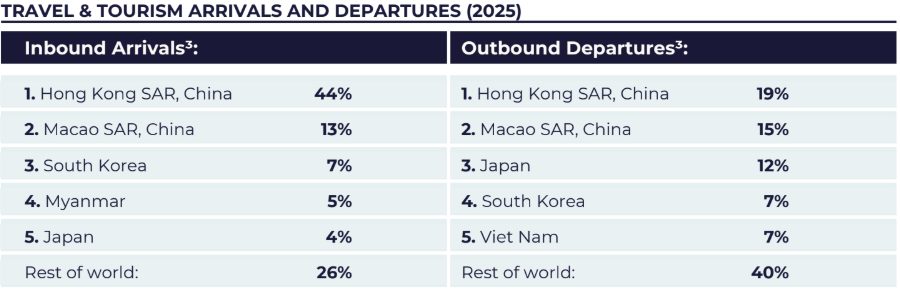
Something seismic is happening in global tourism, and if you haven't noticed yet, you will soon. China just recorded a tourism surge that makes most countries look like they're standing still. In 2025 alone, the country welcomed 68 million international visitors, a 15.5% jump from the previous year. To put that in perspective, that's nearly three times faster than the global tourism growth rate of 5.4%.
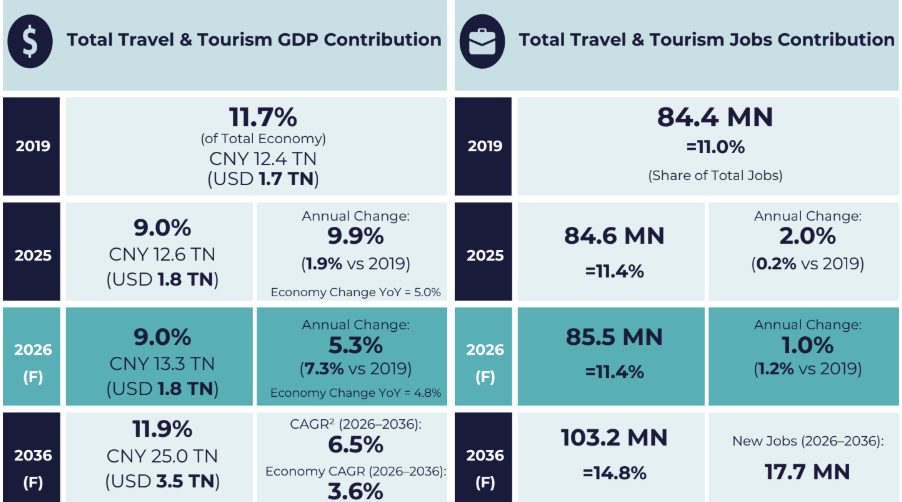
The numbers read like a script written by someone who believes in the power of bold policy. After nearly shutting its doors during the pandemic, China fully reopened to foreign travelers in 2023. Since then, it's been playing catch-up with the energy of a nation determined to reclaim lost ground. The entire travel and tourism sector expanded by 9.9% in 2025, reaching $1.8 trillion and more than doubling the global average growth rate of 4.1%. These aren't incremental gains. These are the kinds of numbers that reshape how the world thinks about travel.
The blueprint for rapid recovery
You can't manufacture this kind of growth without a serious plan. China's government has invested heavily in the infrastructure that makes travel possible: high-speed rail networks connecting cities that once felt distant, expanded air routes, and roads reaching corners of the country that rarely saw international visitors. The ambition extends beyond transportation. New tourism zones, cultural attractions, and theme parks are multiplying. The government even developed cycling routes and hiking trails to push explorers beyond the usual suspects in Beijing and Shanghai.
But infrastructure alone doesn't explain the momentum. Policy reform matters equally. China simplified visa requirements, offering up to 30-day visa-free stays for certain nationalities and extended transit passes of 10 days. Airports now feature biometric systems and digital payment platforms that eliminate the friction travelers expect from slower systems. These moves sound technical, but they translate into real convenience for the people actually planning trips. If you've read about payment headaches in China, you'll appreciate how much these changes matter.
Gloria Guevara, president and CEO of the World Travel and Tourism Council, praised the approach during remarks at the Beijing Fragrant Hills Tourism Summit 2026, calling China's recovery proof that "targeted policy reforms can translate directly into stronger inbound demand and sustained growth." She added that continued visa facilitation could position China as the world's leading travel and tourism economy if the country maintains its current trajectory.
What comes next matters more than the numbers
The real story isn't what's happened. It's what's projected to happen. By 2036, China's travel and tourism sector is forecast to nearly double, potentially reaching $3.5 trillion in value. The country is expected to generate one in every five new tourism jobs created globally over that decade. In 2025, the sector supported 84.6 million jobs in China. That figure is expected to exceed 103 million within ten years.
China is also clawing back its position as the world's largest outbound travel market. Spending from Chinese travelers is forecast to surge 22.5% by 2026, approaching $280 billion and surpassing the United States. The country already ranks second globally in business travel spending at $192 billion, a reminder that tourism growth isn't just about leisure travelers exploring temples and mountains.
This explosion is lifting the entire region. The Asia-Pacific area now ranks as the world's fastest-growing travel destination zone, with growth of 8.1%. If you've been following tourism trends across Asia, from India's domestic boom to the quiet rise of smaller markets, China's surge adds serious weight to the idea that travel's future centers on Asia.
What this means for travelers
For people planning trips, this matters in practical ways. More international visitors means more English signage, more tourist infrastructure, better communication tools. It also means rising prices, crowded attractions, and the inevitable compromises that come with popularity. Popular destinations elsewhere have learned this lesson the hard way (see what Amsterdam decided to do about it). China's next challenge is managing growth without destroying the experience that made people want to visit in the first place.
The path forward depends on whether current trends hold. Continued policy support, investment in transportation and attractions, and the willingness to embrace international travelers all have to stay intact. One policy reversal or a major disruption could shift everything. But for now, the momentum is undeniable. China isn't just recovering from the pandemic's travel freeze. It's remaking itself as a central player in how people move around the world.