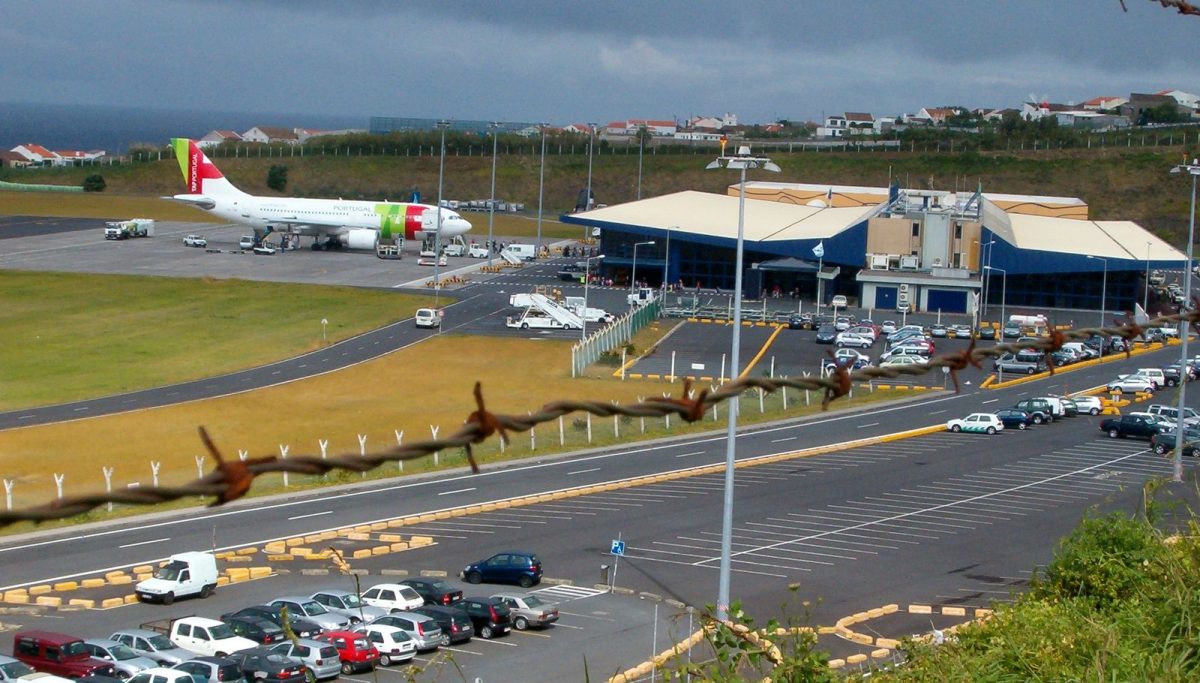
The Azores are getting crowded. Not in a bad way, but in the way that forces infrastructure to catch up fast. Portugal's government just announced an ambitious overhaul of Ponta Delgada's João Paulo II Airport, the main gateway to these volcanic islands, and the numbers tell the story. Ten years ago, about 1 million passengers touched down here annually. Last year, that number hit 3 million. The archipelago has tripled its visitor traffic, and the airport finally has to grow up to match.
The expansion plan is bold. Instead of the original modest renovation adding just 4,000 square metres, airport operator ANA revealed in late 2025 that they would nearly double the terminal's current footprint by 2030, adding roughly 15,000 square metres of new space. Think wider check-in halls, more security lanes, bigger boarding areas, and expanded border control zones. The goal is straightforward: let planes land and people move through without feeling like sardines in a tin.
Why the Azores Matter to Portugal Right Now
This isn't just about fixing traffic jams at one remote airport. Portugal's government is betting that tourism will keep growing here, and they're putting money where their mouth is. The Azores have evolved from a quiet island refuge into a genuine destination draw, with visitors arriving from mainland Europe, North America, and beyond. For a region that has historically struggled economically, tourism has become increasingly vital to the local economy. Better airport infrastructure means more flights, more flexibility for airlines, and more reasons for travelers to book a ticket.
Ponta Delgada, situated on São Miguel island, holds the keys to the archipelago. It's where most international flights land and where connections to the other islands begin. Improving this hub creates a multiplier effect across the entire region. As Europe's tourism boom continues to reshape the continent, the Azores are positioning themselves to capture a slice of that demand.
A Bigger Vision Beyond the Islands
The Ponta Delgada project is part of something larger. Portugal's government is investing over 400 million euros across its entire airport network as part of a national masterplan. Money is flowing not just to the Azores but also to Porto, Faro, Madeira, and Lisbon. These immediate upgrades buy time and capacity while Portugal undertakes its biggest aviation gamble yet: building an entirely new airport outside Lisbon.
Luís de Camões Airport, planned for the Alcochete Firing Range south of the Tagus River, will be massive when it opens. We're talking about a facility designed to handle 56 million passengers annually on day one, with expansion potential to 85 million. It will feature roughly 500,000 square metres of terminal space, 64 boarding gates, and state-of-the-art infrastructure. The current timeline suggests construction could start in 2029 and finish by 2033, with operations potentially beginning in 2035. That's still nearly a decade away, which is why Portugal can't afford to let its existing airports fall behind.
Getting There Will Be Smoother
Here's something that might matter to you as a traveler: Portugal is planning to connect the new Lisbon airport to the city centre via a high-speed rail line that could cut the journey to just 20 minutes. This rail corridor would use a planned Third Tagus Crossing, turning airport access into something resembling modern European travel rather than a grinding slog through traffic.
For now, if you're heading to the Azores, you'll still fly into Ponta Delgada, but improvements are rolling out. Shorter waits at security, clearer pathways through the terminal, and better facilities are coming. The airport is evolving to match what travelers increasingly expect from their entry points.
What This Means for Your Next Trip
Practical takeaway: the next few years represent a sweet spot for visiting the Azores. Airlines are adding routes and increasing frequency because they see the demand and believe in the destination. Once the new Lisbon airport comes online in 2035, Portugal's entire aviation network will look different. Connections will improve. Flight options will expand. The Azores will become even easier to reach from North America and across Europe.
But right now, as Portugal pushes forward with major tourism investments across the country, the islands remain relatively undiscovered compared to the Algarve or Lisbon. That window won't last forever. The expansion of Ponta Delgada Airport isn't just about concrete and steel. It's a signal that Portugal sees the Azores as a destination with staying power, and it's willing to build the infrastructure to prove it.