Picture a Mediterranean island transformed into something unrecognizable. Where locals once lived, tourists now flood in by the millions. Housing becomes impossible to afford. Neighborhoods morph into souvenir shops and beach bars. Public services collapse under the weight of visitors who outnumber residents. This is Mallorca in 2024, and on Sunday night, the island's frustration finally snapped.
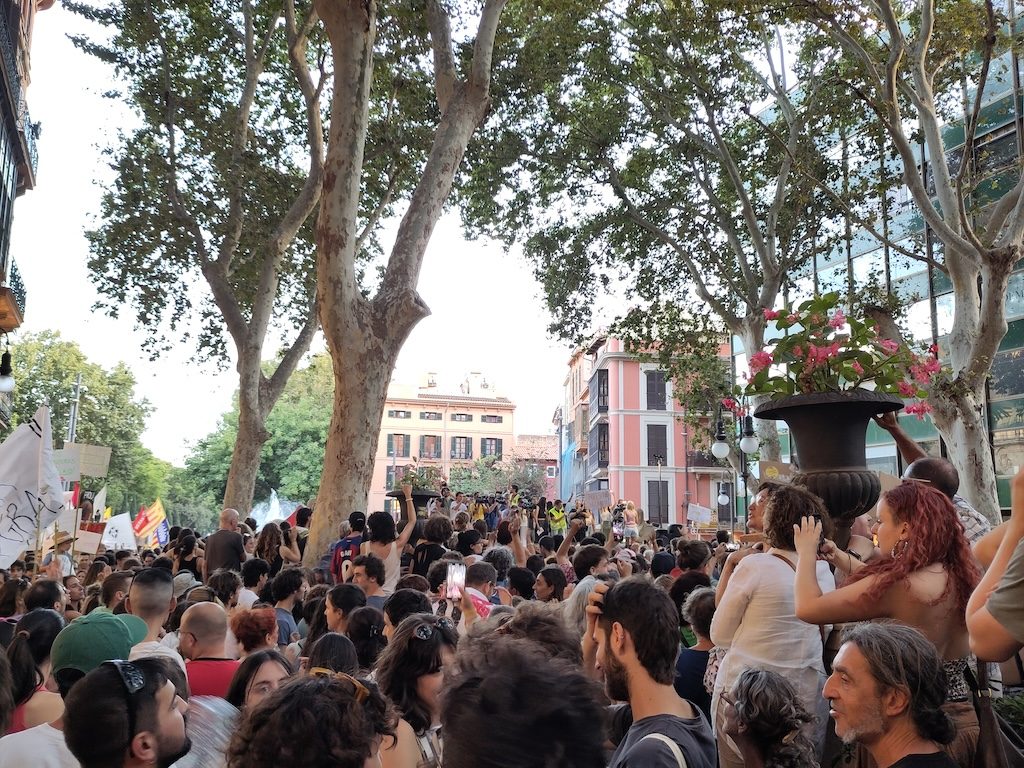
Somewhere between 25,000 and 70,000 people marched through Palma under the banner "Less Tourism, More Life." That gap in numbers matters. Police estimated a quarter million. Organizers said closer to 70,000. Either way, it ranks among the largest anti-tourism demonstrations the island has ever seen. The march itself was peaceful, a river of locals flowing through La Rambla, past restaurants that had shuttered their outdoor tables, past tourists watching from sidewalks, uncertain what they were witnessing.
But when organizers tried to read their manifesto near Ses Voltes, police blocked the route citing crowd control concerns. What happened next became the story everyone remembers: officers deployed batons. Officers fired approximately 20 rubber bullets into the crowd. Eight people needed medical attention. Two ended up in hospital with minor injuries. One man's head was bleeding. Some tourists found themselves caught in the chaos through no fault of their own.
What Broke a Whole Island
This wasn't spontaneous anger. This was years of pressure reaching a breaking point. Mallorca welcomed more than 13 million visitors last year. That's roughly 40 times the island's resident population arriving annually. The math is impossible. Housing prices have become unaffordable for people who actually live there. Rental costs have skyrocketed. Schools, hospitals, and water systems strain under demand they were never designed to handle. Local neighborhoods have been systematically converted into tourism zones, squeezing out the people who built them.
The protest's demands were specific: cap tourist accommodations, restrict cruise ships and private jets, protect affordable housing, shift toward sustainable economics. These aren't the complaints of people opposed to visitors. These are the words of people watching their home become a theme park. As organizers put it, "with all limits broken and the island converted into a theme park for tourists, we are going to see our already collapsed services put to the service of visitors."
Mallorca's crisis isn't unique. Italy's coastal towns are implementing visitor restrictions. Barcelona has become battleground over cruise ships. Ibiza and the Canary Islands are experiencing similar uprisings. Europe's entire tourism model is straining under its own weight, and destinations are reaching the point where communities decide survival means saying no to more visitors.
A Pattern Taking Shape Across Europe
What's happening in Mallorca reflects a fundamental shift in how Europe views tourism. For decades, the formula was simple: more visitors equals more money. That logic worked fine when destinations had capacity to absorb growth. But destinations have limits. Residents have limits. Infrastructure has limits. When you build an economy on the assumption that growth is infinite, you eventually crash into reality.
The violence on Sunday complicates the message, but it doesn't change the underlying truth. Thousands of Mallorcan residents decided the status quo was so unsustainable that they needed to march. Some among them decided conventional protest wasn't enough. Police responded with force. This cycle repeats across Europe now. The interesting question isn't why people protested. It's why policymakers were surprised.
For travelers planning trips to Mallorca or similar destinations, the practical reality is shifting. Communities are fighting back. Some places will implement visitor caps. Others will raise taxes on accommodations. A few might simply become less welcoming. The golden age of unlimited tourism to Europe's most popular spots is ending. That's not a judgment. It's just arithmetic.
Mallorca's message was clear: there's a cost to this model that communities are no longer willing to pay. What remains to be seen is whether the industry and governments will listen before the next island reaches its breaking point.