The party had to end somewhere. Japan's dazzling post-pandemic tourism comeback just stumbled for the first time in six years, and the culprit is unmistakable: a dramatic collapse in visitors from China.
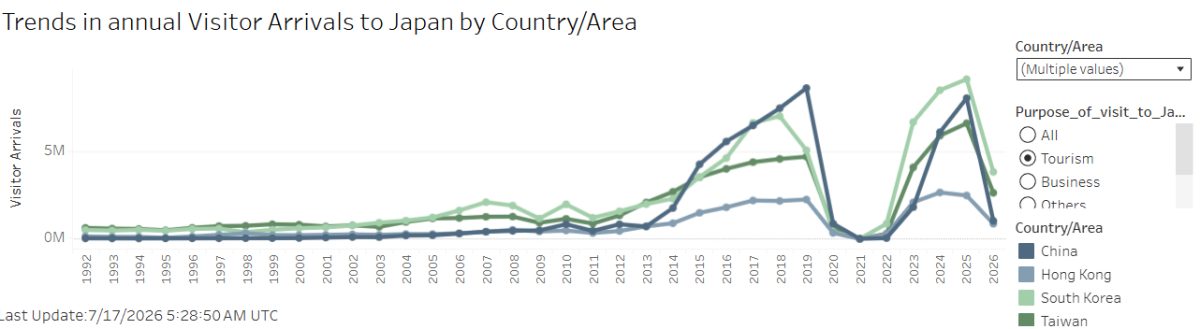
The numbers tell a stark story. The Japan National Tourism Organization reported that foreign arrivals dropped by nearly 500,000 in the first half of 2026, landing at 21 million visitors. That's a two percent decline year-on-year, interrupting a streak of relentless growth that had made Japan one of Asia's hottest destinations. Chinese visitor numbers cratered by 56 percent following a government travel advisory issued late in 2025 that explicitly discouraged citizens from visiting Japan amid geopolitical tensions over Taiwan. Airlines didn't help matters, slashing flight capacity between the two countries in response.
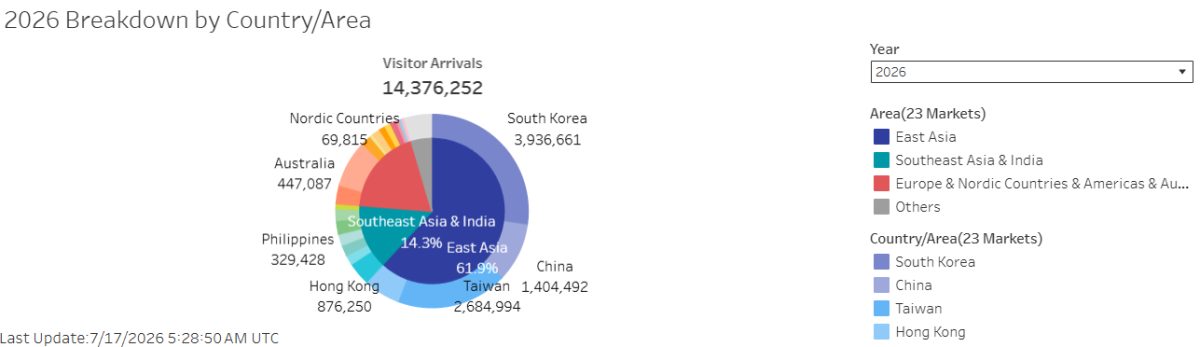
What's remarkable is how quickly the tourism landscape has shifted. China, historically Japan's strongest source market, has been dethroned. South Korea claimed the top spot with 5.46 million visitors (up 18.6 percent), while Taiwan sent nearly four million travelers and climbed to second place (up 21 percent). Meanwhile, Southeast Asia is stepping up, with Vietnam and Malaysia showing gains. Indian travelers jumped an impressive 26 percent, and the Middle East sent nearly 30 percent more visitors than the previous year.
Visitors from the United States, France, Italy, Spain, the UK, and Nordic countries all set new records. This geographic diversification is helping Japan weather the Chinese withdrawal better than it might have otherwise. Yet the loss of such a massive market segment can't be ignored. Japan just made visiting much more expensive, introducing higher departure taxes and visa fees that could further complicate the recovery.
The silver lining in declining numbers
Here's where things get interesting. Despite fewer bodies on the ground, foreign visitors spent roughly 2.51 trillion yen (about $14.49 billion) during the same period, a 0.2 percent increase from the year before. American travelers, who tend to be the biggest spenders, increased by 2.7 percent to around 354,000 visitors. This suggests that Japan is successfully attracting travelers who stay longer, spend more generously, and venture beyond the usual Tokyo-Kyoto circuit.
The strategy Japan is banking on involves three key moves: spreading visitor footfall across different regions, encouraging travelers to return multiple times, and pushing tourists to open their wallets wider. Some of this is clearly working. But there's a hard truth nobody wants to say out loud. Experts like Da Zhigang from the Institute of Northeast Asian Studies have warned that no amount of growth from other markets will simply replace what China once represented. The sheer volume and consistency of Chinese tourism can't be swapped out for scattered gains elsewhere, no matter how encouraging the numbers look on a spreadsheet.
The overtourism problem won't go away
Japan's government isn't slowing down its ambitions. Officials still aim to hit 60 million annual visitors by 2030, up from 43 million in 2025. But this target is already creating friction on the ground. Kyoto's geisha districts have clashed with camera-wielding tourists. Mount Fuji now charges for walking trails, and several prefectures have introduced new tourist taxes to manage the crush. Some locals have openly questioned whether more visitors means more prosperity or just more headaches.
The real question isn't whether Japan can attract 60 million visitors. It's whether it should. The country is learning what Europe already knows: tourism success creates its own problems. Reversing a collapse in one major market while simultaneously managing overtourism in hotspots requires finesse. It requires saying no sometimes. Right now, Japan seems determined to say yes to everything.
For travelers planning a trip, this moment offers something valuable: fewer crowds in many parts of the country, slightly less frenzy at iconic sites, and a genuine opportunity to experience Japan on more manageable terms. The tourism downturn is real for officials worried about revenue. For visitors? It might just feel like better timing.