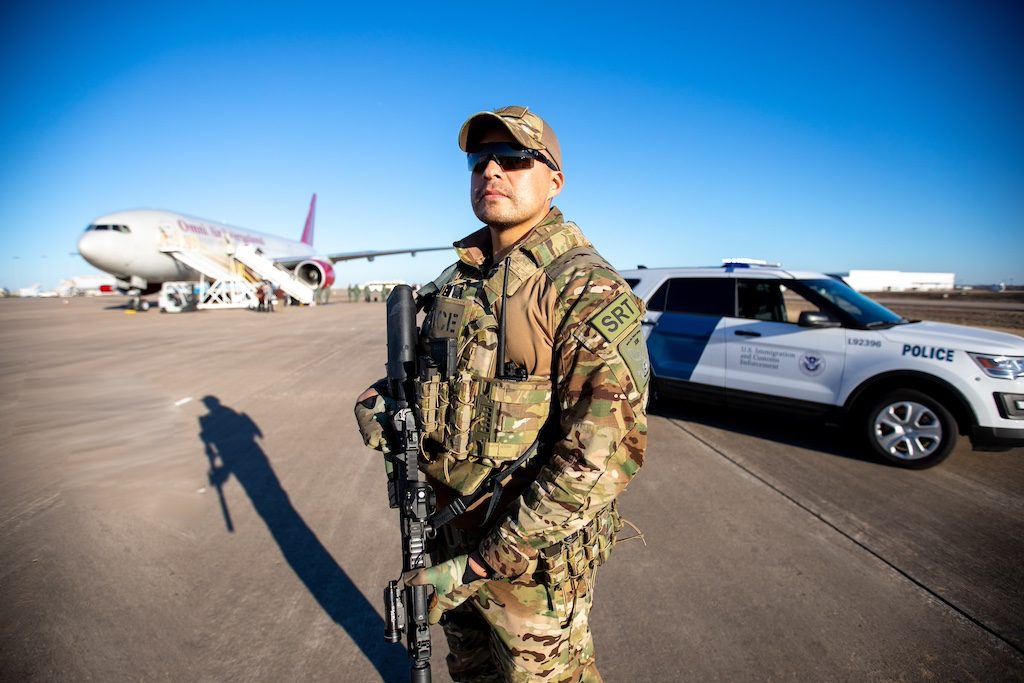
There's something new happening at airport security lines across the United States. Immigration and Customs Enforcement (ICE) agents are now positioned at 13 major American airports, stepping in to help manage operations while the Transportation Security Administration (TSA) deals with serious staffing shortages caused by government budget cuts.
The deployment kicked off in late March, covering major travel hubs like Atlanta, New York's JFK and LaGuardia, Chicago O'Hare, Philadelphia, Phoenix, Houston, Newark, Cleveland, Pittsburgh, New Orleans, and San Juan, Puerto Rico. The goal is straightforward: free up TSA officers to focus on the specialized work only they're trained to do, like running X-ray machines and conducting passenger screening.
What ICE agents can and cannot do
Let's be clear about something important. ICE agents are not replacing TSA screeners. They can't operate metal detectors, pat down passengers, or detect explosives. What they can do is manage crowd flow, control queues, guard entrance and exit points, and handle back-office support work. Think of them as an extra set of hands to keep the airport moving smoothly.
According to Department of Homeland Security spokesperson Lauren Bis, the additional support allows "TSA to focus on their highly specialized screening roles to efficiently get airport security lines moving faster." Some travelers have even reported seeing ICE agents handing out water bottles and assisting with bags, which suggests the role is broader than just security theater.
However, not everyone is convinced this approach solves the real problem. Angelo Kevin Brown, a former TSA agent and Assistant Professor of Criminology at Arkansas State University, told CNN that crowd control can only do so much. "Even if it works as planned and frees up a few TSA agents from smaller tasks, the main issue with time in the security line is dependent on the number of lanes open," he explained. In other words, you still need enough trained personnel actually running the checkpoints.
Prepare for longer lines and more patience
If you're flying soon, expect delays. The TSA's real-time app isn't being fully updated due to the staffing crisis, so you can't rely on it for live information. Airlines recommend arriving at least four hours early for domestic flights to account for potential queues. Check your flight status frequently with your carrier and the airport directly.
Another wrinkle: the TSA is currently training ICE agents on the job, which means the system is still ramping up. Some passengers have reportedly canceled trips entirely out of concern about encountering ICE agents, which adds another layer of uncertainty to this rollout. Whether that anxiety eases as people see how the system actually operates remains to be seen.
Getting ready for your next trip
What should you actually do? Make sure your documentation is completely up to date. That means a valid passport for international travel and proper identification for domestic flights. Even small discrepancies can slow you down when security is already stretched thin. Also consider which airports you're traveling through, since the 13 deployment sites are now operating under this new model. If you're connecting through one of them, give yourself extra time between flights.
For travelers watching this unfold, it's a good reminder that airport infrastructure is fragile. When budgets tighten, the ripple effects reach your travel plans quickly. If you've been considering Global Entry or other trusted traveler programs, now might be the moment to apply, assuming they're back to normal operations.
The broader lesson here is simple: give yourself more time than you think you need. Pack light, arrive early, and stay flexible. The aviation system adapts, but not always smoothly, and your best defense against delays is preparation.