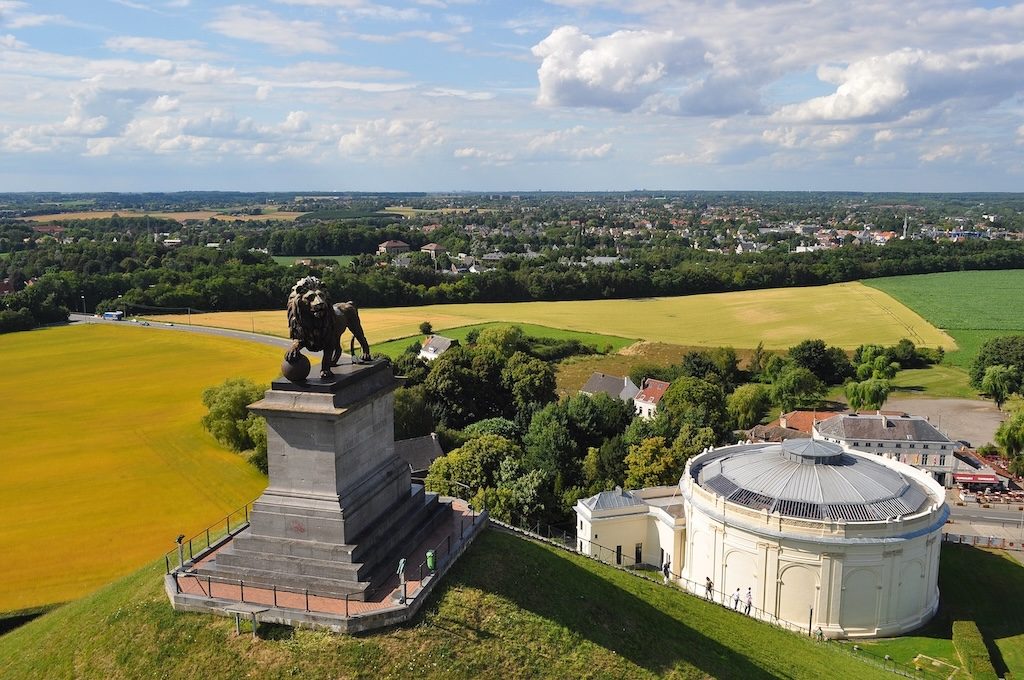
Roll down the highway south of Brussels and you'll spot it: a massive cone-shaped hill crowned with a cast-iron lion, paw planted firmly on a globe. This is the Lion of Waterloo, and it's just emerged from a serious renovation that cost Belgium's government €650,000 and has the whole structure looking sharper than it has in decades.
The monument commemorates June 18, 1815, the day Napoleon's Grand Army got handed its defeat by the British under the Duke of Wellington and other allied forces of the Seventh Coalition. King William I of the Netherlands originally commissioned the mound back in 1926 to mark the spot where a musket ball grazed his son, the Prince of Orange. The result was strange, stunning, and oddly controversial. Victor Hugo himself complained that the artificial hill had stolen the "real relief" of the landscape and left "history disconcerted." But Belgium wasn't listening, and the lion stayed.
Now, 200 years later, the monument needed some serious love. The restoration work tackled the 226-step staircase that climbs the 46-meter hill, replaced damaged balustrades and handrails, and completely refurbished the nine-part lion statue itself. Drone and borescope inspections revealed structural issues that had to be fixed to ensure the 4.45-meter-high beast stays stable for another two centuries. Workers even tucked a time capsule inside containing technical documents, a tool, a lottery ball, and a newspaper.
A Monument That Became a Metaphor
What makes Waterloo special isn't just the battle itself. The phrase has become synonymous with defeat worldwide, and the site draws thousands of drivers past it every single day. If you're curious about Belgium's growing restoration scene, this renovation fits perfectly into a broader European trend of refreshing heritage sites.
The reopening ceremony took place on May 22, with Belgium's Federal Minister for State Property Management Vanessa Matz and Walloon Heritage Minister Valérie Lescresnier presiding. Both stressed the importance of keeping this piece of European history alive and accessible for future generations.
Anniversary Celebrations Throughout 2015
Belgium isn't letting this milestone pass quietly. Through December 31, the "Iconic Lion" exhibition runs at the site, showcasing photographs and artistic interpretations that trace how the monument has evolved over four decades. The real party kicks off on August 15 and 16 with concerts and festivities, and September 12 brings a special theatrical show diving into 200 years of history.
If you're planning a visit to Belgium, the Lion of Waterloo sits just outside Brussels and works perfectly as a half-day trip. The renovated steps make the climb easier than ever, and the views from the top stretch across the actual battlefield where one of history's most pivotal moments unfolded. The gift shop and visitor facilities have been updated too, so you won't feel like you're trudging through a relic.
Whether you're a military history buff or just someone who appreciates the kind of quirky, defiant monuments that make Europe so endlessly weird, the Lion of Waterloo deserves a spot on your Brussels itinerary. It's the kind of place where history stops being a textbook and becomes something you can actually climb.