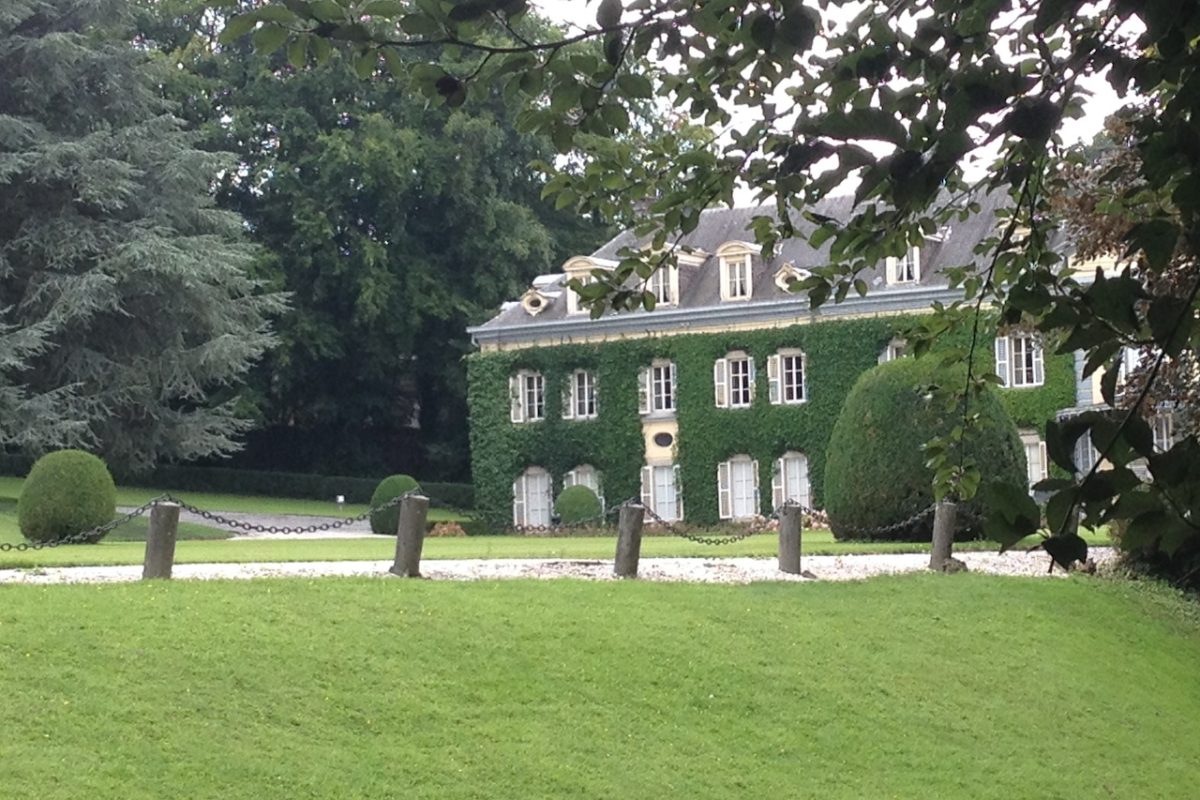
There's something magnetic about watching history get a second act. In the small Belgian town of Visé, architect Luc Spits and hospitality visionary Yannick Bouts are orchestrating exactly that. The Château d'Argenteau, a sweeping estate that's been standing since the 17th century, is about to become something few castles manage: both authentically preserved and thoroughly luxurious.
The castle sits in one of Belgium's most cinematic locations. Perched above the Meuse River with a park scattered with remarkable heritage trees, Château d'Argenteau has drawn admirers for centuries. What the building saw over its lifetime is pure architecture textbook material. Built in the 1600s, it underwent serious transformation in the 18th century, then countless renovations since. Each era left fingerprints on its walls. Now, Spits and Bouts see an opportunity to add their own chapter without erasing the previous ones.
Bouts isn't approaching this as a typical hospitality developer. He's the mastermind behind La Réserve in Knokke, Belgium's first proper five-star resort. That track record matters when you're eyeing a heritage property. "The first time I walked through the château, I felt something immediately," Bouts said. "This isn't just a project, it's a destination in the making." He sees the castle as something that could put Belgium back into serious conversation with international luxury travelers.
Navigating heritage and ambition
Getting permission to transform a protected historical monument takes more than enthusiasm. Visé's planning department had two non-negotiable demands. First, the castle's facades and critical interiors (the chapel and library specifically) had to remain untouched. Second, the surrounding park and its exceptional trees needed preservation, with public access guaranteed. These constraints shaped every aspect of the final design rather than limiting it.
The team has worked within those boundaries to create something expansive. The 2029 opening will welcome guests to 71 rooms and suites, a brasserie, a restaurant chasing Michelin recognition, event spaces, and a wellness center. This is one of several ambitious European hotel openings reshaping the continent, though few blend restoration and new construction quite like this.
Building the next generation
There's another layer to this story. Charlotte Spits, Luc's daughter, is being groomed to run the resort when doors open. Bouts is taking her under his wing in a way that goes beyond typical management training. She'll spend the coming years living at some of Europe's finest hotels (think Four Seasons George V Paris, The Ritz, Cheval Blanc) while also working behind the scenes at leading resorts. The idea is simple but demanding: immerse yourself in excellence at the highest level, then deliver that standard yourself.
"I see enormous potential in Charlotte," Bouts explained. "Education combined with hands-on experience at top-tier properties is what creates genuinely exceptional hospitality." It's a mentorship model that requires patience and resources, but it's also how traditions of excellence actually get passed forward.
Meanwhile, Bouts continues expanding his footprint. In April 2026, he's launching Hasselt Élégance, a three-day automobile event created alongside Louis Kemps Jr., Dries Schietaert, and Simon Croonen. The man clearly thrives on simultaneous, ambitious projects.
For travelers watching the luxury hotel landscape, Château d'Argenteau's story matters. It proves you don't have to choose between honoring history and creating something utterly contemporary. The castle will open in 2029 as evidence that the best travel destinations often emerge when vision meets restraint, when commercial ambition gets channeled through respect for what came before. Start watching this space.