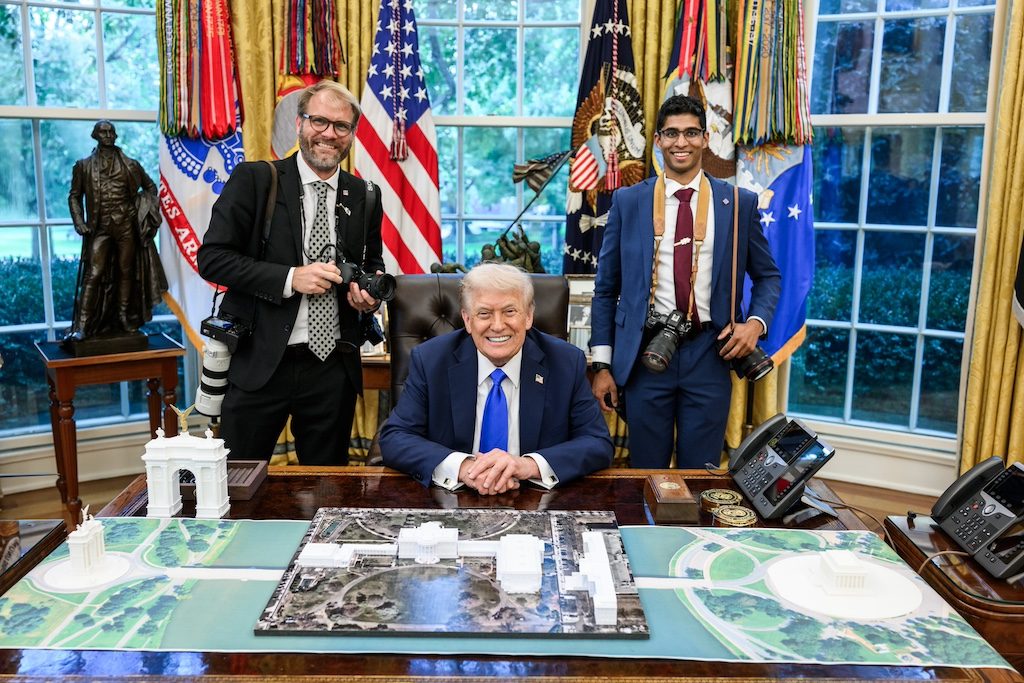
Washington DC just got a lot more complicated. The latest monument proposal to grace the nation's capital isn't a hidden gem or a forgotten historical site, but rather a brand-new structure that's already generating headlines for all the right and wrong reasons.
Picture a 250-foot arch rising near the Arlington Memorial Bridge, crowned with a 60-foot golden Lady Liberty flanked by two 24-foot eagles and four lions guarding the base. The structure would carry inscriptions reading "One Nation Under God" and "Liberty and Justice for All" on opposite sides. It's an ambitious vision, and it's designed to echo the grandeur of Paris's Arc de Triomphe, scaled up for America's 250th anniversary.
The Scale Question
If this proposal wins approval from the Commission of Fine Arts this April, the arch would overshadow both the US Capitol and the Lincoln Memorial in terms of sheer height. That's not a small detail. A group of Vietnam War veterans filed a lawsuit arguing that the structure would obstruct sightlines and block what they call "historically significant reciprocal views," visual axes originally designed to represent post-Civil War reconciliation between North and South.
Travelers visiting DC would experience a fundamentally different landscape. The visual choreography that has guided visitors through the capital for generations could shift dramatically. For those planning a trip during major capital renovations or developments, timing matters.
Cost and Funding Remain Murky
The real numbers tell an interesting story. Early estimates are still being calculated, but the plan includes $2 million from the National Endowment for the Humanities plus up to $13 million in matching funds. That's a far cry from initial promises of complete private funding with surplus White House ballroom money redirected to the project. As public spending becomes scrutinized, transparency about monument construction costs has become a travel and civics issue worth following.
Social media reactions have been sharp. Some call it a gawdy tribute; others point to inflation and ongoing geopolitical tensions, including regional conflicts that affect travel infrastructure costs, as reasons to pause. The debate highlights how even architectural decisions carry broader implications for public resources.
What This Means for Visitors
If you're planning a DC trip in the coming years, this proposal could reshape your itinerary. The Commission of Fine Arts will review final plans on April 16, and the decision will ultimately determine whether this controversial arch becomes part of the capital's skyline. Travelers who've visited DC multiple times will notice the difference if construction moves forward.
The arch is just one piece of a larger reshaping effort. A disputed White House ballroom remains in legal limbo, and plans for a National Garden of American Heroes suggest more monumental changes are coming to the city's commemorative landscape. Those planning extended stays or multiple visits should stay informed about these developments.
For now, the conversation continues. The Commission of Fine Arts operates under new leadership after previous commissioners were replaced, adding another layer to the debate about who decides what monuments represent America. As travelers and citizens alike weigh in on what should occupy our public spaces, Washington DC serves as a case study in how architecture, history, and politics intersect in ways that affect everyone passing through.