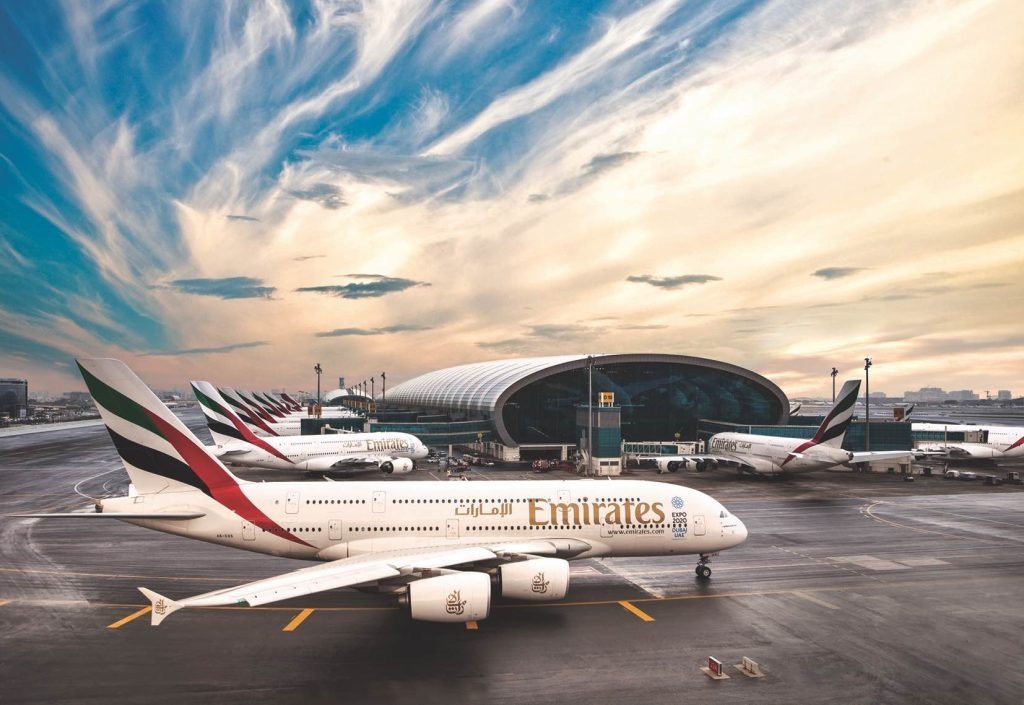
When geopolitical tension threatens the aviation sector, most airlines hunker down. Emirates did something different. The Dubai-based carrier just announced a 3 percent jump in annual profits for the 2025-26 fiscal year, hitting a staggering $6.6 billion before tax and $41 billion in total revenue. Both figures represent all-time highs. For the second consecutive year, Emirates claims the title of world's most profitable airline.
The numbers become even more remarkable when you factor in what happened during the final month of their financial year. From late February through March 2026, regional military strikes forced massive closures across the Gulf's airspace. Dubai International Airport, which has held the crown as the world's busiest international hub for 12 consecutive years, saw passenger traffic plummet 66 percent year-on-year in March alone. The UAE itself absorbed over 2,800 drone and missile attacks, creating what Emirates described as a "disruptive and challenging" operating environment.
How did the airline still manage to grow profits? Preparation and strategic pivoting. While competitors from Lufthansa to AirAsia were forced to cancel thousands of flights and scramble to reroute operations, Emirates had already secured long-term fuel contracts that insulated them from volatile energy prices. Chairman and CEO Sheikh Ahmed bin Saeed Al Maktoum emphasized that fuel costs were "well-hedged" for the next three years, a cushion that allowed the carrier to absorb disruption without raising ticket prices dramatically.
The airline also shifted its business model on the fly. As passenger flights ground to a halt, cargo operations ramped up to fill the void. Essential goods flowing into and through the UAE created a new revenue stream precisely when scheduled flights became impossible. By the end of March, Emirates had recovered to 58 percent of its former seat capacity and was fulfilling 96 percent of its global network by late April. Passenger numbers fell just 1 percent across the full year, landing at 53.2 million travelers, while freight operations soaked up the slack.
The contrast with other carriers speaks volumes. AirAsia's co-founder Tony Fernandes called the crisis worse for aviation than COVID-19 itself. Europe's Fuel Crisis Won't Let Airlines Skip Paying You Back, and regulatory bodies are holding operators accountable. The EU Commissioner for Sustainable Transport has warned that airlines cancelling flights must continue honoring passenger rights. Emirates largely avoided this fight by maintaining operations.
The first 11 months of the fiscal year had already positioned the airline well before the crisis hit. That strong foundation meant the group could weather the storm and still return a $1 billion dividend to its parent company, the Investment Corporation of Dubai. Cash assets hit $16.2 billion, another record, providing a financial moat most competitors simply don't possess.
For travelers, the takeaway is straightforward. Emirates' resilience reflects a carrier with deep pockets, international reach, and operational flexibility. Meanwhile, Emirates is adding private bathrooms to first-class suites, signaling that even amid upheaval, the airline remains focused on premium experience and long-term growth. The regional instability that devastated other carriers became a proving ground for Emirates' business model. Whether you're booking a flight through the Gulf or watching aviation's biggest players jockey for position, the lesson is clear: strategy and financial strength separate the winners from those struggling to keep planes in the air.