Tirana wasn't always Albania's capital. Until 1920, it was just another trading outpost, strategically positioned at the crossroads of the country's geography. Then someone realized that central location made it perfect for a capital, and the city began its unlikely rise. What followed was a tale of sharp turns: Ottoman roots gave way to Italian-influenced architecture, which then vanished under decades of communist gray concrete. Today, barely three decades after that regime's collapse, Tirana has erupted into color and life, preparing for integration into the European Union within the next few years.
The city's recent past refuses to stay buried, and that's exactly why you should visit. From 1944 to 1992, dictator Enver Hoxha ran one of Europe's most paranoid, isolationist regimes. He filled the landscape with nuclear bunkers, demolished religious buildings, and created a surveillance state that made East Germany look casual. Walking through Tirana today means bumping into these ghosts constantly, but they've been transformed into something powerful: spaces for learning and remembering.
Underground lessons and secret police tactics
Start at Bunk'art, a nuclear protection bunker that sits just steps from Skanderbeg Square (the city's enormous main plaza, about six times the size of Brussels' Grand Place). You descend underground into tunnels that now function as a museum and art space, displaying photographs and documents that tell deeply personal stories of ordinary people crushed by the regime. It's sobering, sometimes harrowing, and absolutely essential viewing.
The House of Leaves sits just outside the city center and hits even harder. Originally a maternity hospital, it became an interrogation center and torture chamber. The museum inside catalogs both the suffering and the paranoia: displays of bugging devices hidden in broomsticks, ties, and pipes. The regime trusted no one and recorded everything. If you were labeled a traitor to the state, this is where you ended up.
Skanderbeg Square and architectural chaos
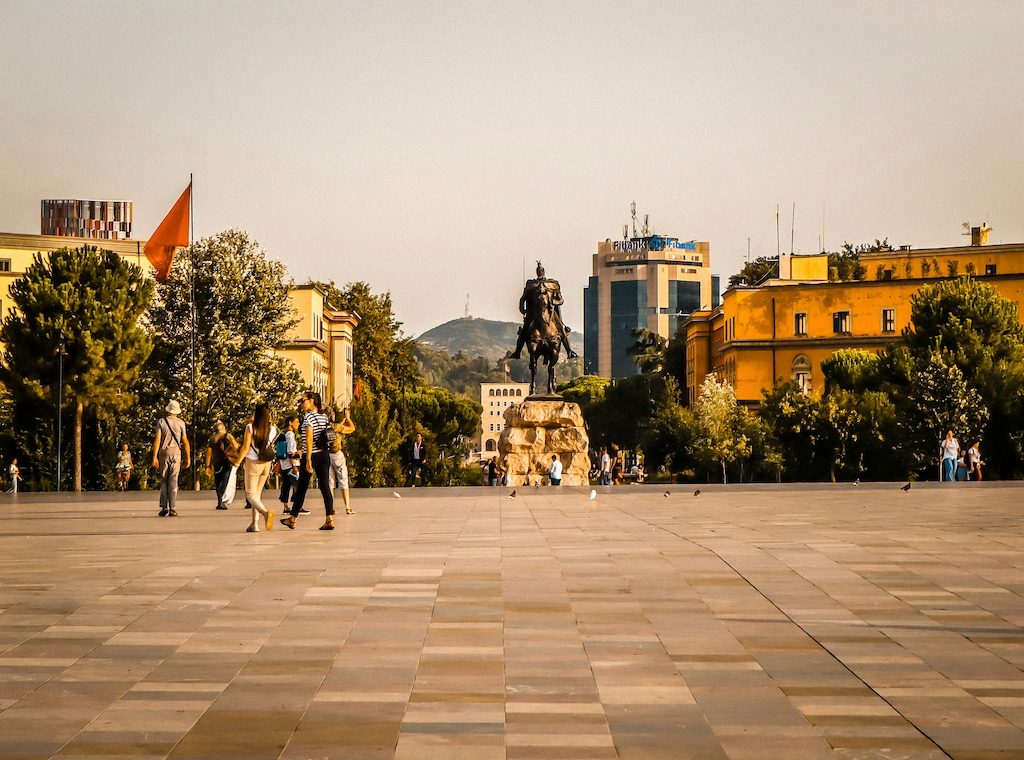
Skanderbeg Square spreads out like a massive canvas in central Tirana. Built by Austrians in 1917 and named after the 15th-century military leader (and national hero) who died of malaria in 1468, it anchors the entire city. The square is ringed by wildly mismatched buildings: some dating from the communist period, others newer, some leftover from Ottoman times. It's architectural whiplash, but it works. Start here and you'll naturally stumble into everything else.
Coffee as a religion
Tirana has an obsession that should surprise no one: coffee. The city boasts one of the world's highest coffee shops per capita, and this isn't casual consumption. After communism fell in the 1990s, cafés exploded as social spaces where people could actually gather publicly. Now, sitting for hours over a tiny cup is a fundamental ritual. Expect to see businesspeople negotiating deals, friends debating philosophy, and strangers becoming friends over espresso.
The Komiteti Kafe Museum blends museum and café into one retro-colored experience. It's easy to miss (basically doubles as a café), but inside you'll find vintage memorabilia, colorful décor, and an actual education in Albanian coffee culture. Grab a cup and settle in. Everyone else is.
George W. Bush and unexpected gratitude
Here's something most travelers don't expect: George W. Bush is genuinely popular in Tirana. Not for his presidency in general, but specifically because he was the first sitting U.S. president to visit Albania (2007) and actively championed Albanian interests, particularly Kosovo's independence and NATO membership. He received a rock star welcome, crowds chanted his name, and now there's a major road and library named after him. It's one of those oddities that makes the city interesting: politics has shaped Tirana in ways that feel both recent and deeply foreign to outsiders.
The broader story is that Albania has harbored a deep appreciation for America dating back to President Woodrow Wilson's support during the nation's early struggles. Understanding that context helps explain why you'll encounter Bush nostalgia here more than almost anywhere else on earth.
Tirana rewards visitors who come curious and stay patient. The city isn't polished or Instagram-ready in the way some capitals aim to be. It's rawer than that, still figuring out who it wants to become. The bunkers and torture chambers remind you of what it's escaped, while the cafés and bold street art show you what it's becoming. That tension, that honest transition, is what makes Tirana unforgettable.