For most of us, a train station is just a place to pass through. But every year, the Prix Versailles reminds us that these transit hubs can be destinations in their own right. On September 28, 2026, the organization unveiled its World's Most Beautiful Stations List, a celebration of architecture, heritage, and innovation that spans the globe.
Since 2015, the Prix Versailles has been honoring exceptional design across airports, universities, sports venues, museums, shops, hotels, and restaurants. The station list, however, holds a special place. As Secretary General Jérôme Gouadain puts it, stations face a unique challenge: they must be beautiful, sustainable, and functional, all while respecting local culture and revitalizing neighborhoods. It's a tall order, but the 2026 laureates prove it's possible.
Underground Wonders
Melbourne's Town Hall Station takes the concept of an underground station to new heights. Designed by Hassell, RSHP, and WW+P, its cavernous concourse beneath City Square is supported by eight tree-like columns that branch out to hold up the ceiling, creating a cathedral-like atmosphere. The copper-toned vaulted ceilings soar ten meters above the platforms, making the space feel vast and airy. It's a far cry from the cramped, fluorescent-lit tunnels we're used to.
In Rome, the Colosseo–Fori Imperiali Station turns an archaeological headache into a stunning feature. Digging in the Eternal City always uncovers something ancient, and this station, which plunges more than 30 meters underground, embraces that history. Ancient wells and archaeological finds are integrated into the design, with light and shadow playing across the different strata of Rome's past. It's like stepping into a time machine.
Naples takes a more artistic approach with Monte Sant'Angelo Station, a project two decades in the making. Designed by artist Anish Kapoor with Future Systems and AL_A, the station's entrance is marked by two monumental corten steel and aluminum openings that evoke Mount Vesuvius and the legend of the Cumaean Sibyl. The entire station is a walk-in sculpture, a mythological journey into the earth that connects past, present, and future.
Above Ground and Beyond
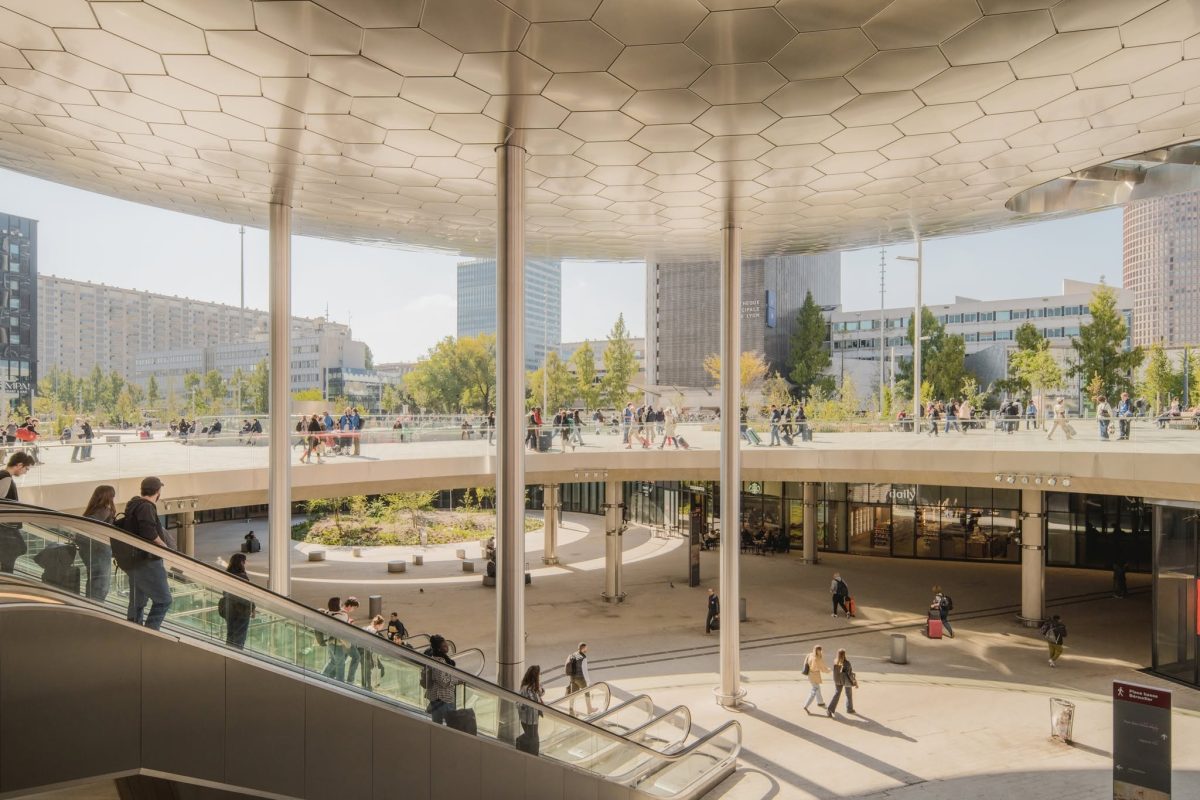
Not all the winners are underground. Lyon Part-Dieu Station in France has doubled in size, thanks to AREP and L'AUC. The design takes inspiration from the city's famous traboules, the hidden passageways that weave through old buildings. The result is a contemporary station that encourages people to walk through it, turning a transit point into a neighborhood connector.
In Riyadh, Saudi Arabia, two stations made the list. National Museum Station, designed by Arup, is a striking concrete shell modeled after the Tuwaiq Mountain, with triangular openings inspired by Najdi architecture. Step inside, and you're greeted by a radiant blue interior that feels like entering a geode. Western Station, designed by Omrania, sits on the site of an old open-air market. Its undulating roofs, inspired by desert dunes, create shaded walkways and public spaces that keep the area's communal spirit alive. The station even includes a mosque and shops, making it a true urban oasis.
Across the Atlantic, the LAX/Metro Transit Center in Los Angeles is a nod to the city's car-centric past, but with an eye to the future. While the full details are still emerging, the station is part of a broader push to make LA more transit-friendly, a topic we've explored in our piece on LA's flying taxi stations.
The Prix Versailles list is more than just a beauty contest. It's a reminder that the places we move through can shape our experience of a city. Whether it's the cathedral-like grandeur of Melbourne or the desert-inspired curves of Riyadh, these stations are proof that travel can be inspiring from the very first step. For more on how transit is evolving, check out our guide to Germany's massive railway stations and the places expats actually want to live.