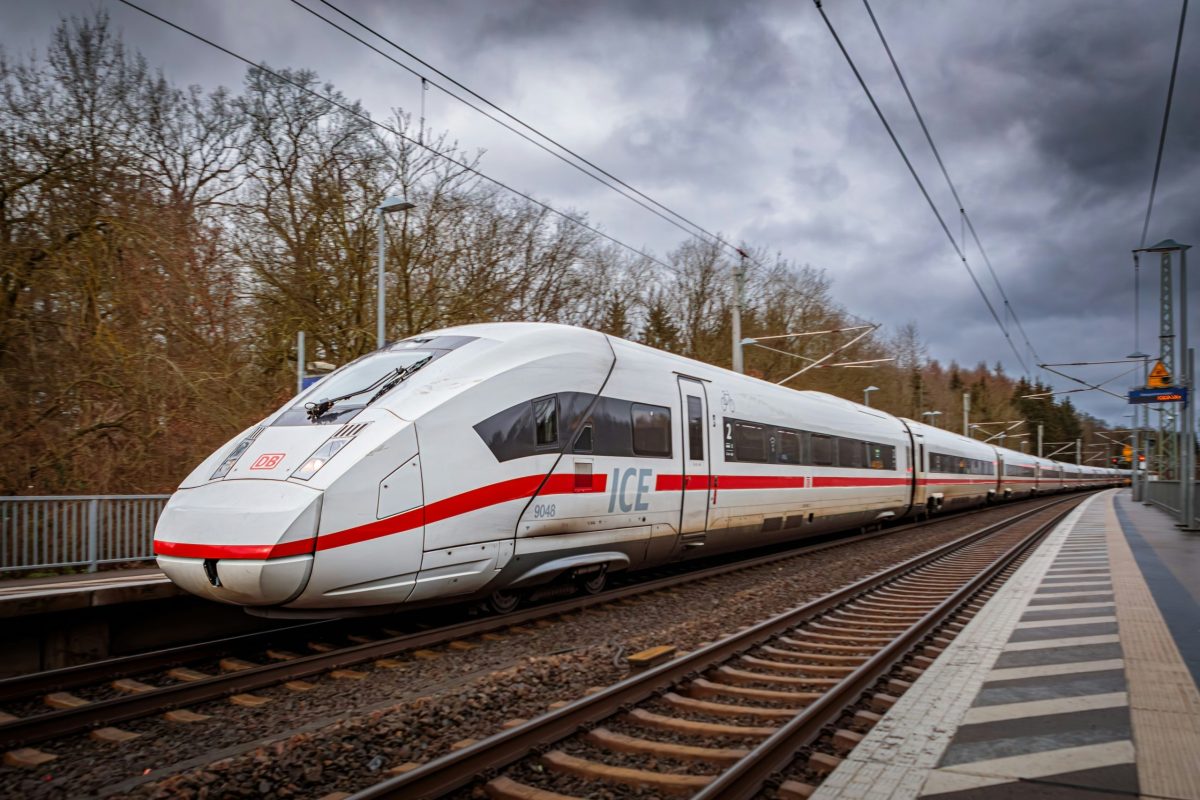
The dream of a quick hop from Amsterdam to Berlin by rail just got a nudge closer to reality. On November 10, 2026, Dutch State Secretary for Public Transport Annet Bertram and German Transport Minister Steffen Bilger signed a joint declaration in Berlin, pledging to boost train services between the two countries. The focus is on three routes: Amsterdam to Berlin, Hamburg, and Frankfurt. But don't start packing for a lightning-fast getaway just yet. The agreement is more of a roadmap than a timetable, with working groups set to figure out the details.
For travelers, the potential payoff is significant. The 660-kilometer Amsterdam to Berlin route currently takes nearly seven hours, which makes flying or even driving look tempting. The declaration aims to shorten that, though it doesn't specify by how much or when. Bertram told Dutch broadcaster NOS that she wanted to take the train to Berlin for the signing but couldn't because of engineering works between Hannover and Berlin, which have diverted high-speed trains via Hamburg. Her frustration was clear: "Interest is not the problem, speed is." She envisions a future where passengers have "several options an hour" to Berlin or Frankfurt within 10 to 15 years. That's a long wait for impatient travelers.
In the meantime, there's a bump in the road. NS and Deutsche Bahn have provisionally removed their direct Amsterdam to Berlin high-speed trains from the timetable between February 6 and May 14, 2027. An NS spokesperson said the operators have requested an alternative route through Germany. So if you're planning a spring trip to the German capital, check the schedules carefully and be ready for connections.
Beyond the headline routes, the agreement could make it easier to reach other European cities. A traveler heading to Copenhagen, for example, could take a train to Hamburg and continue north. Berlin opens up Warsaw and Prague, while Frankfurt connects to Basel and Vienna. One service already shows how these pieces fit together: the direct train linking Prague, Berlin, and Copenhagen, which launched in May 2026 and stops in Hamburg. That gives Dutch travelers two German gateways to hop on board.
Regional lines are seeing changes too. The Wunderline, connecting Groningen in the Netherlands with Leer in Germany, has reopened. Further south, passenger trains will start running between Coevorden and Bad Bentheim in December 2026, restoring a service after 87 years. And there's a longer-term vision for the Lelylijn, a new railway that would link Lelystad with Groningen via Emmeloord, Heerenveen, and Drachten. The two countries will explore extending it into Germany as part of a broader route from Amsterdam to Bremen via Groningen and Oldenburg.
Private operators are already testing the waters. Dutch company GoVolta launched trains from Amsterdam to Berlin and Hamburg in March 2026, with six direct weekly services to Berlin. But it pulled its Hamburg service at the end of May, a sign that demand isn't guaranteed. The declaration also aims to make it easier for new rail companies to enter the market, which could mean more competition and lower prices. For budget-conscious travelers, that's a promising prospect, especially with options like the KLM's new miniature house to enjoy while you wait.
Freight is a big part of the deal too. The two countries want to increase capacity on the stretch between Emmerich and Oberhausen in Germany, which connects to the Betuweroute, a Dutch freight line carrying goods from Rotterdam to Germany's Ruhr region. They also plan to allow longer 740-meter trains for commercial goods or military equipment, and to coordinate the rollout of the European Rail Traffic Management System, a common signaling standard. That could make cross-border rail more efficient for everyone.
For now, the agreement is a promise of things to come. The working groups will examine border crossings like Oldenzaal to Bad Bentheim and the line from Venlo through Kaldenkirchen to Viersen. Ministers will meet annually with ProRail and DB InfraGO, the infrastructure managers, to review progress. So while the future looks brighter for Amsterdam to Berlin rail travel, the present still requires a bit of patience. If you're planning a trip, keep an eye on the schedules and consider the scenic route through Hamburg. And if you're dreaming of other European adventures, check out these under-the-radar cities that might be easier to reach by train soon.