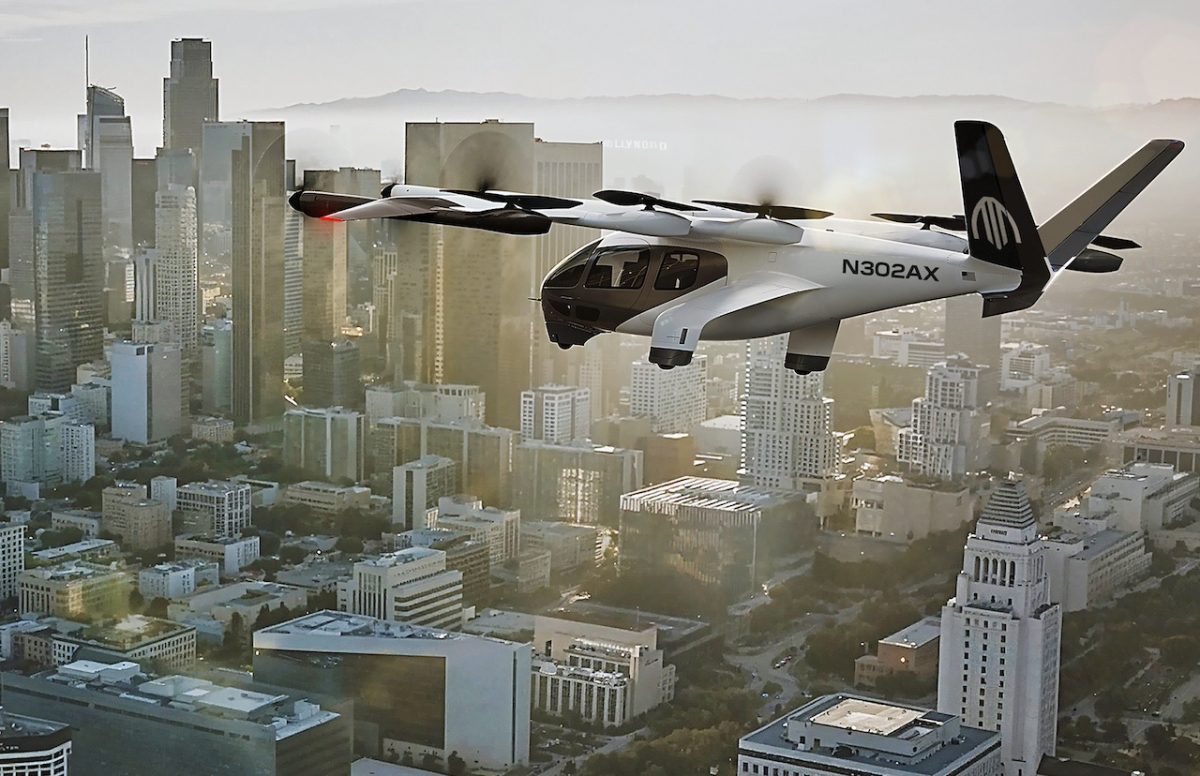
Los Angeles is done waiting in traffic. The city has just announced an audacious plan to launch its first vertiport, a specialized hub for electric air taxis that take off and land vertically. The partnership between aviation manufacturer Archer and entertainment giant AEG Entertainment signals that the City of Angels is serious about reimagining urban transport for the 2028 Olympic Games.
The vertiport will call LA Live home, a sprawling downtown entertainment district already packed with major venues like the Crypto.com Arena, the GRAMMY Museum, and the Los Angeles Convention Center. Choosing this location as the flagship hub makes perfect sense: it's surrounded by restaurants, concert halls, and sports venues, meaning travelers could theoretically arrive, grab a meal, and catch a show without ever sitting in gridlocked traffic. Adam Goldstein, Archer's founder and CEO, sees this as the gateway to something bigger. From LA Live, air taxi routes will eventually fan out across the entire region, connecting passengers to Hollywood Burbank Airport, LAX, SoFi Stadium, and USC.
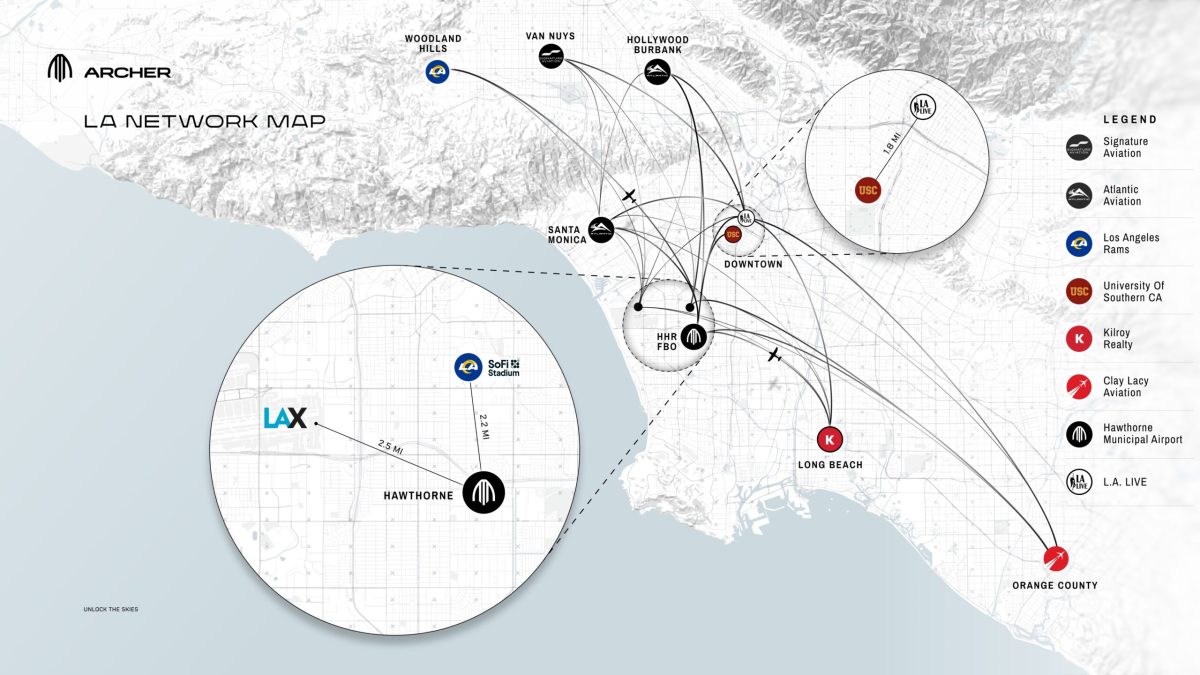
The aircraft doing the heavy lifting is called Midnight, a sleek four-passenger electric vertical take-off and landing (eVTOL) aircraft that Archer has designated as the official Olympic air taxi provider. The plane's Team USA livery is striking: black and white cockpit and fuselage paired with a bright blue tail and red accents. But Midnight isn't just pretty. It can cruise at 241.4 kilometers per hour (150 mph), meaning journeys that would normally take an hour of sitting in LA traffic could shrink to 14 minutes by air. Travel from Hollywood Burbank Airport to SoFi Stadium, which will host swimming and the opening ceremony, could drop from 45 minutes to less than a quarter hour.
Speed isn't the only draw. AEG's president Nick Baker sees this as a chance to enhance how fans and visitors experience major events. "Forward-thinking collaboration that blends infrastructure and technology in service of our fans, visitors, and the broader community" is how he frames it. For tourists, the appeal goes beyond sporting events. Archer promises 12-minute flights to Newport Harbor in Orange County for whale and dolphin watching, compared to nearly an hour by car. That opens up day trips that most travelers would dismiss as impractical.
Before Midnight takes flight, though, Archer and AEG face serious hurdles. The aircraft still needs to clear regulatory approval, a process that typically takes time and scrutiny. Beyond that, the pair must complete feasibility studies on the LA Live vertiport itself, examining land use, airspace capacity, power infrastructure requirements, and community impact. These aren't small questions in a densely packed urban area.
This move puts Los Angeles in growing company. The UK is already planning flying taxi services, and Kazakhstan has announced flying taxi ambitions by 2027. What makes LA's push different is the scale and timing. Having air taxis operational before the world's eyes turn to the city for the Olympics would cement Los Angeles as a genuinely forward-thinking destination, not just a place where tech gets announced but never deployed.
The real test comes next. Can Archer and AEG actually pull this off by 2028? Can they secure the necessary approvals, build the infrastructure, and integrate air taxis into LA's already chaotic airspace without incident? If they do, it won't just change how people move around the city during the Games. It could reshape the entire region's relationship with traffic, tourism, and urban mobility for years to come.