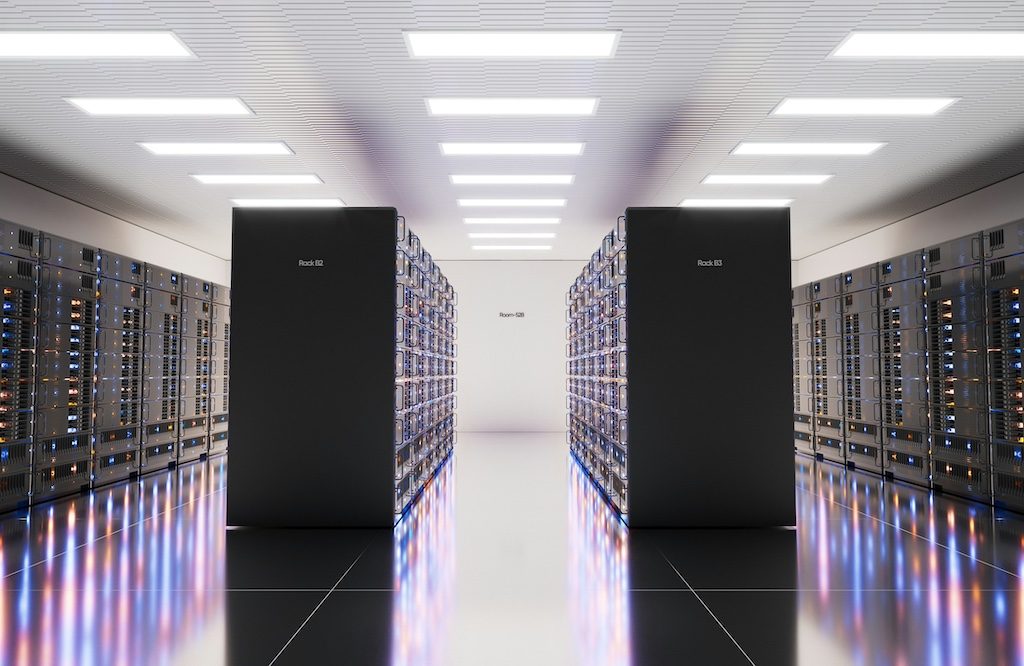
Bruce Lee once said "Be water, my friend." Artificial intelligence seems to have taken that wisdom dangerously literally. While you're prompting ChatGPT or generating images with a few keystrokes, massive data centers behind the scenes are gulping down water at a scale that should make any traveler think twice.
A sobering report from the UN University Institute for Water, Environment and Health has just sounded the alarm on something most of us never think about. The AI boom is consuming staggering quantities of freshwater, and it's happening in some of the world's driest regions.
The Numbers Are Staggering
Picture this. Global data centers used 448 terawatt-hours of electricity in 2025. To generate that power required roughly 4.5 trillion liters of water. That's enough to fill 1.8 million Olympic-sized swimming pools. By 2030, projections show this could jump to 9.3 trillion liters, which would cover the basic annual water needs of about 1.3 billion people living in sub-Saharan Africa.
Processing text queries is one thing. But image generation demands far more power, and high-resolution video? It's exponentially worse. Day-to-day use of AI models accounts for 80 to 90 percent of their total energy footprint.
When Drought Meets Data Centers
Here's where this gets personal for travelers. Many of these water-hungry facilities are built in regions already gasping for moisture. Google's data center in Mesa, Arizona illustrates the problem perfectly. Despite warnings from local water authorities about chronic drought and repeated shortages since 2022, the facility was approved to use up to 5.5 million cubic meters of water annually. That's enough to sustain hundreds of thousands of people. Google has reportedly considered expanding there anyway.
Kathryn Sorensen, former director of Mesa's water department and now a professor at Arizona State University, asked a blunt question: "Is the increase in tax revenue and the relatively paltry number of jobs worth the water?" It's the kind of question that should echo through every tech boardroom.
Spain tells a similar story. Amazon's planned data centers in Aragon are licensed to consume approximately 755,720 cubic meters of water per year, equivalent to irrigating 200 hectares of corn. The region will also need to supply more electricity than it currently generates. Three-quarters of Spain's territory already faces desertification risk, yet the expansion proceeds.
The Renewable Energy Paradox
There's another wrinkle that complicates the narrative. Switching data centers to renewable energy sources does reduce carbon emissions, which sounds good. But some renewable operations, particularly those powered by hydroelectric or solar installations, actually increase water consumption. The problem doesn't disappear, it just shifts form.
What Needs to Change
The UN is now demanding urgent action. They're calling for a responsible AI ecosystem that prioritizes wise resource use, acknowledges local environmental realities, and commits to transparent reporting on energy, water, land, and carbon footprints. Right now, there's shocking opacity about how much water these facilities actually use.
For travelers, this matters more than you might think. Venice faces becoming an underwater museum within 200 years, while destinations worldwide grapple with water scarcity. Every prompt you type, every image you generate, is connected to these distant but very real consequences.
The technology isn't going away. But demanding that companies be transparent about their water footprint, that they build data centers in water-abundant regions, and that they invest in genuine solutions rather than half-measures, is something we can all push for. Start by asking the tech companies you use what their water usage actually is. Most of them can't even answer the question.