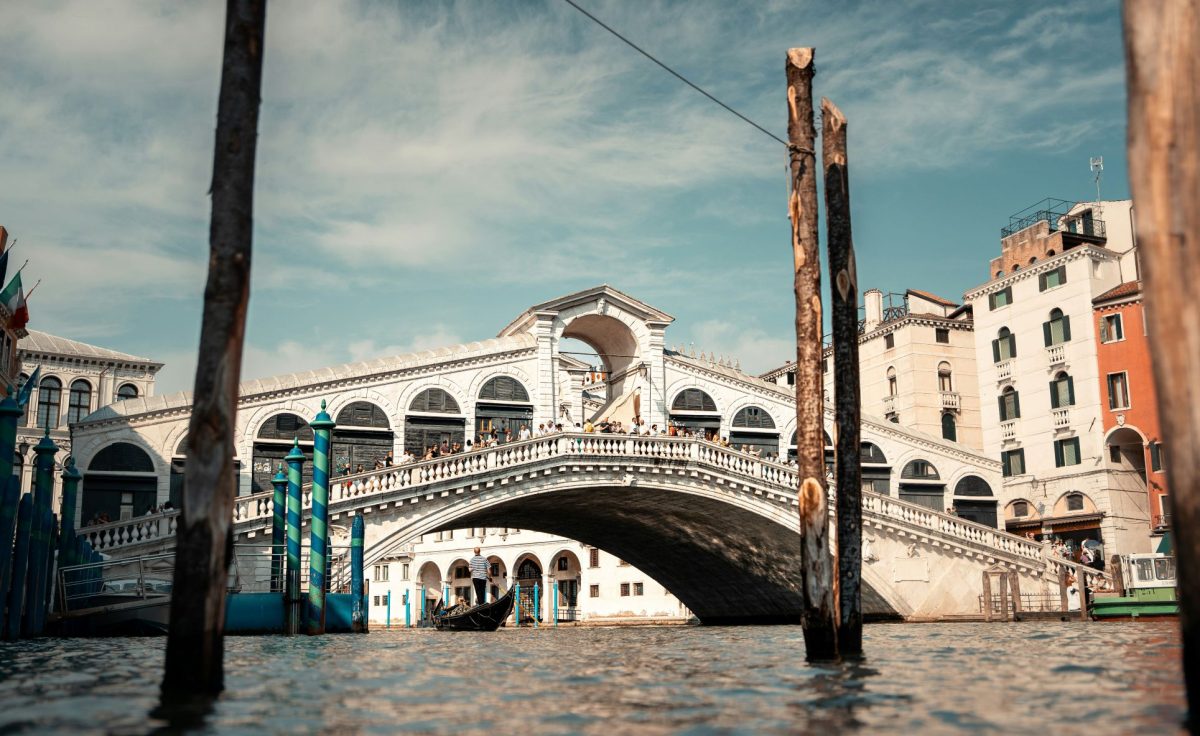
The Bridge of Sighs earned its name from a haunting source: prisoners crossing it for the last time, catching their final glimpses of the city before confinement. Today, a different kind of goodbye looms. Scientists now warn that Venice itself could vanish beneath the waves within 200 years, becoming less a destination for tourists and more a sunken monument for future divers to explore.
Researchers at the University of Salento have published sobering projections showing sea levels could nearly double by the year 2100, rising to about 81 centimeters above current levels. Venice, already sinking slowly into the mudflats beneath it, faces a crisis that goes far beyond the occasional flooding locals have long endured. The city is literally battling two enemies at once: rising waters from climate change and the relentless subsidence of its wooden foundations.
For those planning a visit, this makes Venice feel both impossibly precious and increasingly urgent. Venice's entry fee restrictions are already reshaping how travelers access the city, and understanding the stakes behind those barriers adds another layer to any trip here. This is not just about tourism logistics, but heritage preservation on a scale most travelers never consider.
A Renaissance Masterpiece Facing Extinction
Venice holds a place in the human imagination unlike almost anywhere else. UNESCO recognized it in 1987 as an unparalleled artistic achievement, a complete medieval ensemble frozen in time. The Doge's Palace stood as the seat of power for centuries. St. Mark's Basilica glitters with more than 8,000 square meters of Byzantine mosaics, each tile placed by hands long turned to dust. These structures have survived wars, plagues, and the whims of history. Yet they may not survive physics.
The city already knows what future flooding looks like. In November 2019, Venice experienced its worst flooding in over 50 years when tides rose to 187 centimeters, submerging roughly 80 percent of the city. The phenomenon, called acqua alta in Italian, typically occurs during winter months. That 2019 event served as a preview of what may become routine.
Barriers, Relocation, and the Cost of Salvation
The Italian government has already installed MOSE, a system of 78 mobile floodgates stationed around the lagoon at Lido, Malamocco, and Chioggia. These underwater barriers rise during high water events to temporarily isolate the city from the advancing sea. It can handle up to three meters of floodwaters, which sounds impressive until you consider the projections for the next two centuries.
The University of Salento researchers propose three approaches to keep Venice above water: reinforcing flood barriers, encircling the entire lagoon with coastal dams, or dismantling key artworks and moving them inland to safety. Each option pushes the boundaries of engineering and ethics. The estimated cost of any comprehensive preservation effort reaches nearly 100 billion euros, making this not just a technical problem but a political and financial one.
Yet here's the harder truth: even if engineers succeed in keeping the stones dry, saving Venice's physical treasures may prove easier than preserving the living culture that makes the city breathe. The lagoon-based traditions, the centuries-old trade networks, the unique ways of life that evolved on water, the economic activities rooted in this peculiar geography, these resist the kind of solutions that work on marble and brick.
The Inevitable Goodbye
Piero Lionello, the lead author of the research, spoke to journalists with a candor that cuts through technical jargon. These protective measures, he explained, will not work forever. The future appears unavoidable. Generations to come, he suggested, may only experience Venice as a submarine attraction, descending into the lagoon to witness the flooded ruins of what was once the queen of the Adriatic.
For travelers considering a pilgrimage to Venice now, the implications are profound. Every gondola ride carries added weight. Every moment in the Basilica feels like borrowed time. Hotels are finding ingenious ways to preserve Venetian heritage while adapting to modern realities, a microcosm of the larger struggle facing the city. Visit soon is not mere marketing hyperbole anymore, it's a recommendation rooted in science and sorrow.
Venice has survived invasions, famines, and revolutions. It may not survive the slow rise of the sea. That makes every visit a moment to witness something genuinely irreplaceable, before the lagoon finally claims what the city was built upon.