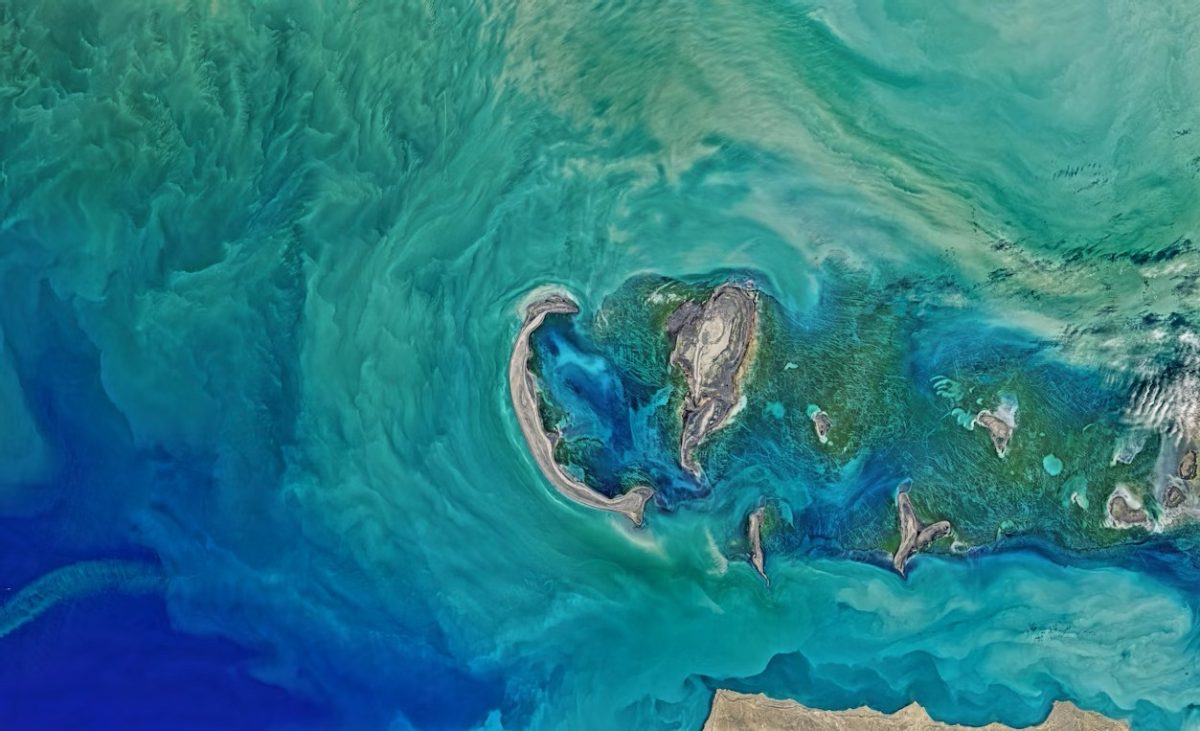
Across the Absheron Peninsula in Azerbaijan, locals can now walk out onto exposed seabed that once lay beneath the water's surface. The Caspian Sea, the planet's largest enclosed body of water, is retreating at an alarming pace. What started as a gradual decline in the mid-1990s has accelerated into a crisis that touches everything from migratory bird populations to the food security of millions of people living along its shores.
A Vast Inland Sea Facing Collapse
Bordered by Russia, Kazakhstan, Turkmenistan, Iran, and Azerbaijan, the Caspian is technically not a sea but a colossal brackish lake fed by 130 rivers. The Volga River supplies most of its water. Unlike ocean basins connected to global systems, the Caspian has no outlets. This means its survival depends entirely on a fragile equilibrium: water flowing in from rivers and rain must balance against evaporation. For decades, that balance has been breaking down. Between 1996 and 2023 alone, water levels dropped two meters. Scientists now predict losses between five and eighteen meters by century's end.
Global warming is the culprit. Warmer temperatures accelerate evaporation across the basin while disrupting rainfall patterns and snowmelt that feed the rivers sustaining the sea. As Dr. Elnur Safarov, coordinator of the Caspian Integrated Scientific Network, explains, "Climate change is accelerating evaporation and disrupting the water balance of the Caspian Sea." What was once a slow geological process has become a climate emergency unfolding in real time.
Birds, Fish, and Endangered Seals Running Out of Space
The shrinking shoreline hits wildlife hardest. Millions of pelicans, flamingos, and ducks depend on the Caspian's deltas, wetlands, and reed beds for nesting, breeding, and rest stops during migration. Sturgeon and other endemic fish species are losing their natural habitats as the seabed dries and the food web collapses. The endangered Caspian seal, which feeds on these fish, now faces starvation as prey becomes scarcer and harder to reach.
Zoologist Dr. Nijat Hasanov paints a stark picture: "Nesting, breeding and resting habitats for millions of birds, including pelicans, flamingos and ducks are in jeopardy." The loss of these wetland ecosystems affects wildlife that travelers come to see, but more importantly, it unravels ecosystems that have existed for millennia.
Fishing Communities Face an Uncertain Future
For the people who depend on the Caspian, the shrinking sea translates into economic hardship. Azerbaijani fishing families now must travel much farther into deeper waters to catch the same amount of fish they once harvested from the shore. This shift increases costs, burns more fuel, and puts boats in riskier conditions. Farhad Mukhtarov, a water governance specialist with the International Institute of Social Studies, describes how "fishing communities now have to go deeper into the sea to catch the same amount of fish they used to catch nearby the shore."
The broader region faces food insecurity as fish stocks decline and livelihoods disappear. As Kazakhstan and its neighbors become more visible to international travelers, tourists often encounter these communities without understanding the environmental pressures reshaping their daily lives.
Five Nations, One Basin, No Unified Action Yet
Saving the Caspian requires something that's proven elusive in international environmental work: genuine cooperation. All five littoral states (Russia, Kazakhstan, Turkmenistan, Iran, and Azerbaijan) have adopted marine safeguards and sustainable development principles through the Tehran Convention. Yet coordinated action remains distant.
Mahir Aliyev, Coordinator of the Secretariat of the Tehran Convention, emphasizes that "coordinated regional action" is "essential to manage the environmental consequences across the basin." The challenge is immense. Each nation has competing interests. Oil extraction, shipping routes, and agricultural water needs pit short-term economic gains against the long-term survival of the sea itself. Without unified commitment to reducing emissions and managing water use, individual countries cannot reverse what's happening.
The call to save the Caspian Sea grows louder, with activists and scientists united in warning that climate change and pollution threaten not just wildlife but human communities that have thrived here for centuries. The question now is whether five nations can put aside differences long enough to act. The sea won't wait for consensus to form.