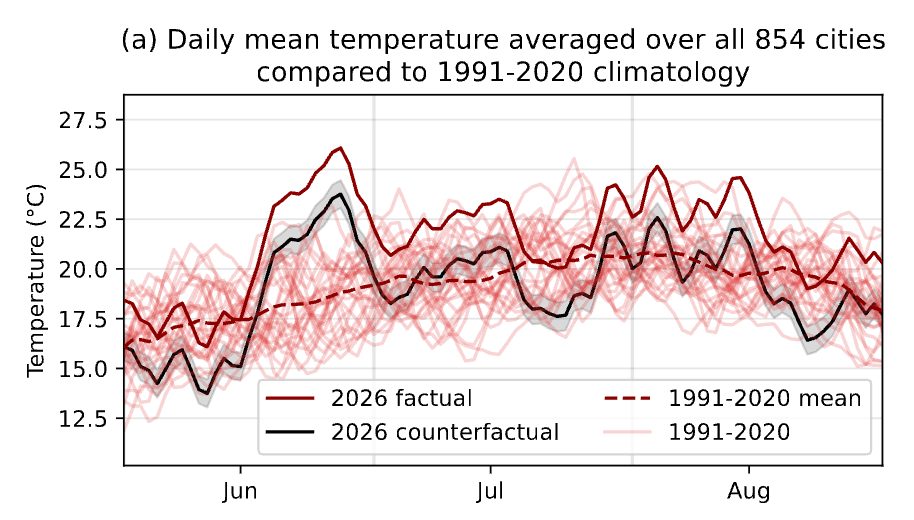
Europe's summer of 2026 was not just uncomfortably hot. It was lethal. A new study from Imperial College London and the London School of Hygiene & Tropical Medicine estimates that 50,391 people died across 854 European cities between June and August, with two-thirds of those deaths directly linked to human-induced climate change.
The research, published in the journal Heat-related urban mortality attributable to human-induced climate change in Europe in summer 2026, analyzed temperature records and mortality data from 30 countries, covering nearly 173 million people. The findings are stark: this summer was the deadliest for heat-related deaths this century, surpassing the previous record of 29,480 deaths in 2022.
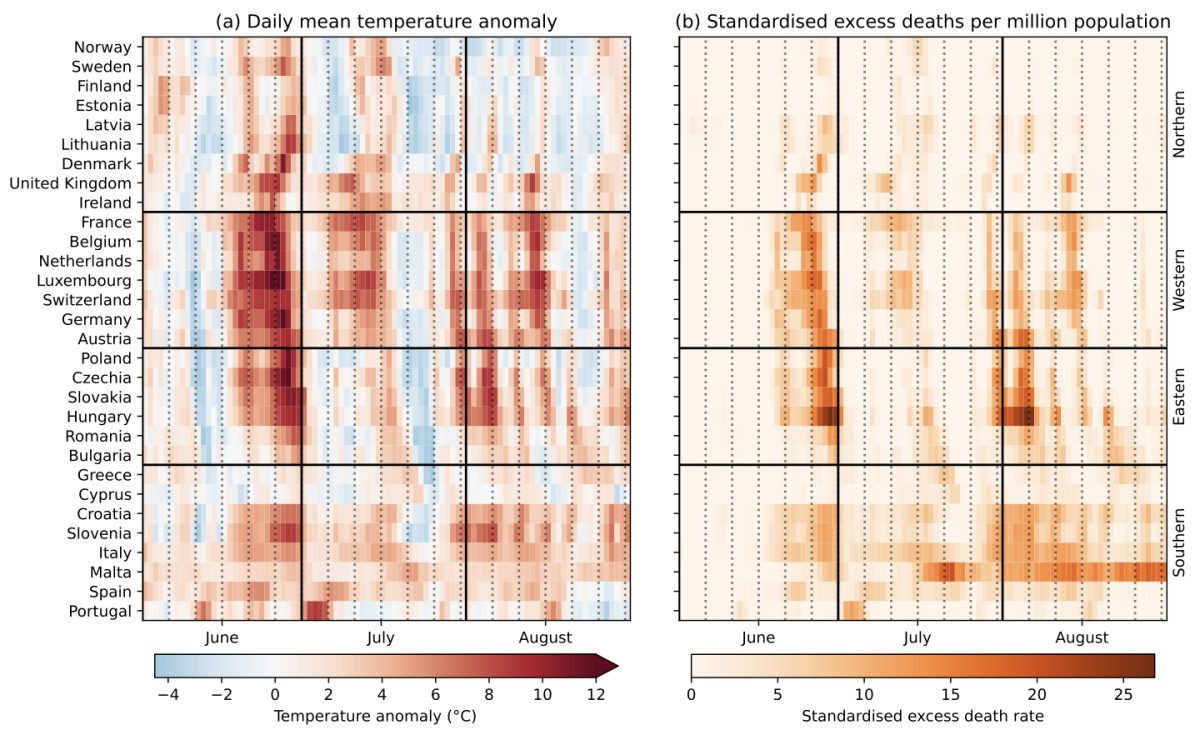
For travelers, this is more than a statistic. It's a warning that summer trips to popular European destinations like Italy, France, and Spain now come with a hidden risk. The study found that the highest mortality rates were in Malta, Italy, and Hungary, while the greatest absolute death tolls were in Italy, France, Spain, Germany, and the UK.
Almost one-third of the deaths occurred during a single intense heatwave between June 17 and July 1. The elderly were hit hardest, with people aged 85 and over accounting for roughly half of the deaths. But younger travelers aren't immune. More than 6,000 deaths were among people under 65, including 833 aged between 20 and 44.
So what does this mean for your next European adventure? First, consider the timing. If you're flexible, autumn bookings are holding firm for good reason. The shoulder season offers milder temperatures and fewer crowds, making it a safer and more enjoyable time to explore.
Second, think about where you go. Coastal destinations and northern cities often escape the worst of the heat. If you're set on a summer trip, look for accommodations with air conditioning, plan outdoor activities for early morning or late evening, and stay hydrated. The study's authors note that heat is rarely listed on death certificates, so the true toll may be even higher.
Emergency rooms in cities like Naples saw a 15% spike in visits during the hottest weeks, according to Dr. Mario Guarino, an emergency physician. He points to poverty and loneliness as factors that make the elderly particularly vulnerable, but the message for all travelers is clear: heat is a serious health threat.
Some researchers caution that the figures are estimates based on epidemiological models, not actual death records. But even the most conservative interpretation suggests that Europe's summers are becoming dangerously hot. As you plan your travels, keep an eye on heat advisories and consider destinations that offer relief. For example, some cities are better equipped for extreme heat, with shaded plazas, public fountains, and indoor attractions.
If you're determined to travel in peak summer, choose your base wisely. Northern Europe, the Alps, and coastal areas with sea breezes are generally cooler. And remember, climate change is making these heatwaves more frequent and intense, so this isn't a one-off. The study's lead author, Clair Barnes, calls it the "worst on record," but warns that hotter, more extreme summers are becoming the norm.
For now, the best advice is to stay informed and adapt. Check weather forecasts before you go, pack light clothing and sunscreen, and don't underestimate the power of a midday siesta in an air-conditioned museum. Europe's beauty is worth experiencing, but it's smarter to do it when the mercury isn't soaring.