The Alps are melting faster than anyone expected. In just ten days, a single Swiss glacier lost a full meter of ice due to this summer's relentless heat. That staggering rate of loss tells you everything about what's happening across Europe's most iconic mountain range right now.
After one of Europe's strongest heatwaves on record, the consequences are already visible on the ground in Switzerland. All the snow and ice that accumulated through winter is expected to vanish by early next week, roughly two months earlier than the historical norm. Scientists track this phenomenon as "glacier loss day," and while 2023 hasn't set a record yet (that grim distinction still belongs to June 2022), the trajectory is deeply concerning.
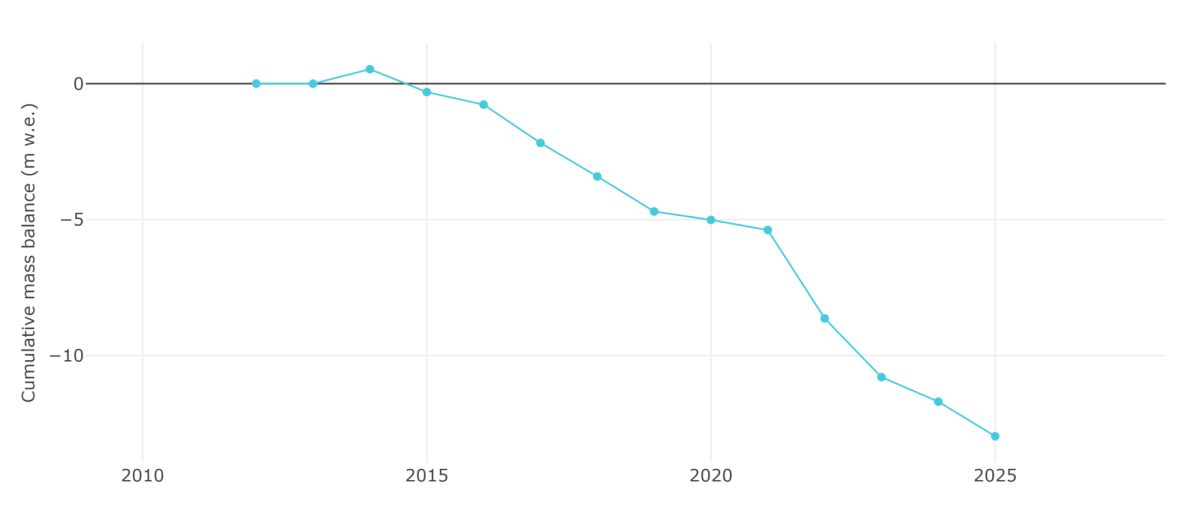
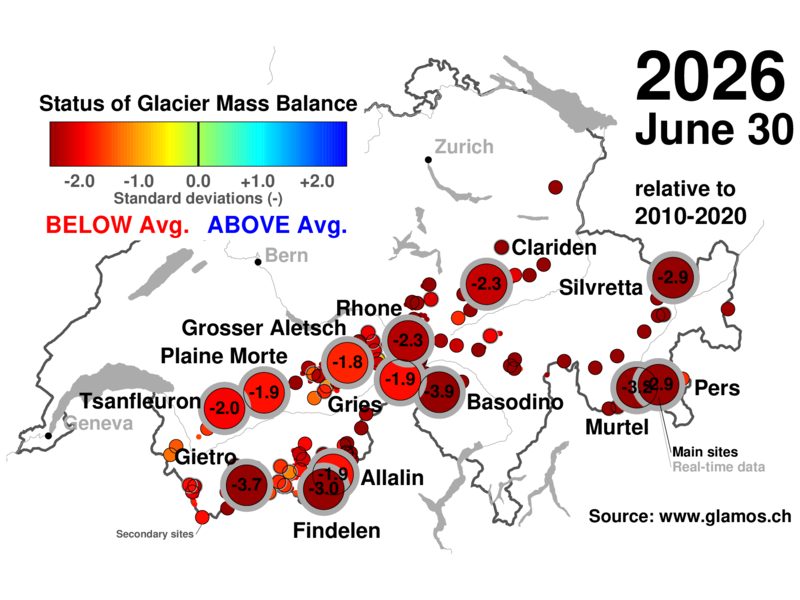
Matthias Huss, director of the Glacier Monitoring in Switzerland network, put it bluntly: "We are just seeing enormous ablation, ice melt rates and snow melt rates all over the Alps." The conditions, he explained, are three months ahead of what would represent a healthy state. When Huss recently returned to the Rhône Glacier after just ten days, he was struck by the visible damage. "It's very impressive to see, and this is just the effect of the heatwave," he said.
The math behind the melt is simple but brutal. This year's average snowfall over the glaciers dropped 25% below the 2010-2020 baseline. Once that protective snow cover disappears, the darker grey ice beneath becomes exposed to the sun. Unlike reflective white snow, dark ice absorbs solar radiation aggressively, accelerating melt even further. It's a feedback loop that feeds on itself.
The damage isn't coming from heat alone. Back in March, Saharan dust arrived in the Alps, darkening the snow surface and jumpstarting the melting process before summer even began. Combined with reduced snowfall and record temperatures exceeding 40 degrees Celsius across multiple regions, the glaciers never stood a chance. As Huss noted, the precise temperature hardly matters when it stays dangerously high. "The more days that are added with very high temperatures, this is just very bad for the glaciers," he said.
For travelers planning Alpine adventures or considering whether to visit soon, the reality is sobering. Switzerland has already lost around 1,200 glaciers over the past 50 years. Only about 1,300 remain. If warming continues at recent rates, Huss predicts that by 2100, only small remnants will survive. If you've dreamed of hiking past dramatic ice formations or seeing the glaciers that have shaped European culture for centuries, the window for those experiences is rapidly closing.
The broader European context matters too. Europe's dream destinations are sweltering and travelers need to know how to handle it. This summer's heat has tested energy grids, emergency services, and hospital systems across the continent. Forecasters warn that another intense heat spell could arrive later in July, suggesting the worst may not yet be over. For mountain travel in particular, these conditions will reshape how and when you can safely explore.
Visiting the Alps remains possible and worthwhile, but it requires realistic expectations. The glaciers you see today will not look the same in a decade. If glacier trekking or alpine climbing is on your bucket list, 2024 might be the time to prioritize it. The ice that drew travelers to Switzerland for generations is retreating faster than anyone predicted, and the pace shows no signs of slowing.